


























As the UK prioritises “Home First” complex care, domiciliary teams are increasingly managing hospital-level clinical needs. Complex care training helps your staff remain capable and confident in safely supporting service users with profound disabilities or long-term conditions in the community.
4.9
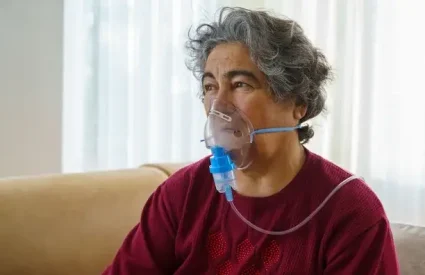
Our CPD-accredited complex care training courses include skills to support service users with brain injuries, dementia and dysphagia, as well as oxygen therapy, catheterisation and more.
Home care teams can access specialised modules instantly through flexible, self-directed learning. Most courses are completed in around 1 hour, and are entirely online. This means the training fits around your shift patterns, as it is accessible at all hours of the day.
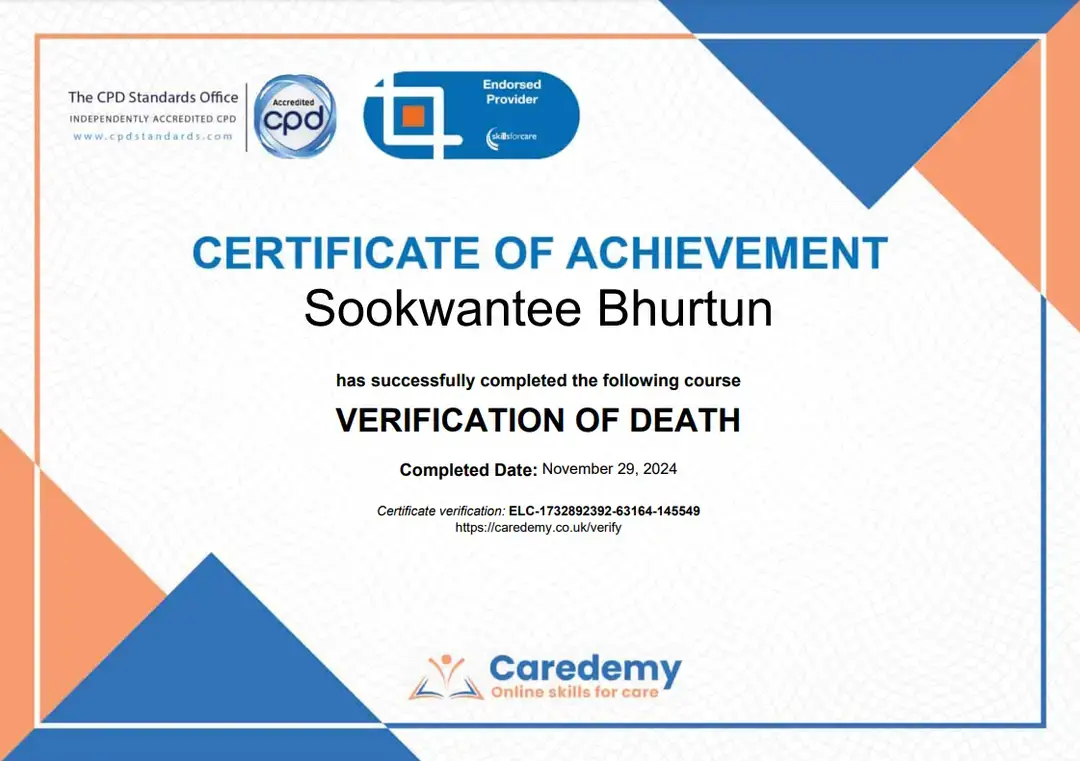
Upon completion, candidates receive a formal certificate to validate your competency and commitment to the highest standards of person-centred care in the UK.
£30.00 Original price was: £30.00.£15.00Current price is: £15.00. +VAT
£30.00 Original price was: £30.00.£15.00Current price is: £15.00. +VAT
£30.00 Original price was: £30.00.£15.00Current price is: £15.00. +VAT
£30.00 Original price was: £30.00.£15.00Current price is: £15.00. +VAT
£30.00 Original price was: £30.00.£15.00Current price is: £15.00. +VAT
£30.00 Original price was: £30.00.£15.00Current price is: £15.00. +VAT
£30.00 Original price was: £30.00.£15.00Current price is: £15.00. +VAT
£30.00 Original price was: £30.00.£15.00Current price is: £15.00. +VAT
£30.00 Original price was: £30.00.£15.00Current price is: £15.00. +VAT
£30.00 Original price was: £30.00.£15.00Current price is: £15.00. +VAT
£30.00 Original price was: £30.00.£15.00Current price is: £15.00. +VAT
£30.00 Original price was: £30.00.£15.00Current price is: £15.00. +VAT
£30.00 Original price was: £30.00.£15.00Current price is: £15.00. +VAT
£30.00 Original price was: £30.00.£15.00Current price is: £15.00. +VAT
£30.00 Original price was: £30.00.£15.00Current price is: £15.00. +VAT
£30.00 Original price was: £30.00.£15.00Current price is: £15.00. +VAT
£30.00 Original price was: £30.00.£15.00Current price is: £15.00. +VAT
£30.00 Original price was: £30.00.£15.00Current price is: £15.00. +VAT
£30.00 Original price was: £30.00.£15.00Current price is: £15.00. +VAT
£30.00 Original price was: £30.00.£15.00Current price is: £15.00. +VAT
£30.00 Original price was: £30.00.£15.00Current price is: £15.00. +VAT
£30.00 Original price was: £30.00.£15.00Current price is: £15.00. +VAT
£30.00 Original price was: £30.00.£15.00Current price is: £15.00. +VAT
£30.00 Original price was: £30.00.£15.00Current price is: £15.00. +VAT
£30.00 Original price was: £30.00.£15.00Current price is: £15.00. +VAT
£30.00 Original price was: £30.00.£15.00Current price is: £15.00. +VAT
£30.00 Original price was: £30.00.£15.00Current price is: £15.00. +VAT
£30.00 Original price was: £30.00.£15.00Current price is: £15.00. +VAT
£30.00 Original price was: £30.00.£15.00Current price is: £15.00. +VAT
£30.00 Original price was: £30.00.£15.00Current price is: £15.00. +VAT
£30.00 Original price was: £30.00.£15.00Current price is: £15.00. +VAT
£30.00 Original price was: £30.00.£15.00Current price is: £15.00. +VAT
£30.00 Original price was: £30.00.£15.00Current price is: £15.00. +VAT
Investing in specialist complex care training ensures full alignment with CQC Key Lines of Enquiry (KLOEs) and the Health and Social Care Act. Quality training embeds a culture of robust clinical governance and risk management, safeguarding both your service users and your staff’s professional well-being.
Each course is worth several CPD points, depending on the level of training completed.
Some complex care training courses are entry level, while others are certified up to QLS Level 3.
Our complex care training courses are written and structured by learning and development professionals, in line with statutory requirements and healthcare guidelines.
We build our online training to cover all topics laid out in the latest recommendations from NICE and Skills for Care, and make sure those who complete our courses are qualified to a standard that is valuable to any CQC-regulated organisation.
Complex care refers to the specialist and coordinated support provided for people with severe, chronic or co-occuring health conditions. This type of care is high-level, often led by clinical nurses, and is extremely valuable in home care teams, sheltered accommodation, assisted living and other care settings.
This type of care is offered to both adults and children, who may require:
Complex Care also describes the clinical skills necessary when looking after people with long term conditions, including:
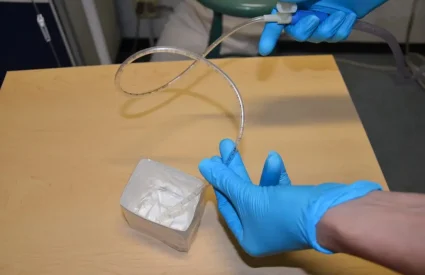
Our complex care training courses also provide robust training on important clinical skills such as sepsis awareness, suctioning, and venepuncture and cannulation. Grouping these courses together under complex care training helps present organisations with a programme of complementary skills that can improve outcomes for service users and help develop a robust CPD programme for staff.
We offer targeted clinical skills training covering essential, hands-on interventions such as inserting cannulas, and complex wound care.
Specialised courses are available focusing on safe catheter care and managing continence to uphold patient dignity, prevent infection, and ensure comfort.
We provide critical training for supporting individuals with dysphagia (swallowing difficulties), such as support with eating and drinking as well as methods for improving comfort.
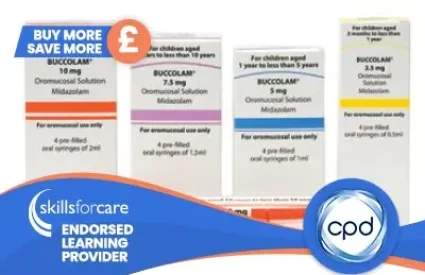
Understanding the safe and legal administration of Buccal Midazolam is important CPD for staff in all care settings, being a life-saving rescue medication used during prolonged seizures.
Training on the National Early Warning Score 2 (NEWS2) equips clinical and support staff with the skills to identify, track, and respond rapidly to clinically deteriorating patients.
Browse the full range of online complex care training courses available to understand the scope of our offering.
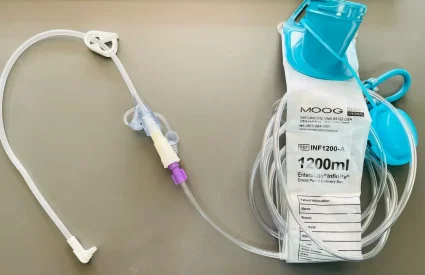
Complex care, also known as long-term clinical care, is specialised support for individuals with significant, ongoing health conditions. Unlike general home care, it involves highly skilled carers or nurses managing clinical needs such as tracheostomy care, PEG feeding, or neurological rehabilitation within a home setting.
Yes. To meet CQC (Care Quality Commission) standards, complex care providers must demonstrate that staff are not only trained but competency-assessed. Training must align with the Health and Social Care Act to ensure services are safe, effective, and well-led.
Most complex care is funded through NHS Continuing Healthcare (CHC) for individuals with a "primary health need." Alternatively, it can be funded via Personal Health Budgets (PHBs), local authority social care budgets, or private self-funding.
Specialist training covers delegated healthcare tasks including stoma care, catheterisation, oxygen therapy, and seizure management. In the UK, these tasks must be signed off by a qualified clinical professional to ensure staff are competent to practice safely.
While domiciliary care focuses on daily living tasks like cleaning and dressing, complex care requires intensive clinical intervention. It involves managing life-limiting conditions and often requires a multidisciplinary team (MDT) including OTs, physiotherapists, and specialist nurses.
Yes, provided they have undergone accredited complex care training and a formal competency sign-off. Under UK clinical governance, a Registered Nurse can delegate specific tasks to support workers, provided there is a robust risk assessment and ongoing supervision in place.
In the UK, complex care providers must follow a formal competency sign-off process. This involves a Registered Nurse observing the staff member performing clinical tasks—such as tracheostomy suctioning or PEG feeding—in a real-world setting. To remain CQC compliant, these competencies must be regularly reviewed and updated through CPD-accredited refresher training to ensure ongoing patient safety and high-quality care delivery.