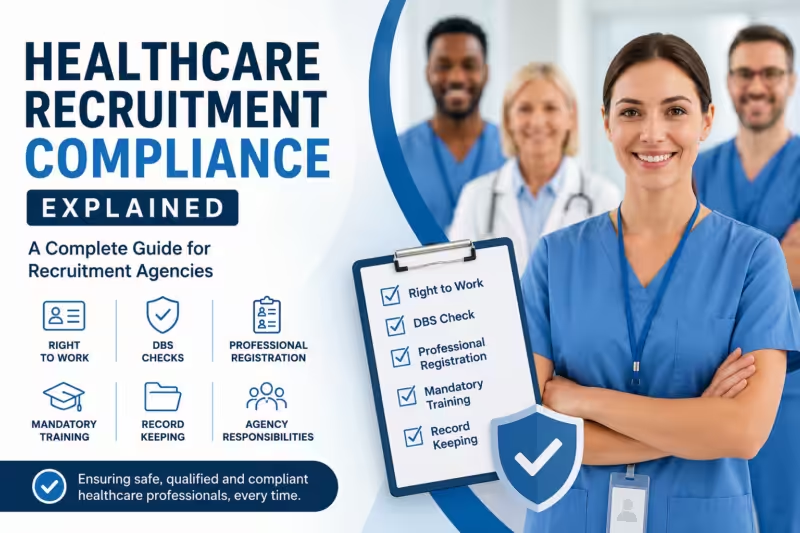
Healthcare Recruitment Compliance Explained
Essential Compliance Checks for Healthcare Recruiters
Recruiting healthcare professionals is about far more than filling vacancies. Every candidate placed into a health or social care setting must meet strict compliance requirements to protect patients, employers, and the recruitment agency itself.
Healthcare recruitment compliance is one of the most important responsibilities for agencies supplying temporary, permanent, or contract healthcare workers across the UK. Failing to complete the correct checks can lead to regulatory action, financial penalties, reputational damage, and risks to patient safety.
Whether you recruit healthcare assistants, nurses, support workers, allied health professionals, or domiciliary care staff, having a robust compliance process helps ensure every worker is safe, qualified, and ready to begin work.
In this guide, we’ll explain the essential elements of healthcare recruitment compliance, including Right to Work checks, DBS checks, professional registration, mandatory training, record keeping, agency responsibilities, and client expectations.
What Is Healthcare Recruitment Compliance?
Healthcare recruitment compliance refers to the legal, regulatory, and contractual requirements that recruitment agencies must meet before placing healthcare professionals with employers.
Compliance ensures workers are:
- Legally entitled to work in the UK
- Suitably qualified
- Safe to work with vulnerable people
- Competent for their role
- Properly trained
- Fully documented
A strong compliance process protects everyone involved:
- Patients and service users
- Care providers
- NHS organisations
- Recruitment agencies
- Healthcare professionals
Why Healthcare Recruitment Compliance Matters
Healthcare is one of the UK’s most heavily regulated sectors.
Patients often include older adults, children, individuals with disabilities, and people receiving complex medical care. Ensuring workers are appropriately screened and trained is essential for maintaining high standards of care.
Good compliance also helps agencies:
- Build trust with clients
- Win framework agreements
- Pass compliance audits
- Reduce placement delays
- Protect their reputation
- Avoid legal issues
Many NHS Trusts and care providers will only work with agencies that demonstrate excellent compliance procedures.
Right to Work Checks
One of the first compliance checks every recruitment agency must complete is verifying a worker’s Right to Work in the UK.
Employers and agencies have a legal duty to prevent illegal working.
Before placement, agencies should verify:
- Passport or immigration documents
- Visa conditions
- Expiry dates
- Any restrictions on working hours
- Identity of the applicant
The UK Government provides detailed guidance on conducting compliant Right to Work checks.
External resource:
Failure to complete proper checks can result in significant civil penalties and damage to an agency’s reputation.
DBS Checks
Most healthcare roles require a Disclosure and Barring Service (DBS) check.
DBS checks help identify whether someone has criminal convictions or is barred from working with vulnerable adults or children.
Depending on the role, agencies may require:
- Basic DBS
- Standard DBS
- Enhanced DBS
- Enhanced DBS with Barred List checks
The appropriate level depends on the responsibilities of the role.
For example:
Healthcare assistants working in residential care usually require Enhanced DBS clearance, while administrative roles may only require a Basic check.
Agencies should also have processes for:
- Monitoring DBS expiry or renewal
- Recording certificate numbers
- Using the DBS Update Service where appropriate
External resource:
Professional Registration
Many healthcare professionals must maintain registration with their professional regulator.
Recruitment agencies should verify registration before placement and monitor renewals.
Examples include:
Nurses and Midwives
Registration with the Nursing and Midwifery Council (NMC).
Doctors
Registration with the General Medical Council (GMC).
Allied Health Professionals
Registration with the Health and Care Professions Council (HCPC).
Agencies should check:
- Registration status
- Registration number
- Any fitness to practise conditions
- Renewal dates
Expired registration can prevent professionals from legally practising.
Mandatory Training
Healthcare workers must complete appropriate mandatory training before beginning work.
Training requirements vary depending on the employer and role, but commonly include:
- Infection Prevention and Control
- Safeguarding Adults
- Safeguarding Children
- Basic Life Support
- Fire Safety
- Health and Safety
- Moving and Handling
- Equality, Diversity and Inclusion
- Information Governance
- GDPR Awareness
Many clients also require refresher training at regular intervals.
Keeping mandatory training up to date helps agencies reduce placement delays and improve workforce readiness.
Caredemy helps agencies onboard workers quickly with online training.
Healthcare professionals can complete training online before their first shift, helping agencies place compliant workers faster.
You may also find these resources useful:
- Safeguarding Adults Training
- Infection Prevention and Control Training
- Basic Life Support Training
- Fire Safety Awareness Training
Record Keeping
Good compliance depends on accurate documentation.
Recruitment agencies should maintain comprehensive records for every healthcare worker.
Typical compliance records include:
- Proof of identity
- Right to Work documentation
- DBS certificates
- Professional registration
- Mandatory training certificates
- Employment history
- References
- Occupational health records (where required)
- Immunisation records (where applicable)
- Signed compliance declarations
Digital compliance systems can help agencies monitor expiry dates and automate reminders.
Having complete records also makes client audits much easier.
Agency Responsibilities
Healthcare recruitment agencies have legal and professional responsibilities beyond simply introducing candidates.
These responsibilities often include:
Candidate Verification
Confirming identity, qualifications, registration, and experience.
Compliance Monitoring
Tracking document expiry dates and ensuring workers remain compliant.
Safe Recruitment
Following safer recruitment principles throughout the hiring process.
Client Communication
Providing clients with accurate compliance information before placements begin.
Continuous Monitoring
Compliance doesn’t end after placement.
Agencies should regularly review:
- Training renewals
- DBS updates
- Professional registration
- Right to Work status
- Client feedback
A proactive approach helps reduce risk and maintain high standards.
Understanding Client Expectations
Healthcare providers increasingly expect recruitment agencies to deliver workers who are fully compliant from day one.
Clients often require evidence that workers have:
- Completed mandatory training
- Passed appropriate DBS checks
- Verified Right to Work
- Professional registration (where applicable)
- Suitable references
- Relevant experience
Many NHS organisations and larger care providers also conduct regular compliance audits.
Agencies that maintain organised, accurate records are more likely to pass these audits successfully and strengthen long-term client relationships.
Common Compliance Mistakes to Avoid
Even experienced agencies can encounter compliance issues.
Some of the most common mistakes include:
- Allowing professional registrations to expire
- Missing Right to Work renewals
- Using outdated training certificates
- Incomplete employment histories
- Poor document storage
- Failing to complete reference checks
- Not tracking DBS renewal dates
Implementing standardised compliance processes and digital record management can help reduce these risks.
Using Technology to Improve Compliance
Modern recruitment agencies increasingly rely on digital tools to streamline compliance.
Online compliance systems can help agencies:
- Store documents securely
- Monitor expiry dates
- Generate compliance reports
- Track mandatory training
- Speed up candidate onboarding
- Reduce administrative workload
Online learning platforms are particularly valuable for ensuring candidates complete required training before starting work.
How Caredemy Supports Healthcare Recruitment Agencies
Fast onboarding can make all the difference in healthcare recruitment.
By offering flexible online learning, Caredemy helps agencies onboard workers quickly with online training.
Agencies can ensure candidates complete mandatory training remotely, receive certificates immediately after successful completion, and arrive ready to meet client requirements.
This reduces delays, improves compliance, and supports a smoother recruitment process for both agencies and healthcare providers.
You can also explore related resources on your website, such as:
- Mandatory Training for Healthcare Staff
- Care Certificate Training
- Healthcare Compliance Training
- Infection Prevention and Control
- Safeguarding Courses
(Add internal links to the relevant Caredemy pages.)
Final Thoughts
Healthcare recruitment compliance is the foundation of safe, effective recruitment within the health and social care sector.
By carrying out thorough Right to Work checks, verifying DBS status, confirming professional registration, ensuring mandatory training is complete, maintaining accurate records, and meeting client expectations, recruitment agencies can build trust while protecting both service users and their business.
Strong compliance processes not only help agencies meet legal obligations but also improve operational efficiency, reduce placement delays, and strengthen relationships with healthcare providers.
If you’re looking to simplify compliance and accelerate worker onboarding, Caredemy helps agencies onboard workers quickly with online training.
Learn More
Learn more at caredemy.co.uk.