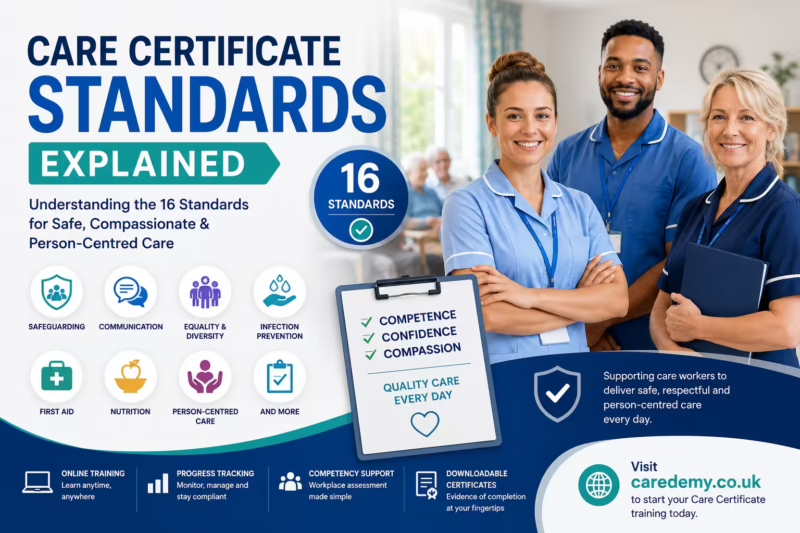
Care Certificate Standards Explained
Your Complete Care Certificate Guide
Starting a career in health and social care requires more than compassion. Care workers need the knowledge, skills, and behaviours to provide safe, effective, and person-centred care from day one. That’s where the Care Certificate comes in.
Whether you’re a Registered Manager, Care Home Manager, Senior Carer, or responsible for onboarding new staff, understanding the Care Certificate is essential for maintaining quality care and meeting regulatory expectations.
In this guide, we’ll explain the Care Certificate Standards, why they matter, how competency is assessed, and how online training can simplify compliance for your organisation.
What Is the Care Certificate?
The Care Certificate is an agreed set of standards that defines the knowledge, skills, and behaviours expected of healthcare support workers and adult social care workers during their induction.
Introduced by Skills for Care, NHS England, and Skills for Health, it provides a consistent foundation for workers entering health and social care.
It is designed primarily for:
- New healthcare assistants
- Adult social care workers
- Support workers
- Care assistants
- Agency staff beginning work in care settings
Although it is not a legal qualification, it is widely recognised as best practice across England and is recommended by the Care Quality Commission (CQC) as part of an effective induction programme.
Read more: https://caredemy.co.uk/care-certificate/
Why Completing All Care Certificate Standards Matters
Each standard covers a different aspect of providing safe, compassionate care.
Completing all standards helps ensure that new care workers can:
- Deliver person-centred support
- Protect vulnerable individuals
- Communicate effectively
- Follow safe working practices
- Recognise safeguarding concerns
- Work confidently within their role
For employers, completing every standard demonstrates a commitment to high-quality induction and workforce development.
Benefits include:
- Better quality of care
- Improved confidence among new staff
- Reduced risk of incidents
- Stronger CQC evidence
- Consistent onboarding across the organisation
The 16 Care Certificate Standards Explained
Below is an overview of each Care Certificate Standard and why it is important.
Standard 1 – Understand Your Role
New workers learn:
- Their responsibilities
- Duty of care
- Professional boundaries
- Working within agreed ways of working
Understanding the role reduces confusion and helps staff work safely from the outset.
Standard 2 – Your Personal Development
Continuous learning is essential in health and social care.
This standard encourages staff to:
- Reflect on performance
- Identify learning needs
- Accept feedback
- Create personal development plans
Managers should regularly review progress through supervision sessions.
Standard 3 – Duty of Care
Duty of care means always acting in the best interests of the people you support.
Topics include:
- Managing dilemmas
- Handling complaints
- Reporting concerns
- Professional accountability
Standard 4 – Equality and Diversity
Everyone deserves respectful, inclusive care.
Learners explore:
- Protected characteristics
- Inclusive practice
- Preventing discrimination
- Respecting individual differences
Providing equitable care improves wellbeing and patient outcomes.
Standard 5 – Work in a Person-Centred Way
Person-centred care places the individual at the centre of every decision.
Workers learn to:
- Respect choices
- Promote independence
- Support dignity
- Involve individuals in care planning
This standard underpins every aspect of quality care.
Standard 6 – Communication
Effective communication improves safety and relationships.
Topics include:
- Active listening
- Verbal communication
- Non-verbal communication
- Confidential information sharing
- Record keeping
Poor communication remains one of the leading causes of care errors.
Standard 7 – Privacy and Dignity
Everyone has the right to privacy and dignity.
Staff learn how to:
- Respect personal space
- Maintain confidentiality
- Preserve dignity during personal care
- Promote independence
Standard 8 – Fluids and Nutrition
Good nutrition is essential for health and recovery.
This standard covers:
- Healthy eating
- Hydration
- Monitoring intake
- Supporting individuals during meals
- Recognising signs of malnutrition
Standard 9 – Awareness of Mental Health, Dementia and Learning Disability
Care workers frequently support people with complex needs.
Learning includes:
- Mental health awareness
- Dementia care principles
- Learning disability awareness
- Reducing stigma
- Supporting independence
Standard 10 – Safeguarding Adults
Safeguarding protects adults from abuse, neglect and exploitation.
Staff learn to recognise:
- Physical abuse
- Emotional abuse
- Financial abuse
- Neglect
- Domestic abuse
- Modern slavery
Knowing when and how to report concerns is critical.
Standard 11 – Safeguarding Children
Even staff working primarily with adults may encounter children during their work.
Topics include:
- Recognising abuse
- Reporting concerns
- Professional responsibilities
- Multi-agency safeguarding
Standard 12 – Basic Life Support
Care workers should know how to respond during emergencies.
Training includes:
- CPR awareness
- Recovery position
- Choking
- Emergency response procedures
Practical competency assessment is usually completed within the workplace.
Standard 13 – Health and Safety
Safe working practices protect everyone.
Topics include:
- Risk assessments
- Fire safety
- Infection prevention
- Moving and handling
- COSHH awareness
- Accident reporting
Standard 14 – Handling Information
Accurate records improve continuity of care.
Learners understand:
- GDPR principles
- Confidentiality
- Secure record keeping
- Information sharing
- Data protection responsibilities
Standard 15 – Infection Prevention and Control
Infection prevention protects staff and those receiving care.
Learning includes:
- Hand hygiene
- PPE
- Cleaning procedures
- Standard precautions
- Managing outbreaks
This standard remains especially important in healthcare settings.
Standard 16 – Awareness of Learning Disability and Autism
The newest Care Certificate Standard helps staff better support autistic people and individuals with learning disabilities.
Topics include:
- Reasonable adjustments
- Communication approaches
- Promoting inclusion
- Reducing health inequalities
- Delivering person-centred support
The addition of this standard reflects the growing importance of providing equitable, accessible care for everyone.
How the Care Certificate Supports Safe, Compassionate, Person-Centred Care
The Care Certificate is much more than a checklist.
Together, the standards help staff develop:
- Compassion
- Professional confidence
- Safe working habits
- Respect for individual rights
- Effective communication
- Clinical awareness
- Accountability
By embedding these principles from the beginning of employment, organisations create a stronger culture of quality care.
Why Workplace Assessment and Competency Sign-Off Are Essential
Online learning alone is not enough.
To complete the Care Certificate successfully, learners must demonstrate competence within their workplace.
Managers or experienced assessors observe staff carrying out everyday tasks before signing them off as competent.
Typical workplace observations include:
- Supporting personal care
- Communicating with individuals
- Following infection prevention procedures
- Maintaining dignity
- Responding appropriately to safeguarding concerns
Competency assessment ensures learning translates into safe practice.
How Managers Can Monitor Progress and Maintain Compliance
Keeping track of induction progress can become challenging when managing multiple new starters.
Using an online learning platform enables managers to:
- Monitor learner progress
- Track course completion
- View assessment results
- Download certificates
- Produce compliance reports
- Identify overdue training
Having clear training records also helps organisations demonstrate compliance during inspections.
Benefits of Online Care Certificate Training
Online learning offers flexibility without compromising quality.
Benefits include:
- Learn anytime, anywhere
- Self-paced study
- Consistent training across multiple locations
- Reduced administrative workload
- Easy progress monitoring
- Downloadable certificates
- Cost-effective staff induction
For organisations recruiting regularly, online training helps standardise induction while reducing delays.
How Caredemy Supports Care Providers
At Caredemy, we understand the challenges of training and managing healthcare teams.
Our online Care Certificate training is designed to help organisations deliver consistent, compliant induction training while giving managers full visibility of learner progress.
Caredemy provides:
- Online Care Certificate training
- Progress tracking
- Competency support
- Downloadable certificates
- Manager dashboards
- Compliance reporting
- Flexible online learning
Whether you’re onboarding one new starter or an entire care team, our platform makes managing Care Certificate training straightforward.
Explore our Care Certificate Training:
https://caredemy.co.uk/care-certificate/
You may also find these resources helpful:
- Care Certificate Workbook: https://caredemy.co.uk/care-certificate-workbook/
- Mandatory Training for Care Staff: https://caredemy.co.uk/
- Healthcare Compliance Resources: https://caredemy.co.uk/blog/
Frequently Asked Questions
Is the Care Certificate mandatory?
The Care Certificate is not a legal requirement. However, it is widely regarded as best practice for new healthcare support workers and adult social care workers, and many employers expect eligible staff to complete it.
How long does it take to complete?
Completion time varies depending on the learner and workplace assessments. Most learners complete the knowledge-based training over several weeks as part of their induction, with competency sign-off taking place alongside their day-to-day work.
Does online training replace workplace assessment?
No. Online learning provides the knowledge component, but learners must also demonstrate competence in the workplace before completing the Care Certificate.
Can managers track learner progress?
Yes. Modern learning management systems allow managers to monitor progress, review completion status, access reports and download certificates to support compliance.
Final Thoughts
Understanding the Care Certificate Standards is essential for delivering safe, compassionate and person-centred care. Together, the 16 standards provide a structured foundation that equips new care workers with the knowledge and practical skills they need to perform their roles confidently.
For care providers, investing in a comprehensive induction programme supports workforce development, improves care quality and strengthens compliance with regulatory expectations.
Caredemy provides online Care Certificate training with progress tracking, competency support, and downloadable certificates to help care providers stay compliant.
Ready to get started? Visit https://caredemy.co.uk to start your Care Certificate training today.