Mandatory Training for Care Workers: What You Actually Need
Mandatory Training for Care Workers: Understanding Essential Requirements for UK Care Staff
If you’re working in health and social care, understanding mandatory training for care workers is essential. Whether you’re a care assistant, support worker, domiciliary carer, agency worker, or care home employee, mandatory training helps ensure you can provide safe, effective, and person-centred care.
The UK care sector is heavily regulated, and employers have a responsibility to make sure staff have the knowledge and skills needed to perform their roles safely. While there is no single national list of legally required courses for every care worker, there are core training areas that most care providers expect staff to complete.
In this guide, we’ll explain what mandatory training means, what the Care Quality Commission (CQC) expects, and the key courses that care workers are typically required to undertake.
Watch: Mandatory Training for Care Workers Explained

This video provides a quick overview of the essential training requirements for UK care workers and explains why ongoing refresher training is important for maintaining compliance and delivering high-quality care.
What Is Mandatory Training for Care Workers?
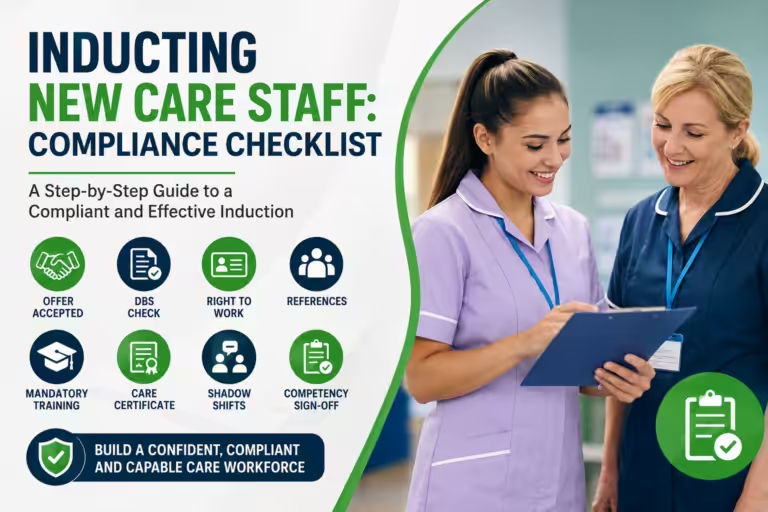
Mandatory training refers to the learning and development activities that employers require staff to complete in order to carry out their duties safely and competently.
The purpose of mandatory training is to:
- Protect people receiving care
- Reduce risks to staff and service users
- Ensure compliance with regulations and best practice
- Improve quality of care
- Support professional development
Mandatory training requirements can vary depending on:
- The care setting
- The role being performed
- Employer policies
- Service user needs
- Regulatory expectations
For example, a domiciliary care worker may require slightly different training from a support worker in a learning disability service, but many core subjects remain the same.
Is Mandatory Training a Legal Requirement?
There is no specific UK law listing every training course a care worker must complete.
However, employers have legal obligations under legislation such as:
- The Health and Safety at Work Act 1974
- The Care Act 2014
- The Mental Capacity Act 2005
- The Health and Social Care Act 2008
These laws require organisations to ensure staff are appropriately trained, competent, and capable of delivering safe care.
As a result, care providers establish mandatory training programmes to demonstrate compliance and protect the people they support.
What Does the CQC Expect?
The Care Quality Commission (CQC) regulates health and social care services in England.
While the CQC does not prescribe a fixed mandatory training list, inspectors expect providers to ensure staff receive suitable training, supervision, and support.
During inspections, the CQC may review:
- Staff training records
- Compliance rates
- Training policies
- Competency assessments
- Refresher training schedules
Providers should be able to demonstrate that staff have the skills and knowledge needed to perform their roles safely and effectively.
Training is often considered when assessing whether services are:
- Safe
- Effective
- Caring
- Responsive
- Well-led
Failure to maintain adequate training standards can contribute to compliance concerns during inspections.
Core Mandatory Training Courses for Care Workers
Most UK care providers require staff to complete a set of core mandatory training modules.
Below are the most common subjects included in mandatory care training programmes.
Safeguarding Adults and Children
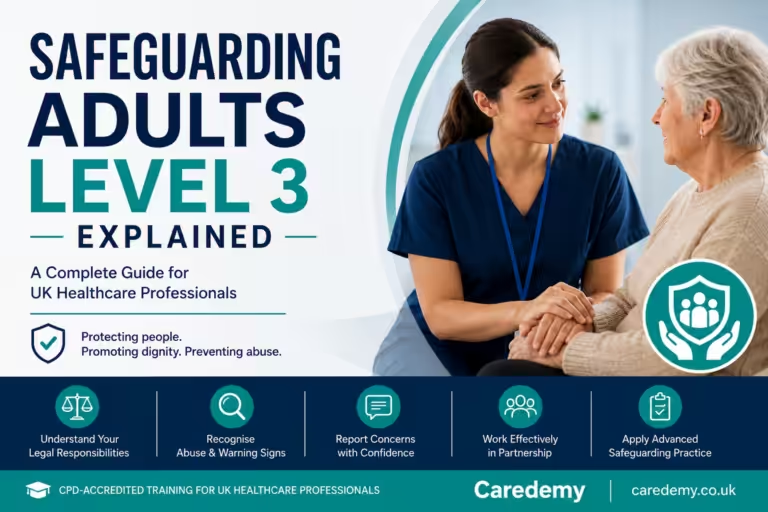
Safeguarding training helps care workers recognise, prevent, and respond appropriately to abuse, neglect, exploitation, and harm.
Topics typically include:
- Types of abuse
- Warning signs and indicators
- Reporting concerns
- Whistleblowing procedures
- Duty of care
- Record keeping
Safeguarding is one of the most important responsibilities for anyone working in care.
Infection Prevention and Control
Infection control training helps staff minimise the spread of infections within care environments.
Training usually covers:
- Hand hygiene
- Personal protective equipment (PPE)
- Cleaning and disinfection
- Cross-contamination prevention
- Outbreak management
- Standard infection control precautions
Following the COVID-19 pandemic, infection prevention remains a major focus across health and social care settings.
Moving and Handling
Moving and handling training teaches safe techniques for supporting people with mobility needs.
Key topics include:
- Risk assessments
- Safe lifting principles
- Use of equipment
- Hoists and slings
- Preventing injury
- Maintaining dignity during transfers
Improper moving and handling practices can result in serious injuries for both staff and service users.
Fire Safety Awareness
Every care worker should understand how to respond effectively in the event of a fire.
Fire safety training often covers:
- Fire prevention
- Fire hazards
- Emergency procedures
- Evacuation plans
- Fire extinguishers
- Reporting incidents
Because many individuals receiving care may have mobility or cognitive challenges, fire safety awareness is particularly important in care settings.
Medication Awareness and Administration
Many care workers assist with or administer medication as part of their role.
Medication training typically includes:
- Safe administration procedures
- Documentation requirements
- Medication storage
- Common medication errors
- Reporting concerns
- Consent and capacity considerations
Employers may also require competency assessments before staff administer medicines independently.
Mental Capacity Act (MCA) and Deprivation of Liberty Safeguards (DoLS)
The Mental Capacity Act 2005 provides a framework for making decisions on behalf of people who may lack capacity.
Training helps staff understand:
- The five principles of the Mental Capacity Act
- Assessing capacity
- Best-interest decisions
- Consent
- Restrictive practices
- Deprivation of Liberty Safeguards
This training is particularly important for staff supporting older adults, people with dementia, and individuals with learning disabilities.
Basic Life Support (BLS)
Basic Life Support training prepares staff to respond to medical emergencies.
Topics commonly include:
- Cardiopulmonary resuscitation (CPR)
- Recovery position
- Choking management
- Emergency response procedures
- Recognising cardiac arrest
Prompt and effective action can save lives while waiting for emergency services to arrive.
Additional Training Often Required
Depending on the role and care setting, employers may also require training in:
- Equality, diversity and inclusion
- Health and safety awareness
- Food safety and hygiene
- Dementia awareness
- Autism awareness
- Learning disability awareness
- Duty of care
- Information governance
- Data protection and GDPR
- Conflict resolution
- Positive behaviour support
- End of life care
These topics may form part of induction programmes or ongoing professional development plans.
How Often Should Mandatory Training Be Refreshed?
One of the most common questions care workers ask is how often training needs to be renewed.
There is no single national standard that applies to every course.
However, many UK care providers require annual refresher training to ensure knowledge remains current and staff continue to work safely and confidently.
Some employers may adopt different schedules based on:
- Risk assessments
- Regulatory guidance
- Insurance requirements
- Internal policies
- Changes to legislation
Maintaining up-to-date training records is essential for both individuals and employers.
The Benefits of Completing Mandatory Care Training
Effective mandatory training delivers benefits far beyond compliance.
Improved Safety
Training helps reduce accidents, incidents, and safeguarding concerns.
Better Quality Care
Well-trained staff are better equipped to provide person-centred support.
Increased Confidence
Care workers gain practical knowledge that supports decision-making and professional performance.
Regulatory Compliance
Training helps providers demonstrate compliance with CQC expectations and legal obligations.
Career Development
Many mandatory courses provide a strong foundation for further learning and progression within health and social care.
Online Mandatory Training for Care Workers
Digital learning has become increasingly popular across the care sector.
Online training allows care workers to:
- Learn at their own pace
- Access training from any location
- Reduce travel costs
- Complete refresher courses efficiently
- Track progress electronically
For employers, online learning can simplify compliance management and staff development.
Flexible Mandatory Training with Caredemy
At Caredeemy, learners can access flexible online mandatory care training designed specifically for UK care settings.
Courses are developed to support care assistants, support workers, domiciliary carers, agency staff, and care home employees in maintaining essential knowledge and compliance requirements.
Online learning provides a convenient way to complete mandatory training while balancing work and personal commitments.
Final Thoughts
Mandatory training forms the foundation of safe, effective, and compassionate care.
While specific requirements vary between organisations, most UK care providers expect staff to complete training in safeguarding, infection control, moving and handling, fire safety, medication awareness, MCA/DoLS, and basic life support.
By keeping training up to date and maintaining professional competence, care workers can provide higher-quality support while helping organisations meet regulatory expectations.
Whether you’re new to care or looking to refresh your knowledge, investing in mandatory training is one of the most important steps you can take in your professional development.
Explore all mandatory care training courses at caredemy.co.uk.