Moving and Handling Training Basics: A Complete Guide for UK Health and Social Care Staff
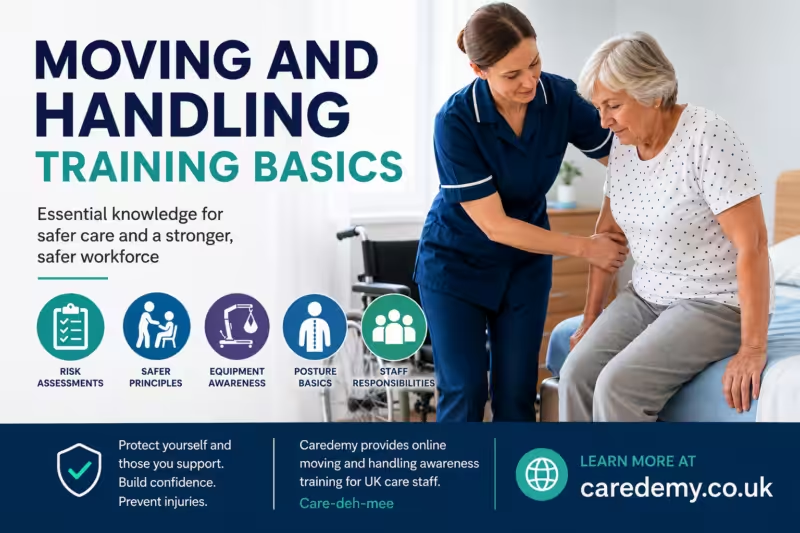
Safe Manual Handling for UK Care Staff
Moving and handling training is one of the most important aspects of workplace safety in health and social care. Every day, care workers, nurses, support workers and healthcare professionals help people move safely while protecting both the individual receiving care and themselves from injury.
Poor moving and handling practices can lead to serious musculoskeletal injuries, falls, reduced independence for service users and breaches of health and safety legislation. That’s why employers across the UK have a legal duty to provide appropriate training, suitable equipment and safe systems of work.
At Caredemy, we provide comprehensive online Moving and Handling Awareness Training designed to help healthcare professionals understand safe handling principles, reduce workplace risks and support high-quality, person-centred care.
What Is Moving and Handling?
Moving and handling refers to any activity involving lifting, lowering, pushing, pulling, carrying, supporting or repositioning people or objects.
Within health and social care this commonly includes:
- Assisting someone from bed to chair
- Helping a person stand or walk
- Repositioning someone in bed
- Using hoists and transfer equipment
- Moving wheelchairs
- Handling medical equipment
- Transporting supplies safely
The aim is always to reduce risk while maintaining the dignity, comfort and independence of the person being supported.
Why Is Moving and Handling Training Important?
Manual handling injuries remain one of the leading causes of work-related sickness absence across the UK.
Healthcare professionals frequently perform physically demanding tasks that can place considerable strain on the:
- Back
- Neck
- Shoulders
- Knees
- Wrists
Without proper training, even routine activities can result in long-term injuries.
Good moving and handling training helps staff:
- Prevent musculoskeletal disorders (MSDs)
- Reduce workplace accidents
- Protect vulnerable people
- Improve confidence
- Meet legal responsibilities
- Promote safer working environments
Ultimately, safe moving and handling benefits everyone involved.
UK Moving and Handling Legislation
Several pieces of UK legislation place responsibilities on employers and employees regarding moving and handling.
Health and Safety at Work etc. Act 1974
The Health and Safety at Work etc. Act requires employers to provide safe working environments, appropriate training and suitable equipment to protect staff and others.
External guidance:
https://www.hse.gov.uk/legislation/hswa.htm
Manual Handling Operations Regulations 1992 (as amended)
These regulations specifically require employers to:
- Avoid hazardous manual handling where possible
- Assess unavoidable risks
- Reduce risks as far as reasonably practicable
This legislation forms the basis of most moving and handling policies across healthcare settings.
External guidance:
https://www.hse.gov.uk/msd/manualhandling.htm
Management of Health and Safety at Work Regulations 1999
Employers must carry out suitable risk assessments and implement measures to control identified hazards.
External guidance:
https://www.hse.gov.uk/simple-health-safety/risk/index.htm
LOLER and PUWER
Where lifting equipment such as hoists is used, employers must also comply with:
- Lifting Operations and Lifting Equipment Regulations (LOLER)
- Provision and Use of Work Equipment Regulations (PUWER)
These ensure equipment is safe, maintained and inspected regularly.
Understanding Risk Assessments
Every moving and handling activity should begin with a risk assessment.
Rather than relying on assumptions, staff should consider the individual circumstances before assisting someone.
A suitable assessment considers:
The Person
Think about:
- Mobility
- Weight-bearing ability
- Communication needs
- Medical conditions
- Pain levels
- Cognitive impairment
- Behaviour that may affect safety
No two individuals have identical moving and handling needs.
The Task
Ask yourself:
- What movement is required?
- How often is it performed?
- Is assistance needed?
- Can it be avoided?
The Environment
Check:
- Floor surfaces
- Lighting
- Space available
- Trip hazards
- Access routes
- Furniture positioning
Even well-planned moves can become unsafe if the environment changes.
The Equipment
Ensure equipment is:
- Appropriate
- Clean
- Well maintained
- Correctly adjusted
- Suitable for the individual
Safer Moving and Handling Principles
Good practice is based on reducing unnecessary strain while maintaining safety.
Key principles include:
Encourage Independence
Always encourage individuals to do as much as they safely can for themselves.
Supporting independence:
- Maintains dignity
- Promotes rehabilitation
- Improves confidence
- Reduces physical strain on staff
Avoid Unnecessary Lifting
Modern care practice focuses on avoiding manual lifting whenever possible.
Instead, staff should use:
- Hoists
- Slide sheets
- Transfer boards
- Standing aids
- Wheelchairs
- Profiling beds
Plan Before Moving
Never rush.
Before beginning:
- Explain the process
- Prepare equipment
- Clear obstacles
- Agree communication
- Check brakes and safety features
Good preparation prevents accidents.
Work as a Team
When assistance from colleagues is required:
- Allocate roles
- Communicate clearly
- Count together
- Move smoothly
- Stop immediately if anything feels unsafe
Equipment Awareness
Moving and handling equipment is designed to reduce risk—not replace good judgement.
Common equipment includes:
Mobile Hoists
Used for individuals unable to stand independently.
Staff should always:
- Use the correct sling
- Follow manufacturer guidance
- Ensure brakes are used appropriately
- Complete pre-use safety checks
Standing Aids
Suitable for people who can partially weight bear.
These encourage greater independence while reducing strain on carers.
Slide Sheets
Help reposition people in bed with minimal friction.
Correct use significantly reduces pulling forces on both staff and service users.
Transfer Boards
Often used during seated transfers.
They allow smoother movement while reducing lifting.
Wheelchairs
Staff should understand:
- Brake operation
- Footrest positioning
- Safe transfers
- Safe transportation
Posture Basics
Good posture plays a major role in preventing injury.
Safe posture generally includes:
- Stable base of support
- Feet shoulder-width apart
- Natural spinal alignment
- Bending knees rather than the back
- Keeping loads close to the body
- Avoiding twisting while lifting
Small improvements in posture can significantly reduce injury risk over time.
Staff Responsibilities
Safe moving and handling is everyone’s responsibility.
Healthcare workers should:
- Follow workplace policies
- Attend training
- Report faulty equipment
- Report incidents and near misses
- Use equipment correctly
- Follow care plans
- Ask for help when needed
Staff should never attempt unsafe manoeuvres simply because they are under time pressure.
Common Moving and Handling Mistakes
Avoiding common mistakes helps reduce injuries.
These include:
- Skipping risk assessments
- Attempting unsafe lifts
- Using incorrect equipment
- Poor communication
- Working alone when assistance is required
- Ignoring pain or discomfort
- Failing to report damaged equipment
Good practice is built on consistency.
Person-Centred Moving and Handling
Moving and handling is not simply about physical movement.
Every interaction should respect the individual’s:
- Privacy
- Choice
- Comfort
- Independence
- Communication preferences
- Cultural needs
Safe care should always be person-centred.
The Importance of Regular Refresher Training
Knowledge and best practice evolve over time.
Refresher training helps staff:
- Maintain competence
- Learn updated guidance
- Refresh practical knowledge
- Improve confidence
- Reduce workplace injuries
Many healthcare providers include moving and handling as part of their mandatory annual training programme, alongside workplace risk assessments and competency reviews where appropriate.
Online Moving and Handling Awareness Training with Caredemy
Caredemy’s Moving and Handling Awareness Training has been developed for UK health and social care professionals.
The course helps learners understand:
- Moving and handling legislation
- Risk assessment principles
- Safe handling techniques
- Equipment awareness
- Staff responsibilities
- Injury prevention
- Best practice in healthcare settings
Learners can study online at their own pace from any device, making it ideal for care homes, domiciliary care providers, NHS staff, supported living services and other healthcare organisations.
Explore our Moving and Handling Awareness Training and wider Mandatory Training library at:
Internal links
- https://caredemy.co.uk/
- https://caredemy.co.uk/course-category/manual-handling/
- https://caredemy.co.uk/course-category/mandatory-training/
Frequently Asked Questions
Is moving and handling training a legal requirement?
Employers have legal duties under UK health and safety legislation to provide suitable information, instruction and training where manual handling risks exist.
How often should moving and handling training be refreshed?
Many employers provide refresher training annually, although frequency should be based on workplace risk assessments, local policies and staff responsibilities.
Does moving and handling always involve lifting?
No. It includes pushing, pulling, supporting, repositioning, carrying and moving people or objects safely.
Who should complete moving and handling training?
It is suitable for care workers, nurses, healthcare assistants, support workers, domiciliary carers, therapists and anyone whose role involves assisting people or manual handling tasks.
Can poor moving and handling cause long-term injury?
Yes. Incorrect techniques can lead to musculoskeletal disorders, back injuries, shoulder injuries and other long-term health problems.
Learn Safe Moving and Handling with Caredemy
Safe moving and handling is essential for protecting both care staff and the people they support. Understanding risk assessments, using appropriate equipment, maintaining good posture and following safe working practices can significantly reduce injuries while improving the quality of care.
Whether you’re new to healthcare or refreshing your knowledge, effective training helps you work confidently, safely and in line with UK best practice.
Explore Caredemy’s online Moving and Handling Awareness Training today and build the knowledge you need to support safer care across every healthcare setting.