
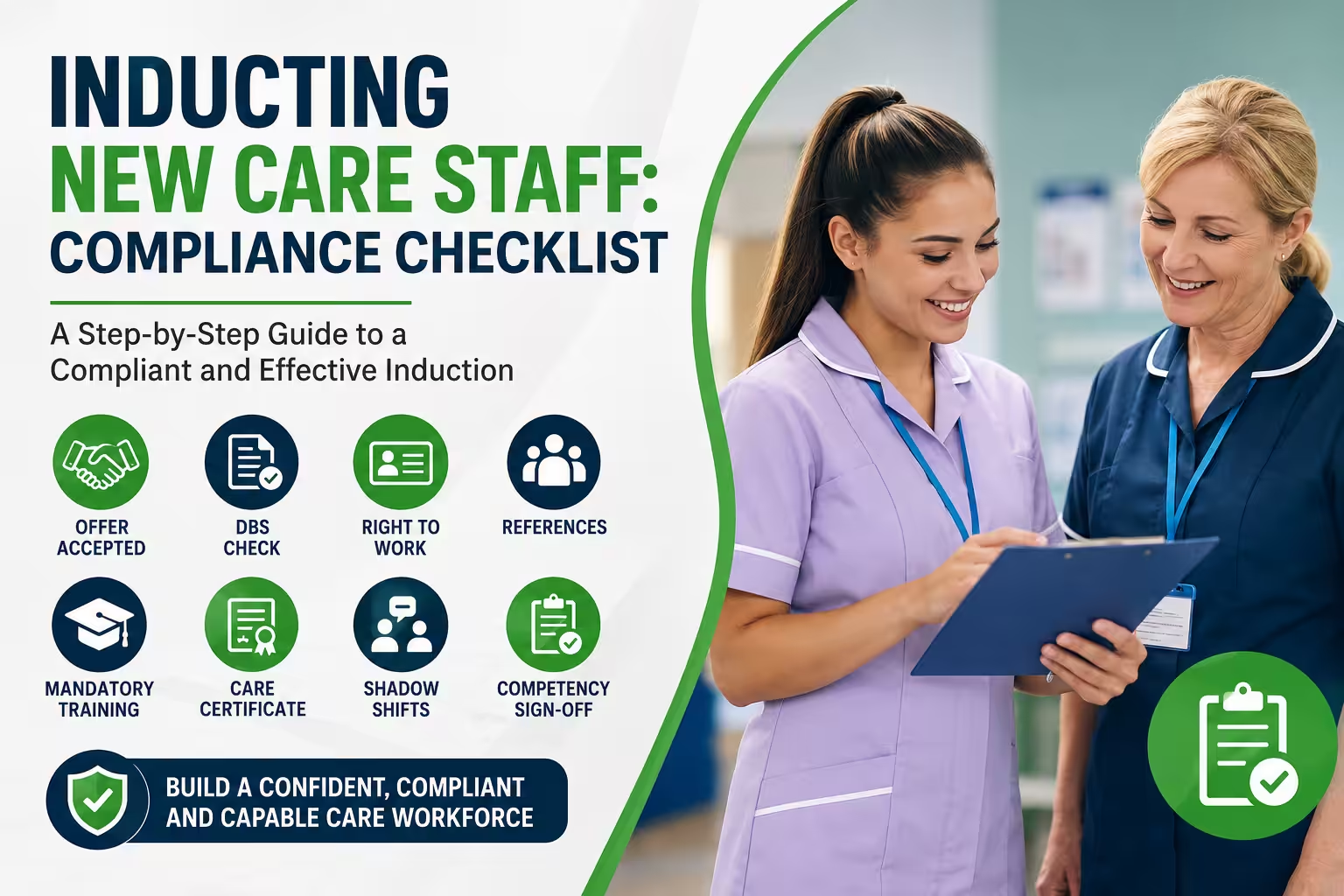
Inducting New Care Staff: Compliance Checklist
Essential Steps for Onboarding New Care Staff
Recruiting the right people is only the first step in building a safe, compliant, and effective care workforce. Once a candidate accepts your job offer, a structured induction process ensures they are legally eligible to work, understand their responsibilities, and are prepared to provide high-quality care.
A well-planned care staff induction checklist not only helps you meet regulatory requirements but also improves staff confidence, retention, and the quality of care delivered to the people you support.
Whether you operate a residential care home, domiciliary care service, supported living service, or healthcare organisation, this guide outlines the essential stages of a compliant induction process.
Why a Care Staff Induction Checklist Matters
Induction is much more than introducing a new employee to the workplace. It is a critical process that helps ensure:
- Compliance with UK employment and care regulations
- Safer care for service users
- Reduced organisational risk
- Better staff engagement and retention
- Increased confidence for new starters
- Evidence of compliance during inspections
The Care Quality Commission (CQC) expects care providers to recruit suitable staff and ensure they receive appropriate induction, supervision, and ongoing training before working independently.
Step 1: Offer Accepted
Everything begins once the successful candidate accepts your job offer.
Before they start work, provide:
- Written offer of employment
- Contract of employment
- Job description
- Employee handbook
- Start date
- Information about the induction programme
- Uniform requirements (if applicable)
This is also the ideal time to explain what documentation they must provide before beginning work.
Checklist
✔ Employment offer accepted
✔ Contract issued
✔ Start date confirmed
✔ Pre-employment paperwork completed
Step 2: Complete a DBS Check
For most care roles, a Disclosure and Barring Service (DBS) check is essential.
The level of DBS required depends on the role, but many care workers require an Enhanced DBS with Barred List checks.
The DBS helps employers make safer recruitment decisions by identifying relevant criminal history where appropriate.
You should ensure:
- Correct DBS level is requested
- Identity documents are verified
- Results are reviewed
- Risk assessments are completed where necessary
- Records are securely retained
Never assume a previous DBS is suitable without checking whether it is transferable and appropriate for the role.
Step 3: Verify Right to Work
Every UK employer has a legal responsibility to confirm that employees have the legal right to work in the UK.
This protects both the organisation and the employee.
Typical documents include:
- British or Irish passport
- UK birth certificate (with supporting documentation)
- Visa documentation
- Biometric Residence Permit (where applicable)
Checks must be completed before employment begins and recorded correctly.
Failure to carry out Right to Work checks can lead to significant penalties for employers.
Step 4: Obtain Employment References
References remain an important part of safer recruitment.
Many providers request:
- Two employment references
- Most recent employer reference
- Character reference where appropriate
References should help verify:
- Employment history
- Suitability for care work
- Reliability
- Professional conduct
- Any safeguarding concerns
It is good practice to follow up unclear references before confirming employment.
Step 5: Complete Mandatory Training
Training is one of the most important stages of induction.
New care staff should complete all mandatory training before carrying out duties independently.
Training often includes:
- Safeguarding Adults
- Safeguarding Children (where appropriate)
- Moving and Handling
- Fire Safety
- Infection Prevention and Control
- Health and Safety
- Food Safety (where applicable)
- Equality, Diversity and Human Rights
- GDPR and Data Protection
- Basic Life Support
- Medication Awareness (role dependent)
High-quality online learning allows new employees to complete much of this training before or shortly after their first day.
Regular refresher training should also be scheduled throughout employment.
Step 6: Begin the Care Certificate
For many healthcare support workers and adult social care workers, the Care Certificate provides the recognised foundation for safe practice.
The Care Certificate covers the knowledge, skills, and behaviours expected of workers entering health and social care.
Standards include:
- Duty of Care
- Person-Centred Care
- Privacy and Dignity
- Communication
- Safeguarding
- Infection Prevention
- Health and Safety
- Basic Life Support
- Awareness of Mental Health
- Fluids and Nutrition
The Care Certificate combines learning with workplace observation to ensure staff can demonstrate competence in practice.
Completing the Care Certificate helps build confidence while promoting consistent standards across the organisation.
Step 7: Arrange Shadow Shifts
Learning doesn’t stop after online training.
New staff benefit enormously from shadowing experienced colleagues.
Shadow shifts allow new employees to:
- Observe safe working practices
- Understand daily routines
- Learn organisational procedures
- Build confidence
- Become familiar with service users
- Ask questions in a supportive environment
The number of shadow shifts should reflect:
- Previous experience
- Complexity of the role
- Individual confidence
- Employer policies
Some staff may require additional supervised shifts before working independently.
Step 8: Competency Sign-Off
Before staff begin unsupervised work, employers should confirm that they are competent.
Competency assessments typically include:
- Practical observations
- Medication administration (where applicable)
- Moving and handling techniques
- Infection control practices
- Documentation standards
- Communication skills
- Safeguarding awareness
Managers should maintain clear records showing:
- Assessment dates
- Assessor
- Outcome
- Any further development required
Competency sign-off demonstrates that staff have met the required standard before taking full responsibility for care delivery.
Ongoing Support After Induction
Induction should lead naturally into continuous professional development.
New staff should receive:
- Regular supervision
- Probation reviews
- Annual appraisals
- Refresher training
- Continuing professional development (CPD)
- Opportunities to develop specialist skills
Supporting staff throughout their employment helps improve retention while maintaining high standards of care.
Common Induction Mistakes to Avoid
Even experienced providers can overlook important steps.
Common mistakes include:
- Starting work before Right to Work checks are complete
- Missing or incomplete references
- Delaying mandatory training
- Inadequate shadowing
- Poor documentation
- No competency assessment
- Inconsistent induction between different managers
Using a structured checklist helps ensure every new employee receives the same high standard of induction.
A Simple Care Staff Induction Checklist
Use this quick checklist when onboarding new care workers:
- ☐ Job offer accepted
- ☐ Contract issued
- ☐ Identity verified
- ☐ Right to Work confirmed
- ☐ DBS completed
- ☐ References received
- ☐ Mandatory training completed
- ☐ Care Certificate started
- ☐ Shadow shifts completed
- ☐ Competency assessed
- ☐ Competency signed off
- ☐ Regular supervision scheduled
Keeping this checklist for every employee provides useful evidence during inspections and demonstrates a consistent recruitment process.
How Caredemy Can Help
A compliant induction programme doesn’t need to be complicated.
Caredemy supports compliant staff induction.
Our online training platform enables care providers to deliver essential mandatory training, Care Certificate learning, compliance tracking, and digital certification through one easy-to-use learning management system.
Whether you’re onboarding one new starter or hundreds of employees across multiple locations, Caredemy helps streamline the induction process while supporting regulatory compliance.
Final Thoughts
An effective care staff induction checklist protects your organisation, supports your employees, and ultimately improves outcomes for the people receiving care.
By following a structured process—from job offer and DBS checks through to mandatory training, the Care Certificate, shadow shifts, and competency sign-off—you can build a confident, capable workforce that is ready to deliver safe, person-centred care from day one.
Visit caredemy.co.uk to discover how our online training solutions can support your staff induction, compliance, and ongoing professional development.