
How to Reduce Failed CQC Training Audits
Keep Your Training Records Audit-Ready: Master compliance and prevent failed CQC training inspections across your care organisation.
Preparing for a CQC training audit can be one of the most challenging aspects of running a health or social care organisation. Whether you’re managing a care home, domiciliary care service, GP practice, dental surgery, supported living service or other regulated healthcare provider, your staff training records play a vital role in demonstrating safe, effective and well-led care.
Unfortunately, many providers only discover gaps in their compliance when an inspection is already underway. Missing certificates, expired training, inconsistent records and poor evidence are among the most common reasons organisations struggle during inspections.
The good news is that these issues are entirely preventable with the right systems and regular monitoring. In this guide, we’ll explain the most common causes of failed training audits and show you how to keep your organisation inspection-ready all year round.
Why Training Records Matter During a CQC Inspection
The Care Quality Commission (CQC) expects providers to ensure staff are competent, appropriately trained and able to carry out their roles safely. Inspectors may ask to see evidence that staff have completed mandatory training, refreshed knowledge where required and remain competent in their duties.
Training records help demonstrate compliance with:
- Safe recruitment and induction
- Ongoing competency and supervision
- Mandatory and role-specific training requirements
- Continuing professional development (CPD)
- Governance and quality assurance
Well-maintained records also support staff confidence and improve the quality of care delivered to service users.
Ensure Audit Readiness Across Your Care Organisation
Manage, track, and report mandatory training compliance effortlessly with Caredemy’s dedicated Team Training and digital dashboard solutions.
Explore Team Training Browse All Care CoursesCommon Reasons Organisations Fail a CQC Training Audit
1. Missing Certificates
One of the fastest ways to create concerns during an inspection is being unable to produce training certificates. Common causes include certificates stored across multiple systems, misplaced paper records, staff completing training with different outside providers, managers unable to access historical files, and employees leaving without records being archived.
If inspectors request evidence and it cannot be produced quickly, they may question whether training was completed at all. How to avoid this: Maintain a centralised digital training system where certificates are stored securely and can be accessed instantly by authorised managers.
2. Expired Mandatory Training
Completing mandatory training once is not enough. Many courses require periodic refresher training to ensure knowledge remains current and staff continue to work safely. Common examples include:
| Mandatory Training Course | Core Focus Area | Caredemy Solution |
|---|---|---|
| Fire Safety | Evacuation & safety protocols | Fire Safety Course |
| Moving & Handling | Safe manual handling techniques | Moving & Handling |
| Infection Control | Hygiene & outbreak management | Infection Control |
| Basic Life Support | Emergency response & CPR | Basic Life Support |
| Safeguarding Adults | Protecting vulnerable individuals | Safeguarding Adults Level 2 |
Expired training records suggest that organisations are not actively monitoring staff competence. Best practice: Create automatic reminders before certificates expire and schedule refresher training well in advance.
3. Inconsistent Training Records
Another frequent issue is inconsistency between different systems—such as HR records showing completed training while managers have different information, missing induction documentation, incorrect completion dates, different versions of the same course, and duplicate staff records. These inconsistencies make it difficult to demonstrate compliance confidently.
Best practice: Use one reliable source of truth for all staff learning records and ensure updates are made consistently.
4. Poor Evidence of Competency
Training certificates alone may not always be enough. Inspectors often want reassurance that learning has been applied in practice. Good evidence may include competency assessments, practical observations, supervision notes, appraisals, clinical sign-offs, and skills assessments. This demonstrates that staff not only attended training but also understand how to apply it safely.
5. Staff Cannot Demonstrate Knowledge
Inspectors regularly speak directly with employees, asking questions such as: What would you do if you suspected abuse? How do you report incidents? What are your infection control responsibilities? How do you protect confidential information?
If staff cannot answer basic questions relating to their role, inspectors may conclude that training has not been effective. How to improve knowledge retention: Learning should not end once a course has been completed. Consider team discussions, toolbox talks, scenario-based learning, supervisions, refresher quizzes, and annual competency reviews to reinforce learning throughout the year.
Why Internal Audits Are Essential
Many providers only review their training records when they know an inspection is approaching. This creates unnecessary pressure and increases the risk of discovering problems too late. Instead, organisations should conduct regular internal training audits.
A simple monthly or quarterly review can identify expiring certificates, missing mandatory courses, new starters awaiting induction, role-specific training gaps, incomplete records, and compliance trends. By identifying issues early, managers have time to resolve them before they become inspection findings.
Create a Training Compliance Checklist
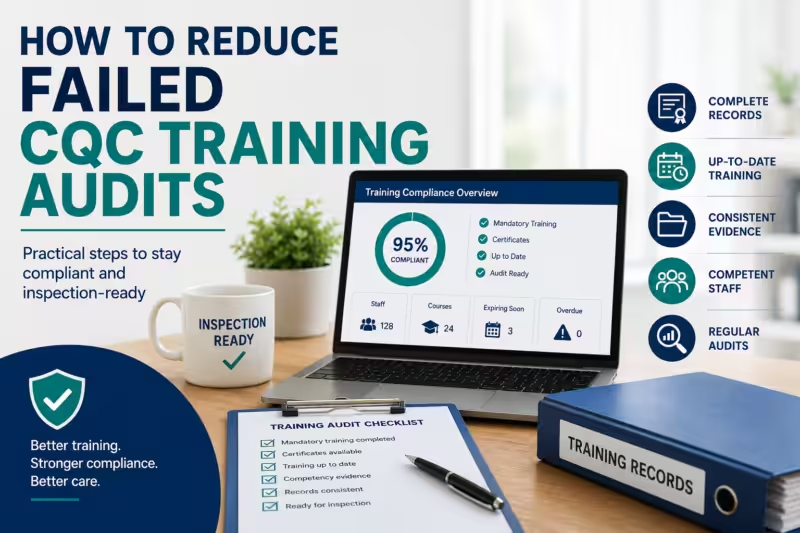
An effective internal audit should include checks for:
- All staff have completed mandatory training
- Certificates are stored securely and digitally
- Expiry dates are monitored actively
- Refresher training is scheduled in advance
- Competency assessments are completed and recorded
- Induction records are available for review
- Training aligns directly with staff roles
- Managers can access records quickly during an audit
- Staff understand key policies and procedures
Using a consistent checklist helps ensure nothing is overlooked.
Benefits of Digital Training Management
Many organisations now use online learning management systems to simplify compliance. Key benefits include:
- Instant access to verified certificates
- Automated renewal reminders
- Centralised reporting and compliance tracking
- Comprehensive manager dashboards
- Reduced paperwork and administrative workload
- Easier evidence presentation during CQC inspections
- Better visibility of compliance across multiple teams or sites
Digital systems save time while reducing the administrative burden on managers.
How Caredemy Supports CQC Compliance
At Caredemy, we understand how stressful inspections can be. Our online training platform is designed to help health and social care providers manage mandatory training efficiently with CPD-accredited online courses, instant digital certificates, manager dashboards, automated reporting, progress tracking, compliance monitoring, and easy access to training records.
Caredemy helps organisations stay inspection-ready. Whether you’re managing a small care provider or a large healthcare organisation, having organised, accessible and up-to-date training records makes preparing for inspections significantly easier. Explore our full course library and healthcare compliance blog for more guidance.
Final Thoughts
A successful CQC training audit is rarely the result of last-minute preparation. It comes from maintaining accurate records, ensuring staff complete refresher training on time, keeping evidence organised and regularly reviewing compliance.
By carrying out routine internal audits and using effective training management systems, organisations can reduce stress, improve workforce competence and demonstrate their commitment to delivering safe, high-quality care. If you’re looking for a simpler way to manage mandatory training and maintain compliance, Caredemy helps organisations stay inspection-ready. Visit caredemy.co.uk to explore our online healthcare training courses and compliance solutions.
Ready to Stay Inspection-Ready All Year Round?
Discover how Caredemy’s online learning platform and compliance solutions can streamline your training management and prepare your team for CQC success.
Explore Team Training Browse All Courses