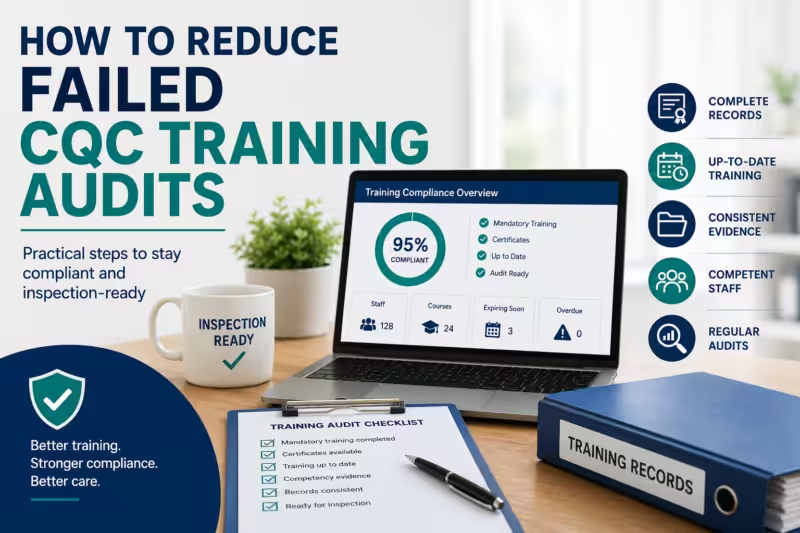
How to Reduce Failed CQC Training Audits
Keep Your Training Records Audit-Ready
Preparing for a CQC training audit can be one of the most challenging aspects of running a health or social care organisation. Whether you’re managing a care home, domiciliary care service, GP practice, dental surgery, supported living service or other regulated healthcare provider, your staff training records play a vital role in demonstrating safe, effective and well-led care.
Unfortunately, many providers only discover gaps in their compliance when an inspection is already underway. Missing certificates, expired training, inconsistent records and poor evidence are among the most common reasons organisations struggle during inspections.
The good news is that these issues are entirely preventable with the right systems and regular monitoring.
In this guide, we’ll explain the most common causes of failed training audits and show you how to keep your organisation inspection-ready all year round.
Why Training Records Matter During a CQC Inspection
The Care Quality Commission (CQC) expects providers to ensure staff are competent, appropriately trained and able to carry out their roles safely.
Inspectors may ask to see evidence that staff have completed mandatory training, refreshed knowledge where required and remain competent in their duties.
Training records help demonstrate compliance with:
- Safe recruitment and induction
- Ongoing competency
- Mandatory and role-specific training
- Continuing professional development (CPD)
- Governance and quality assurance
Well-maintained records also support staff confidence and improve the quality of care delivered to service users.
Common Reasons Organisations Fail a CQC Training Audit
1. Missing Certificates
One of the fastest ways to create concerns during an inspection is being unable to produce training certificates.
Common causes include:
- Certificates stored across multiple systems
- Paper records that have been misplaced
- Staff completing training with different providers
- Managers unable to access historical records
- Employees leaving without records being archived
If inspectors request evidence and it cannot be produced quickly, they may question whether training was completed at all.
How to avoid this
Maintain a centralised digital training system where certificates are stored securely and can be accessed instantly by authorised managers.
2. Expired Mandatory Training
Completing mandatory training once is not enough.
Many courses require periodic refresher training to ensure knowledge remains current and staff continue to work safely.
Common examples include:
- Fire Safety
- Moving and Handling
- Infection Prevention and Control
- Basic Life Support
- Safeguarding Adults
- Safeguarding Children
- Health and Safety
Expired training records suggest that organisations are not actively monitoring staff competence.
Best practice
Create automatic reminders before certificates expire and schedule refresher training well in advance.
3. Inconsistent Training Records
Another frequent issue is inconsistency between different systems.
Examples include:
- HR records showing completed training while managers have different information
- Missing induction documentation
- Incorrect completion dates
- Different versions of the same course
- Duplicate staff records
These inconsistencies make it difficult to demonstrate compliance confidently.
Best practice
Use one reliable source of truth for all staff learning records and ensure updates are made consistently.
4. Poor Evidence of Competency
Training certificates alone may not always be enough.
Inspectors often want reassurance that learning has been applied in practice.
Good evidence may include:
- Competency assessments
- Practical observations
- Supervision notes
- Appraisals
- Clinical sign-offs
- Skills assessments
This demonstrates that staff not only attended training but also understand how to apply it safely.
5. Staff Cannot Demonstrate Knowledge
Inspectors regularly speak directly with employees.
They may ask questions such as:
- What would you do if you suspected abuse?
- How do you report incidents?
- What are your infection control responsibilities?
- How do you protect confidential information?
If staff cannot answer basic questions relating to their role, inspectors may conclude that training has not been effective.
How to improve knowledge retention
Learning should not end once a course has been completed.
Consider:
- Team discussions
- Toolbox talks
- Scenario-based learning
- Supervisions
- Refresher quizzes
- Annual competency reviews
These activities reinforce learning throughout the year.
Why Internal Audits Are Essential
Many providers only review their training records when they know an inspection is approaching.
This creates unnecessary pressure and increases the risk of discovering problems too late.
Instead, organisations should conduct regular internal training audits.
A simple monthly or quarterly review can identify:
- Expiring certificates
- Missing mandatory courses
- New starters awaiting induction
- Role-specific training gaps
- Incomplete records
- Compliance trends
By identifying issues early, managers have time to resolve them before they become inspection findings.
Create a Training Compliance Checklist
An effective internal audit should include checks for:
- All staff have completed mandatory training
- Certificates are stored securely
- Expiry dates are monitored
- Refresher training is scheduled
- Competency assessments are completed
- Induction records are available
- Training aligns with staff roles
- Managers can access records quickly
- Staff understand key policies and procedures
Using a consistent checklist helps ensure nothing is overlooked.
Benefits of Digital Training Management
Many organisations now use online learning management systems to simplify compliance.
Benefits include:
- Instant access to certificates
- Automated renewal reminders
- Centralised reporting
- Manager dashboards
- Reduced paperwork
- Easier evidence during inspections
- Better visibility of compliance across teams
Digital systems save time while reducing the administrative burden on managers.
How Caredemy Supports CQC Compliance
At Caredemy, we understand how stressful inspections can be.
Our online training platform is designed to help health and social care providers manage mandatory training efficiently with:
- CPD-accredited online courses
- Instant digital certificates
- Manager dashboards
- Automated reporting
- Progress tracking
- Compliance monitoring
- Easy access to training records
Caredemy helps organisations stay inspection-ready.
Whether you’re managing a small care provider or a large healthcare organisation, having organised, accessible and up-to-date training records makes preparing for inspections significantly easier.
Final Thoughts
A successful CQC training audit is rarely the result of last-minute preparation. It comes from maintaining accurate records, ensuring staff complete refresher training on time, keeping evidence organised and regularly reviewing compliance.
By carrying out routine internal audits and using effective training management systems, organisations can reduce stress, improve workforce competence and demonstrate their commitment to delivering safe, high-quality care.
If you’re looking for a simpler way to manage mandatory training and maintain compliance, Caredemy helps organisations stay inspection-ready.
Visit caredemy.co.uk to explore our online healthcare training courses and compliance solutions.