Building a Mandatory Training Matrix That Actually Works
How to Build a Mandatory Training Matrix
Managing mandatory training across a healthcare organisation can quickly become complicated. With multiple staff roles, different training requirements, renewal dates, and regulatory expectations, relying on spreadsheets or memory often leads to missed deadlines and unnecessary compliance risks.
A well-designed mandatory training matrix provides a clear overview of your workforce’s training status, helping managers ensure every employee has completed the right training at the right time.
Whether you manage a care home, GP practice, supported living service, dental practice, pharmacy, or healthcare agency, a robust training matrix is one of the most valuable compliance tools you can implement.
At Caredemy, we help healthcare providers simplify mandatory training management with online courses, automated reporting, and compliance tracking designed specifically for UK health and social care organisations.
What Is a Mandatory Training Matrix?
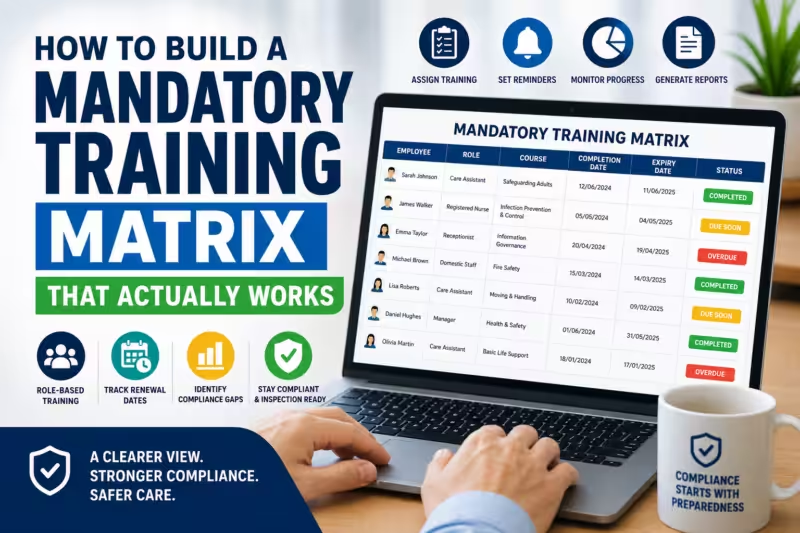
A mandatory training matrix is a document or digital dashboard that records:
- Every employee
- Their job role
- Required mandatory training courses
- Completion dates
- Certificate expiry dates
- Renewal status
Rather than checking individual certificates, managers can instantly see compliance across the entire workforce.
Think of it as your organisation’s training dashboard.
Why Is a Training Matrix Important?
Healthcare providers have legal and regulatory responsibilities to ensure staff remain competent and appropriately trained.
A training matrix helps organisations:
- Demonstrate compliance during inspections
- Monitor mandatory learning across departments
- Reduce expired training certificates
- Plan future training
- Identify skills gaps before they become risks
- Improve patient safety
- Support workforce planning
For organisations regulated by the Care Quality Commission (CQC), evidence of effective staff training is a key part of demonstrating safe, effective care.
Different Roles Require Different Training
One of the biggest mistakes organisations make is assigning the same mandatory training to every employee.
Different job roles carry different responsibilities and therefore require different learning.
For example:
| Role | Typical Mandatory Training |
|---|---|
| Care Assistant | Safeguarding Adults, Moving & Handling, Infection Prevention & Control, Basic Life Support, Medication Awareness |
| Registered Nurse | Clinical training, Medicines Management, Safeguarding, Infection Prevention, Basic Life Support |
| Reception Staff | Information Governance, Fire Safety, Equality & Diversity, Safeguarding Awareness |
| Domestic Staff | Fire Safety, Infection Prevention & Control, Health & Safety |
| Managers | Leadership, Safeguarding, Health & Safety, Data Protection, Risk Assessment |
Assigning unnecessary training wastes time and budget, while missing essential courses increases organisational risk.
Include Renewal Dates
Mandatory training isn’t completed once and forgotten.
Many healthcare courses require renewal every one to three years, depending on:
- Employer policy
- Professional guidance
- Risk assessments
- Regulatory expectations
Your training matrix should clearly display:
- Completion date
- Expiry date
- Next renewal due
- Staff member responsible
Without renewal tracking, certificates often expire unnoticed until an inspection or incident highlights the issue.
Use Colour Coding for Instant Visibility
The most effective mandatory training matrices use simple colour coding.
For example:
🟢 Green – Training completed and valid
🟡 Amber – Renewal approaching
🔴 Red – Training expired or overdue
⚪ Grey – Training not required
Colour coding allows managers to identify priorities in seconds rather than reviewing every certificate individually.
Digital learning management systems (LMS) can automate this process, reducing manual administration and improving visibility.
Identify Compliance Gaps Before They Become Problems
A training matrix should do more than record completed courses.
It should actively help you identify compliance risks, including:
- Expired certificates
- New starters missing induction training
- Staff who have changed roles
- Employees requiring refresher training
- Teams falling below compliance targets
- Organisation-wide training trends
Early identification allows managers to schedule training before gaps affect service delivery.
Common Mistakes When Building a Mandatory Training Matrix
Many organisations begin with a spreadsheet but encounter problems as they grow.
Common mistakes include:
Treating Every Employee the Same
Different roles require different competencies.
Creating a single checklist for everyone often results in unnecessary training or missed essential courses.
Forgetting Renewal Dates
Tracking completion dates alone isn’t enough.
Expired certificates can leave organisations non-compliant without anyone realising.
Using Multiple Versions
Saving different spreadsheets across departments creates confusion.
A single source of truth is essential.
Not Updating Role Changes
When staff move into new positions, their mandatory training requirements often change.
The matrix should be updated immediately.
Manual Tracking
Large organisations can spend many hours each month updating spreadsheets.
Automated reporting significantly reduces administration while improving accuracy.
Digital Training Matrices vs Spreadsheets
Many healthcare providers begin with Excel.
While spreadsheets work for small teams, they become increasingly difficult to manage as organisations grow.
Spreadsheet Advantages
- Familiar
- Low cost
- Flexible
Spreadsheet Limitations
- Manual updates
- Human error
- No automatic reminders
- Difficult reporting
- No central certificate storage
- Limited audit trail
A digital learning management system provides:
- Automatic renewal reminders
- Live compliance reporting
- Certificate storage
- Manager dashboards
- Role-based training assignment
- Organisation-wide visibility
Best Practices for Maintaining Your Training Matrix
A training matrix should be treated as a live document.
Good practice includes:
- Reviewing compliance monthly
- Updating new starters immediately
- Recording role changes
- Scheduling refresher training in advance
- Archiving leavers
- Monitoring organisation-wide compliance trends
- Using automated reports wherever possible
Consistency is key.
Supporting CQC Compliance
Training records form part of the evidence healthcare providers may use to demonstrate they have appropriately trained and competent staff.
An accurate mandatory training matrix supports evidence for:
- Safe staffing
- Staff competence
- Ongoing professional development
- Governance
- Risk management
Keeping records organised can also make inspections far less stressful.
How Caredemy Makes Mandatory Training Management Easier
Managing compliance doesn’t need to involve endless spreadsheets and manual reminders.
Caredemy’s online learning platform is designed specifically for UK health and social care providers, helping organisations:
- Assign training by job role
- Monitor learner progress
- Track renewal dates
- Store certificates securely
- Generate compliance reports
- Identify overdue training instantly
- Manage multiple locations from one dashboard
Whether you oversee ten employees or several thousand, Caredemy helps streamline mandatory training management while reducing administrative workload.
Frequently Asked Questions
What is a mandatory training matrix?
A mandatory training matrix is a document or digital system that tracks required training, completion dates, and renewal dates for employees across an organisation.
How often should a training matrix be updated?
Ideally, it should be updated in real time whenever staff complete training, join the organisation, leave, or change roles. At a minimum, managers should review it monthly.
Is Excel suitable for managing mandatory training?
Excel can work for small teams but becomes increasingly difficult to manage as staff numbers grow. Many organisations move to a learning management system for automated tracking and reporting.
Does every employee need the same mandatory training?
No. Training requirements should be based on each employee’s role, responsibilities, and organisational risk assessment.
How can organisations reduce compliance gaps?
Regular monitoring, automated renewal reminders, role-specific learning pathways, and accurate reporting all help minimise compliance gaps.
Final Thoughts
A mandatory training matrix is far more than a spreadsheet. It’s a vital governance tool that helps healthcare organisations maintain compliance, support staff competence, and deliver safe, high-quality care.
By assigning role-specific training, tracking renewal dates, using clear colour coding, and reviewing compliance regularly, organisations can avoid common mistakes and stay inspection-ready throughout the year.
With the right systems in place, managing mandatory training becomes simpler, more accurate, and far less time-consuming.
Caredemy makes managing mandatory training simple.
Explore Caredemy’s online compliance training courses and discover how our platform can help your organisation build and maintain an effective mandatory training matrix.