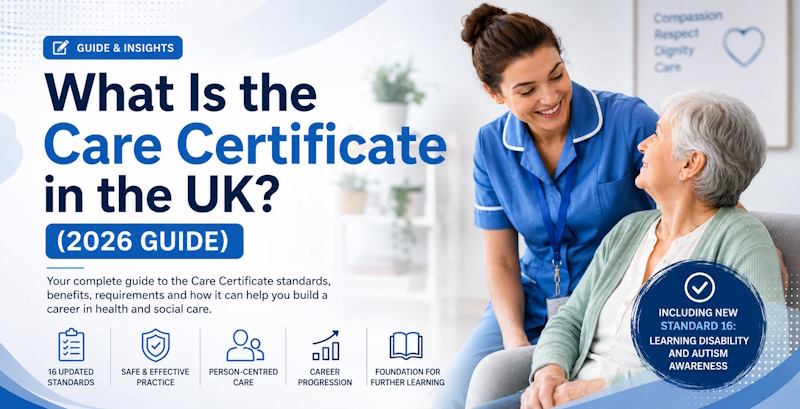
What Is the Care Certificate in the UK? (2026 Guide)
The Care Certificate is now considered one of the most important foundations for safe and compassionate care
If you are starting a career in health or social care in the UK, one of the first things you will hear about is the Care Certificate. Whether you want to become a healthcare assistant, support worker, domiciliary carer, or care home worker, the Care Certificate is now considered one of the most important foundations for safe and compassionate care. In this 2026 guide, we explain exactly what the Care Certificate is, who needs it, how it works, what the standards include, how long it takes to complete, and how it can help your career in care.
What Is the Care Certificate?
The Care Certificate is a nationally recognised set of standards for people working in health and social care roles across England. It was created to ensure that new care workers have the essential knowledge, skills, and behaviours needed to provide safe, effective, and compassionate care. (skillsforcare.org.uk)
The certificate was developed jointly by:
- Skills for Care
- Skills for Health
- NHS England
It applies to workers in:
- Adult social care
- NHS healthcare support roles
- Care homes
- Home care services
- Community care settings
- Supported living environments
The Care Certificate is often completed during induction when someone starts their first care role.
Why Was the Care Certificate Introduced?
The Care Certificate was introduced following the 2013 Cavendish Review, which found inconsistencies in the training and preparation of healthcare assistants and support workers across the UK care sector. (NHS Employers)
The review highlighted concerns that:
- Training standards varied widely between employers
- Some care workers lacked essential skills
- There was no consistent benchmark for quality care training
As a result, the Care Certificate was launched in 2015 to create a standardised framework for entry-level care staff.
The goal was simple: ensure all care workers understand the principles of dignity, safety, communication, safeguarding, and person-centred care before working independently.
Is the Care Certificate Mandatory in the UK?
Technically, the Care Certificate is not a legal requirement. However, in practice, many employers expect new care staff to complete it.
Most NHS trusts, care homes, domiciliary care agencies, and support providers use the Care Certificate as part of their induction process. In many entry-level roles, completing the certificate is effectively expected within the first few months of employment. (NHS Employers)
Employers value it because it demonstrates that a worker:
- Understands core care principles
- Can work safely
- Knows how to protect vulnerable individuals
- Can communicate professionally
- Understands safeguarding and infection control
Who Needs the Care Certificate?
The Care Certificate is mainly designed for staff who are new to care work.
Typical job roles include:
- Healthcare assistants (HCAs)
- Care assistants
- Support workers
- Home carers
- Personal assistants
- Residential care workers
- Domiciliary carers
- Rehabilitation assistants
- Nursing home support staff
It is particularly useful for people:
- Starting their first care role
- Returning to care after a long break
- Moving from another industry into care
- Looking to improve employability in health and social care
What Are the Care Certificate Standards in 2026?
The Care Certificate was updated in 2025 and now includes 16 standards instead of the previous 15. A new standard covering learning disability and autism awareness was added to reflect evolving sector needs. (skillsforcare.org.uk)
The 16 Care Certificate Standards
1. Understand Your Role
Learners understand their responsibilities, boundaries, and the importance of working within agreed ways of working.
2. Your Personal Development
Focuses on learning, reflection, supervision, and professional development.
3. Duty of Care
Explains legal and professional responsibilities for keeping people safe.
4. Equality, Diversity, Inclusion and Human Rights
Promotes fairness, inclusion, and anti-discriminatory practice.
5. Work in a Person-Centred Way
Teaches carers to respect individual preferences, choices, and independence.
6. Communication
Covers verbal, non-verbal, written, and professional communication skills.
7. Privacy and Dignity
Ensures individuals are treated respectfully and confidentially.
8. Fluids and Nutrition
Focuses on hydration, nutrition, and recognising signs of poor intake.
9. Awareness of Mental Health and Dementia
Introduces common mental health conditions and dementia awareness.
10. Adult Safeguarding
Teaches how to recognise and respond to abuse or neglect involving adults.
11. Safeguarding Children
Explains responsibilities for protecting children from harm.
12. Basic Life Support
Covers emergency response and potentially lifesaving procedures.
13. Health and Safety
Includes workplace safety, moving and handling, fire safety, and risk assessments.
14. Handling Information
Focuses on confidentiality, GDPR, and secure record keeping.
15. Infection Prevention and Control
Teaches hygiene, PPE use, and infection control procedures.
16. Awareness of Learning Disability and Autism
The newest standard, added in 2025, helps care workers better support individuals with learning disabilities and autistic people. (skillsforcare.org.uk)
How Long Does the Care Certificate Take?
Most workers complete the Care Certificate within 12 weeks of starting their role. (NHS Employers)
However, the exact timeframe depends on:
- Employer requirements
- Work schedule
- Previous experience
- Training format
- Assessment availability
Some people complete the theory elements quickly through online learning, while workplace observations and practical assessments may take longer.
How Is the Care Certificate Assessed?
The Care Certificate is not just an online course. It requires both:
- Knowledge-based learning
- Practical workplace assessment
Workers must demonstrate that they can apply the standards safely in real care settings. (skillsforcare.org.uk)
Assessment methods may include:
- Written workbooks
- E-learning modules
- Practical observations
- Supervisor assessments
- Discussions with assessors
- Reflective accounts
This practical element is extremely important. Many professionals in the care sector emphasise that the Care Certificate should involve hands-on assessment rather than purely self-directed online learning. (Reddit)
Can You Complete the Care Certificate Online?
Parts of the Care Certificate can be completed online through eLearning providers such as Caredemy and other training organisations.
Online learning can help learners:
- Study flexibly
- Learn at their own pace
- Build theoretical understanding
- Prepare for workplace assessments
However, full completion of the Care Certificate still requires practical competency assessment in a real care environment. Online learning alone is usually not enough for official workplace sign-off. (Reddit)
Is the Care Certificate a Qualification?
This is a common misconception.
The Care Certificate itself is not a formal regulated qualification like an NVQ or RQF diploma. Instead, it is a set of recognised standards and competencies.
However, completing it can help learners progress toward further qualifications such as:
- Level 2 Adult Social Care Certificate
- Level 2 Diploma in Care
- Level 3 Diploma in Adult Care
- Healthcare apprenticeship programmes
The 2025 update aligned the Care Certificate more closely with the Level 2 Adult Social Care Certificate qualification pathway. (skillsforcare.org.uk)
What Is the Difference Between the Care Certificate and NVQ?
Many people confuse the Care Certificate with NVQs or diplomas in care.
Here is the difference:
| Care Certificate | NVQ / Diploma |
|---|---|
| Entry-level induction standard | Formal qualification |
| Usually completed within first 12 weeks | Takes several months or longer |
| Focuses on essential competencies | More detailed vocational learning |
| Designed for beginners | Suitable for career progression |
| Assessed in the workplace | Assessed through coursework and observations |
| Not regulated as a qualification | Regulated qualification |
The Care Certificate is often the first step before progressing to more advanced care qualifications.
What Are the Benefits of Completing the Care Certificate?
Improved Employability
Employers prefer candidates who already understand the basics of care work.
Greater Confidence
New workers gain a better understanding of safe practice and professional responsibilities.
Better Quality of Care
The standards help workers provide safer, more compassionate support.
Career Progression
The certificate can open pathways to senior care roles and formal qualifications.
Consistency Across the Sector
The Care Certificate helps standardise training expectations across the UK care industry.
What Jobs Can You Get With a Care Certificate?
Completing the Care Certificate may help you access roles such as:
- Healthcare Assistant
- Support Worker
- Care Assistant
- Home Care Worker
- Community Care Assistant
- Residential Support Worker
- Mental Health Support Worker
- Senior Carer trainee roles
While employers still value experience and personal qualities, the certificate demonstrates commitment to professional care standards.
Is the Care Certificate Worth It in 2026?
For most people entering the care sector, yes.
The UK health and social care sector continues to face significant workforce demand, and employers increasingly value workers who already understand:
- Safeguarding
- Infection control
- Communication
- Person-centred care
- Professional responsibilities
The addition of Standard 16 also reflects growing awareness around inclusive care for autistic people and individuals with learning disabilities. (Care and Support West)
Although the certificate alone will not guarantee a job, it can strengthen your CV and help you feel more prepared for real-world care work.
Final Thoughts
The Care Certificate remains one of the most important starting points for anyone entering health and social care in the UK.
In 2026, the updated 16-standard framework continues to provide a strong foundation for safe, compassionate, and professional care practice. Whether you are beginning your first role in care or looking to improve your skills, understanding the Care Certificate can help you build confidence, meet employer expectations, and progress within the sector.
For many care workers, it is the first step toward a rewarding long-term career supporting vulnerable people and making a genuine difference every day.