
UK Care Training Regulations: Essential Guide to Compliance
In the dynamic and highly regulated UK health and social care sector, staying compliant with care training regulations isn’t just a legal obligation; it’s the bedrock of quality care, staff safety, and organisational integrity. For care providers, managers, and training leads, navigating the complexities of care training regulations can seem daunting. The key to effective healthcare compliance lies in a proactive, systematic approach to staff development, ensuring every team member possesses the necessary skills and knowledge to deliver safe, effective, and compassionate care. This article will guide you through the essential steps and considerations for maintaining robust UK care compliance in your training programmes.
Understanding the Regulatory Landscape for UK Care Training

The UK care sector is overseen by several regulatory bodies, each with specific expectations regarding staff training and competence. Understanding these frameworks is the first step towards achieving and maintaining compliance.
In England, the Care Quality Commission (CQC) sets the standards for health and social care services. Their fundamental standards, particularly Regulation 18 (Staffing) and Regulation 12 (Safe care and treatment), directly relate to ensuring staff are suitably qualified, competent, and supported to carry out their roles. The CQC expects providers to have robust systems for assessing, monitoring, and improving staff skills and knowledge.
Similar regulatory bodies operate across the devolved nations:
- Wales: Care Inspectorate Wales (CIW)
- Scotland: Care Inspectorate Scotland
- Northern Ireland: Regulation and Quality Improvement Authority (RQIA)
While specific guidance may vary, the core principle remains consistent: care providers must ensure their staff receive appropriate training, supervision, and professional development to meet the needs of the people they support and to comply with relevant legislation, such as the Health and Social Care Act 2008 (Regulated Activities) Regulations 2014.
Core Principles of Compliant Care Training
Achieving compliance goes beyond simply ticking boxes. It requires embedding a culture of continuous learning and development. Here are the core principles:
1. Comprehensive Training Needs Assessment
Before any training begins, a thorough assessment of your organisation’s and individual staff members’ training needs is crucial. This involves:
- Organisational Needs: Identifying training required to meet regulatory standards, service user needs, and organisational goals.
- Role-Specific Needs: Determining the specific skills and knowledge required for each role within your service.
- Individual Needs: Assessing existing staff competencies, identifying gaps, and considering personal development goals. This can be done through appraisals, supervision, observations, and incident reviews.
A well-conducted needs assessment ensures that training resources are allocated effectively and that training is relevant and impactful.
2. Structured and Relevant Training Programmes
Your training programme should be structured to cover all essential areas, from induction to ongoing specialist development.
- Induction Training: Essential for all new staff, covering fundamental policies, procedures, and core skills before they begin working unsupervised.
- Mandatory Training: Core subjects required for all care staff, often with specific refresher frequencies.
- Specialist Training: Tailored training for staff working with specific conditions (e.g., dementia, autism), complex needs, or advanced procedures.
Training content must be up-to-date, evidence-based, and reflect current best practices and regulatory guidance.
3. Quality and Delivery of Training
The effectiveness of your training hinges on its quality. Consider:
- Accreditation and Recognition: Utilising training providers or courses that are accredited by recognised bodies (e.g., Skills for Care, CPD Certification Service) can provide assurance of quality and relevance.
- Delivery Methods: A blended approach, combining online learning, classroom sessions, practical workshops, and on-the-job training, often yields the best results.
- Trainer Competence: Ensure trainers are knowledgeable, experienced, and skilled in adult education principles.
Training should be engaging, interactive, and provide opportunities for staff to apply their learning in practical scenarios.
4. Meticulous Record Keeping
Robust record keeping is non-negotiable for demonstrating compliance. You must be able to prove that staff have completed required training and are competent. Essential records include:
- Individual training records (dates, course titles, providers, outcomes).
- Certificates of completion.
- Evidence of competency assessments.
- Training matrices showing compliance levels across the organisation.
- Records of supervision and appraisals where training needs are discussed.
These records are vital during regulatory inspections and audits.
5. Regular Review and Update
The care sector is constantly evolving, with new guidance, best practices, and legislation emerging. Your training programmes must reflect this dynamism. Regularly review:
- Training Content: Ensure it remains current and aligned with regulatory expectations.
- Staff Competencies: Periodically reassess staff skills and knowledge, especially for high-risk tasks.
- Training Effectiveness: Evaluate whether training is achieving its intended outcomes and making a tangible difference to care quality.
This continuous improvement cycle is fundamental to sustained compliance.
Key Areas of Mandatory Training for UK Care Staff
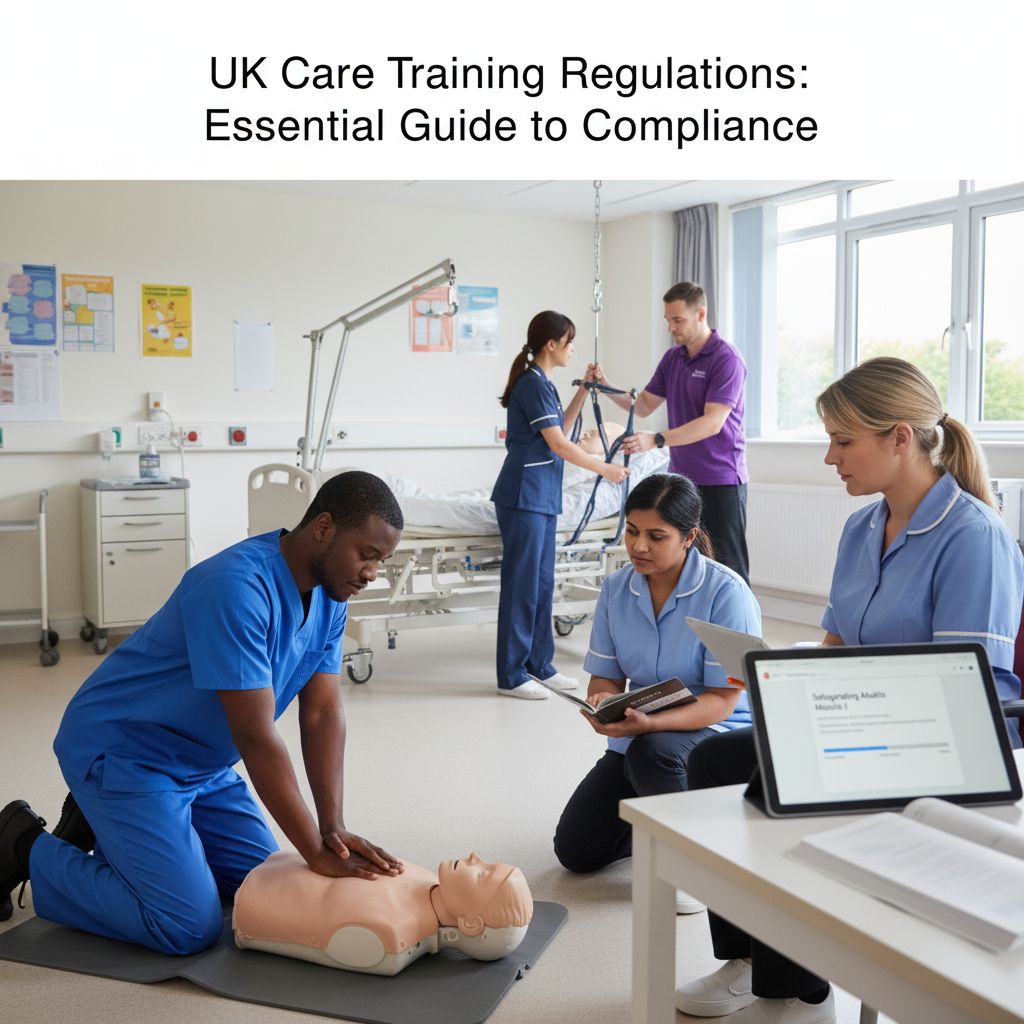
While specific mandatory training requirements can vary based on the service type and individual roles, several core subjects are universally expected across UK care settings. These typically require regular refreshers to ensure knowledge and skills remain current.
- Safeguarding Adults and Children: Essential for all staff to recognise and respond to signs of abuse, neglect, or harm. This includes understanding local safeguarding procedures and reporting mechanisms.
- Basic Life Support (BLS) / First Aid: Crucial for responding to medical emergencies. The level of training (e.g., basic first aid, advanced BLS) may depend on the care setting and staff roles.
- Moving and Handling: Practical training to ensure staff can safely move and assist individuals, protecting both service users and themselves from injury.
- Infection Prevention and Control (IPC): Covers hand hygiene, use of PPE, waste management, and preventing the spread of infections, especially critical in health and social care environments.
- Medication Management: For staff involved in administering or assisting with medication, this training covers safe practices, documentation, and understanding different types of medication.
- Fire Safety: Includes fire prevention, evacuation procedures, and the use of fire fighting equipment.
- Food Hygiene and Safety: For staff involved in food preparation or handling, ensuring safe practices to prevent foodborne illnesses.
- Mental Capacity Act (MCA) and Deprivation of Liberty Safeguards (DoLS): Essential for understanding how to support individuals who lack capacity to make specific decisions, ensuring their rights and best interests are protected.
- Dignity and Respect: Training on person-centred care, promoting independence, and upholding the dignity of individuals.
- Health and Safety: General awareness of workplace hazards, risk assessment, and reporting procedures.
- Data Protection (GDPR): Understanding responsibilities regarding handling personal and sensitive information.
It is vital for care providers to conduct their own needs assessment to determine the precise mandatory training requirements for their specific service and staff roles, consulting guidance from their respective regulatory body.
Developing a Robust Training Matrix and Schedule
A well-organised training matrix is an indispensable tool for managing UK care compliance. It provides a clear overview of who needs what training, when, and when refreshers are due.
Creating Your Training Matrix
A training matrix typically includes:
- Staff Names/IDs: List all employees.
- Training Topics: List all mandatory and relevant specialist training courses.
- Completion Dates: Record when each staff member completed each course.
- Refresher Due Dates: Clearly mark when refresher training is required.
- Competency Status: Indicate if competency has been assessed and confirmed.
- Notes: Any relevant comments, e.g., exemptions, specific learning needs.
This matrix can be a simple spreadsheet or integrated into a more sophisticated Learning Management System (LMS).
Scheduling and Tracking
Once your matrix is established, develop a clear training schedule. This involves:
- Annual Planning: Map out all planned training for the year, including refreshers.
- Individual Training Plans: For each staff member, create a personalised plan based on their role and identified needs.
- Automated Reminders: Utilise systems that can send automated reminders for upcoming training and refreshers.
- Monitoring Progress: Regularly review the matrix to identify any overdue training or emerging gaps.
Proactive scheduling prevents last-minute rushes and ensures continuous compliance.
Ensuring Training Effectiveness and Competency
Attendance at a training course does not automatically equate to competence. Regulatory bodies expect providers to demonstrate that staff have not only received training but have also understood and can apply their learning in practice.
Beyond Attendance: Assessing Competency
To ensure training effectiveness, consider:
- Practical Assessments: For skills-based training (e.g., moving and handling, medication administration), practical assessments or observations are crucial.
- Supervision and Mentoring: Regular supervision sessions provide opportunities to discuss learning, observe practice, and offer constructive feedback. Mentoring can support new skills integration.
- Knowledge Checks: Quizzes, case studies, or discussions can verify understanding of theoretical concepts.
- Feedback Loops: Encourage staff to provide feedback on training quality and relevance. Also, gather feedback from service users and their families on the quality of care provided, which can indirectly reflect staff competence.
- Incident Reviews: Analyse incidents or near misses to identify any underlying training gaps or areas where competency needs strengthening.
Developing a competency framework for different roles can help standardise expectations and assessment methods.
The Role of Continuous Professional Development (CPD)
Continuous Professional Development (CPD) is an ongoing process of learning and development that helps individuals maintain and enhance their professional competence. For care staff, CPD is not just beneficial for personal growth; it’s integral to healthcare compliance.
How CPD Contributes to Compliance
- Staying Current: CPD ensures staff are aware of the latest best practices, research, and changes in legislation or guidance.
- Skill Enhancement: It allows staff to develop new skills or refine existing ones, leading to improved care quality.
- Professionalism: Engaging in CPD demonstrates a commitment to professional standards and continuous improvement, which is viewed positively by regulators.
- Addressing Complex Needs: As service users’ needs become more complex, CPD helps staff acquire the specialist knowledge required to provide tailored support.
Encourage staff to identify their own CPD goals, support their participation in relevant activities (e.g., workshops, conferences, online courses, reflective practice), and record their CPD activities as part of their professional portfolio.
Preparing for Regulatory Inspections and Audits
Regulatory inspections are a critical test of your care training regulations compliance. Being well-prepared can make a significant difference to the outcome.
What Inspectors Look For
Inspectors will typically want to see evidence of:
- A Clear Training Strategy: How you identify, plan, deliver, and evaluate training.
- Comprehensive Training Records: Easily accessible and up-to-date records for all staff, demonstrating completion of mandatory and role-specific training.
- Competency Assessments: Evidence that staff have been assessed as competent in their roles, especially for high-risk tasks.
- Staff Knowledge and Confidence: Inspectors may speak directly with staff to gauge their understanding of policies, procedures, and their ability to apply training in practice.
- Culture of Learning: Evidence that the organisation supports and encourages continuous learning and professional development.
- Response to Incidents: How training is reviewed and adapted in response to incidents, complaints, or changes in service user needs.
Common Pitfalls to Avoid
- Out-of-date records: Ensure all training records are current and accurate.
- Lack of refresher training: Missing mandatory refreshers is a common compliance issue.
- Generic training: Training that isn’t tailored to the specific needs of your service users or staff roles.
- No evidence of competency: Relying solely on attendance certificates without assessing practical application.
- Poor staff engagement: Staff who are unaware of their training requirements or the importance of compliance.
Regular internal audits of your training systems can help identify and rectify these issues before an external inspection.
Leveraging Technology for UK Care Compliance
In today’s digital age, technology offers powerful solutions for managing UK care compliance and training efficiently.
Benefits of Learning Management Systems (LMS)
An LMS can revolutionise how you manage your training:
- Centralised Records: All training data, certificates, and competency assessments are stored in one secure, accessible location.
- Automated Tracking: The system can automatically track course completions, generate reports, and send reminders for upcoming training or refreshers.
- Online Course Delivery: Many mandatory and specialist courses can be delivered online, offering flexibility for staff to learn at their own pace and convenience.
- Consistency: Online modules ensure that all staff receive the same high-quality, up-to-date information.
- Reporting and Analytics: Generate detailed reports on compliance rates, training gaps, and individual progress, providing valuable insights for management and inspectors.
- Cost-Effectiveness: Reduces administrative burden and can be more cost-effective than traditional classroom training for certain subjects.
Choosing an LMS specifically designed for the health and social care sector, like CareDemy’s platform, can further streamline your compliance efforts by offering relevant, accredited content and features tailored to your needs.
A Proactive Approach to Care Training Regulations
Staying compliant with UK care training regulations is an ongoing journey, not a destination. It demands a proactive, systematic, and person-centred approach that prioritises the continuous development of your workforce. By understanding the regulatory landscape, implementing robust training programmes, meticulously maintaining records, and leveraging technology, care providers can not only meet their legal obligations but also significantly enhance the quality and safety of the care they deliver.
A well-trained, competent, and confident workforce is your greatest asset. Investing in their development is an investment in the future of your service, ensuring positive outcomes for both your staff and the individuals you support, while consistently demonstrating robust healthcare compliance.

Frequently asked questions
What are the main regulatory bodies overseeing care training in the UK?
In England, the Care Quality Commission (CQC) sets standards. Wales has Care Inspectorate Wales (CIW), Scotland has Care Inspectorate Scotland, and Northern Ireland has the Regulation and Quality Improvement Authority (RQIA). All expect appropriate staff training and development.
How often should care training be updated or reviewed?
Training programmes must be regularly reviewed and updated to reflect new guidance, best practices, and legislation. This includes reviewing content, staff competencies, and training effectiveness to ensure sustained compliance.
What records are essential for demonstrating care training compliance?
You must keep meticulous records including individual training records (dates, courses, outcomes), certificates of completion, evidence of competency assessments, training matrices, and records of supervision where training needs are discussed.
Why is a comprehensive training needs assessment crucial for care providers?
A thorough training needs assessment is crucial to identify organisational, role-specific, and individual staff training requirements. This ensures training resources are allocated effectively, making training relevant and impactful for meeting regulatory standards and service user needs.