How Often Should Mandatory Training Be Updated? A Complete Guide for UK Care Providers
Keeping Care Training Up to Date
One of the most common questions asked by care providers, registered managers and care workers is:
“How often should mandatory training be updated?”
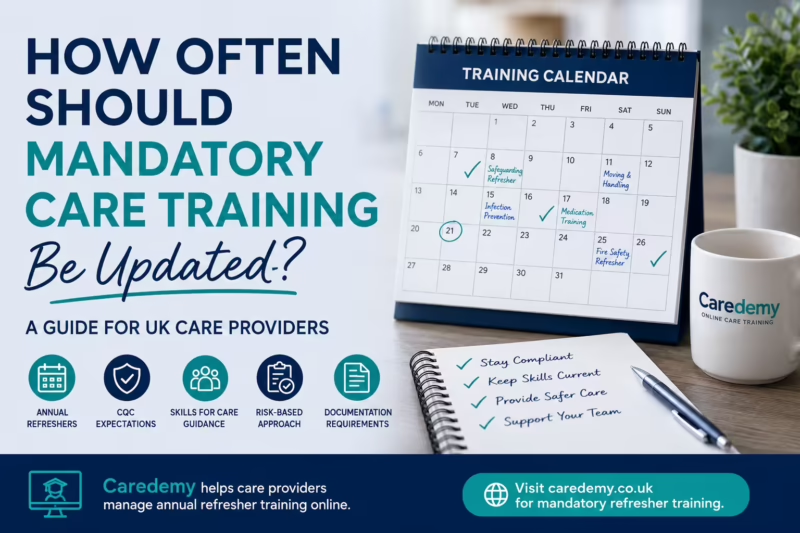
The short answer is that most mandatory training should be refreshed annually. However, there is no single legal requirement that states all care training must be completed every 12 months. The correct refresher frequency depends on several factors, including the subject matter, workplace risks, staff responsibilities, regulatory expectations and organisational policies.
For CQC-regulated services, maintaining up-to-date training records and ensuring staff remain competent is essential for demonstrating compliance and delivering safe, effective care.
In this guide, we’ll explain annual refresher expectations, CQC guidance, Skills for Care recommendations, risk-based training schedules and best practices for managing mandatory training updates.
Why Mandatory Training Updates Matter
Healthcare and social care environments constantly evolve. Legislation changes, best practice develops and workplace risks can emerge unexpectedly.
Regular refresher training helps ensure staff:
Maintain competence
Follow current legislation and guidance
Deliver safe care
Protect vulnerable individuals
Reduce incidents and errors
Meet employer and regulatory requirements
Remain confident in their roles
Without regular updates, skills and knowledge can become outdated, potentially affecting service quality and patient safety.
Is Annual Mandatory Training a Legal Requirement?
Many care providers assume annual refresher training is legally required.
In reality, UK legislation generally requires employers to provide appropriate training and ensure staff remain competent rather than specifying exact renewal periods.
Relevant legislation includes:
Health and Safety at Work etc. Act 1974
Care Act 2014
Health and Social Care Act 2008 (Regulated Activities) Regulations 2014
Regulation 18 of the Health and Social Care Act 2008 (Regulated Activities) Regulations 2014 requires providers to ensure staff receive appropriate support, training and professional development necessary to perform their roles safely and effectively.
The emphasis is on competency rather than simply completing a course.
What Does the CQC Say About Refresher Training?
The Care Quality Commission does not publish a fixed list of mandatory courses with mandatory renewal dates.
Instead, inspectors expect providers to demonstrate that:
Staff receive appropriate training
Training is relevant to their role
Knowledge is regularly refreshed
Competency is assessed
Training records are maintained
Learning is embedded into practice
During inspections, providers may be asked to produce evidence showing that staff training remains current and that refresher schedules are being monitored effectively.
The CQC focuses on whether staff have the skills, knowledge and experience to provide safe care.
For official guidance, visit:
What Does Skills for Care Recommend?
Skills for Care provides widely recognised guidance for adult social care employers.
Their guidance supports regular refresher training and ongoing competency assessments rather than relying solely on one-off training events.
Skills for Care highlights the importance of:
Continuing professional development (CPD)
Supervision and appraisal
Observation of practice
Reflective learning
Refresher training where required
Further guidance can be found at:
Recommended Refresher Frequencies for Common Mandatory Care Training
While organisations may adopt different schedules, the following frequencies are commonly used across the UK care sector.
| Training Topic | Typical Refresher Period |
|---|---|
| Safeguarding Adults | Annually |
| Safeguarding Children | Annually |
| Moving and Handling | Annually |
| Fire Safety Awareness | Annually |
| Infection Prevention and Control | Annually |
| Health and Safety | Annually |
| Basic Life Support | Annually |
| First Aid | Every 1-3 years depending on qualification |
| Medication Administration | Annually |
| Food Hygiene | Every 3 years (or sooner if required) |
| GDPR and Data Protection | Annually |
| Equality, Diversity and Inclusion | Annually |
These are commonly accepted industry standards but should always be reviewed against local policies and risk assessments.
Using a Risk-Based Approach to Training Updates
Not every training subject carries the same level of risk.
A risk-based approach allows providers to determine whether refresher training should be more frequent than annual updates.
Factors to consider include:
High-Risk Activities
Training may need more frequent updates where staff:
Administer medication
Support people with complex needs
Use specialist equipment
Deliver clinical interventions
Respond to emergencies
Changes in Legislation
Training should be reviewed when:
Regulations change
New guidance is published
Organisational policies are updated
Incident Trends
Additional refresher training may be required following:
Medication errors
Safeguarding concerns
Health and safety incidents
Infection outbreaks
Near misses
Competency Concerns
Managers should consider extra training if staff demonstrate:
Gaps in knowledge
Poor practice observations
Low confidence
Performance issues
Training Completion Does Not Always Equal Competence
A common mistake is assuming a completed certificate proves competence.
Inspectors increasingly look for evidence that learning is being applied in practice.
Competency can be demonstrated through:
Practical assessments
Observations
Supervisions
Spot checks
Reflective discussions
Audits
Appraisals
Training certificates should form part of a wider workforce development strategy.
How to Keep Training Records Up to Date
Accurate documentation is critical for compliance.
Providers should maintain records showing:
Course title
Completion date
Expiry date
Learner name
Assessment results
Competency checks
Refresher requirements
Good record-keeping helps organisations:
Prepare for CQC inspections
Monitor compliance levels
Reduce administrative workload
Identify overdue training quickly
Using Online Training Management Systems
Many care providers now use learning management systems (LMS) to manage refresher training.
Benefits include:
Automated reminders
Centralised records
Instant certificates
Compliance dashboards
Manager reporting
Multi-location oversight
Reduced paperwork
An LMS can significantly reduce the risk of missed renewals and expired certifications.
Common Training Compliance Mistakes
Assuming All Training Lasts Forever
Knowledge fades over time and regulations change.
Missing Expiry Dates
Manual spreadsheets can quickly become outdated.
No Competency Assessments
Training should be reinforced through observation and supervision.
Inconsistent Refresher Schedules
A documented training matrix helps ensure consistency.
Poor Inspection Preparation
Providers should be able to produce training evidence quickly when requested.
How Caredemy Helps Manage Refresher Training
At Caredemy, we help care providers manage annual refresher training through a simple online platform designed for health and social care organisations.
Benefits include:
200+ CPD-accredited courses
Automated training reminders
Compliance reporting
Instant certificates
Staff training records
Mobile-friendly learning
Multi-site management
Free learner replacement for team accounts
Whether you manage a care home, domiciliary care service, supported living organisation or healthcare team, maintaining up-to-date mandatory training becomes significantly easier with a structured training management system.
Explore our:
Frequently Asked Questions
How often should mandatory training be updated?
Most mandatory care training is refreshed annually, although some subjects may require more or less frequent updates depending on risk, legislation and organisational policy.
Does the CQC require annual refresher training?
The CQC does not prescribe specific renewal periods. Providers must ensure staff remain competent and training remains current.
Is online refresher training acceptable?
Yes. Online training is widely used across the care sector, particularly when combined with competency assessments and practical supervision where required.
What happens if staff training expires?
Expired training can increase compliance risks, affect inspection outcomes and potentially impact service quality and safety.
How can providers track refresher training?
Many organisations use a learning management system (LMS) with automated reminders and reporting features to monitor compliance.
Final Thoughts
When considering how often mandatory training should be updated, annual refresher training remains the benchmark across much of the UK care sector. However, the most effective approach is to combine regular training updates with competency assessments, supervision and a risk-based review process.
By maintaining accurate records, monitoring expiry dates and ensuring staff remain competent, care providers can support safer services, improve compliance and demonstrate a strong commitment to high-quality care.
Looking for an easier way to manage refresher training?
Visit caredemy.co.uk to explore CPD-accredited mandatory training courses and compliance management solutions for UK care providers.