CQC Training Requirements Explained for Care Homes: A Complete Compliance Guide
Understand CQC expectations for staff training, competency, and compliance.
Running a care home or domiciliary care service involves much more than providing high-quality care. Providers must also ensure staff are properly trained, competent, and able to deliver safe, effective, and person-centred care that meets the expectations of the Care Quality Commission (CQC).
One of the most common questions asked by care home managers, registered managers, and compliance leads is:
“What are the CQC training requirements for care homes?”
The answer is not simply a list of mandatory training courses. Instead, the CQC focuses on whether staff have the knowledge, skills, experience, and ongoing support needed to perform their roles safely and effectively.
In this guide, we explain the CQC’s expectations around staff training, competency, refresher training, documentation, compliance tracking, and common inspection mistakes, helping care providers build a robust compliance framework.
What Are the CQC Training Requirements?
The CQC does not provide a definitive list of mandatory training courses that every care provider must complete.
Instead, training requirements are determined by:
- The needs of the people receiving care
- The type of service being delivered
- Staff roles and responsibilities
- Relevant legislation and regulations
- Best practice guidance
- Organisational policies and procedures
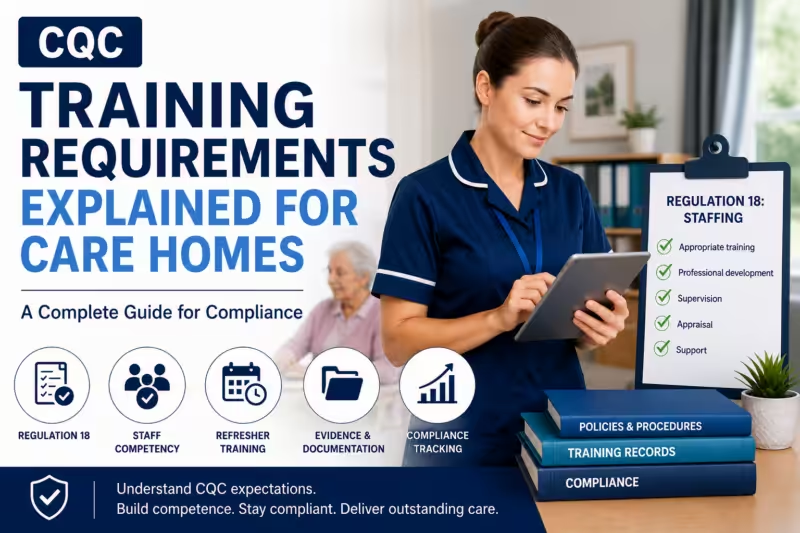
The key regulation governing staff training is Regulation 18: Staffing within the Health and Social Care Act 2008 (Regulated Activities) Regulations 2014.
Under Regulation 18, providers must ensure staff receive:
- Appropriate training
- Professional development
- Supervision
- Appraisal
- Support necessary to perform their role
This helps ensure safe, effective, and high-quality care delivery.
Useful External Resources
- Health and Social Care Act 2008 (Regulated Activities) Regulations 2014: https://www.legislation.gov.uk/uksi/2014/2936/contents/made
- CQC Regulation 18 Guidance: https://www.cqc.org.uk/guidance-providers/regulations-enforcement/regulation-18-staffing
- CQC Guidance for Providers: https://www.cqc.org.uk/guidance-providers
Understanding Regulation 18: Staffing
Regulation 18 is one of the most important regulations affecting care home providers.
While many managers focus on training completion rates, Regulation 18 goes much further. The regulation requires providers to ensure staff are competent and capable of carrying out their duties safely.
Inspectors want to see evidence that:
- Staff receive appropriate induction training
- Learning is relevant to their role
- Training is refreshed regularly
- Competency is assessed and documented
- Managers monitor compliance
- Staff understand how to apply learning in practice
Simply purchasing training courses is not enough.
The CQC wants to see how training translates into improved care outcomes.
Why Staff Competency Matters More Than Certificates
One of the most common misconceptions in social care is that a training certificate automatically demonstrates competency.
The CQC does not view competency and training completion as the same thing.
A certificate confirms an individual has completed a learning activity. Competency demonstrates they can safely apply that knowledge in real-life situations.
For example:
Medication Administration
Staff should be able to:
- Administer medicines safely
- Follow MAR charts correctly
- Understand medication errors and near misses
- Escalate concerns appropriately
- Follow organisational procedures
Safeguarding
Staff should demonstrate they can:
- Recognise signs of abuse and neglect
- Understand safeguarding responsibilities
- Follow reporting procedures
- Protect vulnerable adults from harm
Moving and Handling
Staff should be able to:
- Use moving and handling equipment safely
- Follow risk assessments
- Protect both themselves and service users from injury
- Apply safe handling techniques consistently
Competency assessments may include:
- Workplace observations
- Practical assessments
- Spot checks
- Knowledge assessments
- Supervision discussions
- Audits and quality checks
Providers that combine training with competency assessments are often better prepared for inspections.
Which Training Courses Are Commonly Expected by the CQC?
Although there is no official mandatory training list, inspectors generally expect providers to have considered training in key risk areas.
Common training topics include:
- Safeguarding Adults
- Safeguarding Children
- Medication Administration
- Infection Prevention and Control
- Fire Safety Awareness
- Health and Safety
- Moving and Handling
- Food Safety and Hygiene
- Mental Capacity Act (MCA)
- Deprivation of Liberty Safeguards (DoLS)
- Equality, Diversity and Inclusion
- Basic Life Support
- Dementia Awareness
- Duty of Care
- GDPR and Data Protection
- End of Life Care
- Person-Centred Care
The exact training requirements will vary depending on the nature of the service and the needs of the people being supported.
For example, a nursing home supporting people with dementia may require additional specialist dementia training, while a domiciliary care provider may focus more heavily on lone working and community-based care risks.
Explore Caredemy’s healthcare and social care training library:
The Importance of Refresher Training
Training should not be treated as a one-off activity.
Knowledge can fade over time, guidance changes, and best practice evolves.
Without refresher training, staff may unknowingly begin working in ways that no longer reflect current standards.
Refresher training helps organisations:
- Maintain compliance
- Reinforce good practice
- Improve care quality
- Reduce risk
- Address knowledge gaps
- Support continuous professional development
Many providers schedule annual refresher training for core subjects such as safeguarding, health and safety, infection control, and fire safety.
The CQC will often review how providers ensure learning remains current and relevant.
Having a structured refresher training programme demonstrates strong governance and oversight.
Evidence and Documentation: If It Isn’t Recorded, It Didn’t Happen
Training records play a crucial role during inspections.
Managers should be able to quickly demonstrate that staff have completed required learning and that competency has been assessed where appropriate.
Training documentation should include:
- Course completion records
- Certificates
- Training dates
- Expiry dates
- Competency assessments
- Supervision records
- Appraisal documentation
- Induction records
Inspectors may ask to review evidence showing how staff have been trained and supported.
Poor record-keeping can create compliance concerns, even where training has actually taken place.
Maintaining accurate, organised records is therefore essential.
How Learning Management Systems Support Compliance
Many care providers still manage training using spreadsheets and manual reminders.
While this may work for small organisations, it becomes increasingly difficult as services grow.
A Learning Management System (LMS) can help providers manage training more efficiently by:
- Delivering online training
- Automating learner enrolment
- Storing certificates securely
- Tracking completion rates
- Monitoring training expiry dates
- Producing compliance reports
- Providing audit-ready evidence
For care groups and multi-site providers, an LMS offers visibility across the organisation and helps managers identify compliance risks before they become inspection issues.
Caredemy helps UK care providers manage online staff training and compliance efficiently through CPD-accredited courses, automated tracking, compliance reporting, and a powerful learning management platform.
Learn more about team training solutions:
https://caredemy.co.uk/sp/team-training/
Compliance Tracking: What CQC Inspectors Want to See
Training compliance is not simply about course completion.
Inspectors often look at how organisations monitor and manage ongoing compliance.
Managers should be able to demonstrate:
- Current compliance levels
- Training completion rates
- Overdue training
- Competency assessments
- Supervision schedules
- Appraisal processes
- Action plans for non-compliance
Inspectors may ask questions such as:
- How do you identify training gaps?
- How do you know staff remain competent?
- How do you monitor overdue training?
- How do you ensure new staff complete induction training?
- What happens when training requirements are not met?
Providers that can answer these questions confidently are often better positioned during inspections.
Common Training Mistakes Identified During Inspections
Many training-related compliance issues stem from avoidable mistakes.
1. Treating Training as a Tick-Box Exercise
Training should support safe care delivery, not simply generate certificates.
2. Failing to Assess Competency
Providers must ensure staff can apply learning in practice.
3. Allowing Training to Expire
Overdue training can indicate weak governance and oversight.
4. Poor Documentation
Missing certificates and incomplete records can create unnecessary inspection concerns.
5. Relying Solely on Spreadsheets
Manual tracking systems often lead to missed deadlines and gaps in compliance.
6. Delivering Generic Training to All Staff
Training should reflect individual roles, responsibilities, and service user needs.
Building a Strong Training Compliance Framework
Providers that consistently perform well during inspections often have a structured approach to workforce development.
Key components include:
Training Matrix
A clear framework showing required training by role.
Structured Induction
Comprehensive onboarding for new starters.
Refresher Training Programme
Regular updates for core subjects and high-risk areas.
Competency Assessments
Practical verification that learning can be applied safely.
Supervision and Appraisals
Ongoing support and performance monitoring.
Automated Compliance Tracking
Systems that identify gaps before they become problems.
Together, these elements create a robust training and compliance framework that supports both staff and service users.
Preparing for Your Next CQC Inspection
Before an inspection, providers should review:
✓ Staff training records
✓ Training matrix
✓ Competency assessments
✓ Supervision records
✓ Appraisal records
✓ Refresher training schedules
✓ Compliance reports
✓ Induction documentation
Being able to quickly produce this information demonstrates effective leadership, governance, and quality assurance.
How Caredemy Supports Care Home Compliance
Managing staff training across a busy care service can be challenging.
Caredemy helps care homes, domiciliary care providers, supported living services, and healthcare organisations simplify compliance through:
- CPD-accredited online courses
- Automated compliance tracking
- Learner progress monitoring
- Certificate management
- Reporting and audit tools
- Team training solutions
- Flexible online learning
Whether you need training for a small team or multiple locations, Caredemy provides an efficient way to manage workforce development and demonstrate compliance.
Explore our training solutions:
Conclusion
Understanding CQC training requirements is essential for every care home and social care provider.
The CQC’s focus extends beyond training completion. Providers must ensure staff are competent, supported, and able to deliver safe, effective, person-centred care.
By combining high-quality training, competency assessments, refresher programmes, and effective compliance tracking, organisations can improve care quality, reduce risk, and strengthen inspection readiness.
Caredemy helps UK care providers manage online staff training and compliance efficiently through CPD-accredited courses, automated reporting, and powerful compliance management tools.
Visit caredemy.co.uk to explore care home training solutions and support your organisation’s compliance journey.