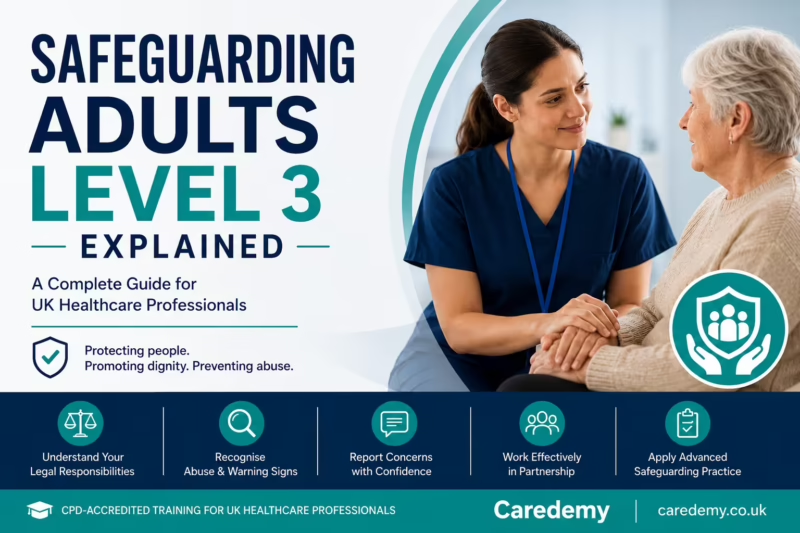
Safeguarding Adults Level 3 Explained: A Complete Guide for UK Healthcare Professionals
Understanding Safeguarding Responsibilities in Healthcare Settings
Safeguarding adults is one of the most important responsibilities in health and social care. Every healthcare professional has a duty to recognise abuse, protect vulnerable adults, and take appropriate action when concerns arise.
For professionals working in healthcare settings, understanding Safeguarding Adults Level 3 is essential. This advanced level of safeguarding training provides the knowledge and skills required to identify risks, respond effectively to safeguarding concerns, and fulfil legal and professional responsibilities.
In this guide, we explain what Safeguarding Adults Level 3 is, who needs it, what it covers, and why it is crucial for protecting adults at risk.
What Is Safeguarding?
Safeguarding refers to the actions taken to protect a person’s right to live safely, free from abuse, neglect, exploitation, and harm.
Adult safeguarding aims to:
- Prevent abuse and neglect
- Protect individuals at risk
- Promote wellbeing and independence
- Support people to make informed decisions
- Ensure concerns are investigated appropriately
- Improve outcomes for vulnerable adults
Safeguarding is not only about responding to abuse when it occurs. It also involves recognising risks early and taking proactive steps to prevent harm.
Healthcare professionals play a vital role in safeguarding because they often have direct contact with individuals who may be vulnerable due to age, disability, illness, mental health conditions, or other circumstances.
What Is Safeguarding Adults Level 3?
Safeguarding Adults Level 3 is an advanced safeguarding training level designed for healthcare professionals who have a greater responsibility for identifying, assessing, and responding to safeguarding concerns.
Level 3 training builds upon the knowledge gained in Levels 1 and 2 and focuses on:
- Recognising complex safeguarding situations
- Understanding professional responsibilities
- Making appropriate referrals
- Working with multi-agency safeguarding teams
- Applying safeguarding legislation and guidance
- Managing safeguarding concerns within clinical practice
The training ensures that professionals can confidently respond to safeguarding issues while maintaining the safety and wellbeing of adults at risk.
Who Needs Safeguarding Adults Level 3 Training?
Level 3 safeguarding training is commonly recommended for:
- Registered nurses
- Nursing associates
- Healthcare assistants with safeguarding responsibilities
- Paramedics
- Allied health professionals
- Midwives
- Occupational therapists
- Physiotherapists
- Mental health practitioners
- Social workers
- GP practice staff
- Community healthcare workers
- Hospital staff
- Clinical managers
- Safeguarding leads
Many NHS organisations and healthcare providers require staff to complete safeguarding training appropriate to their role.
For healthcare professionals, safeguarding training requirements are often guided by the Intercollegiate Guidance for Adult Safeguarding.
Why Is Safeguarding Adults Level 3 Important?
Adults at risk may experience abuse in a variety of settings, including:
- Their own homes
- Residential care homes
- Nursing homes
- Hospitals
- Supported living environments
- Community settings
Without appropriate safeguarding knowledge, warning signs may be missed, allowing abuse or neglect to continue.
Level 3 training helps professionals:
- Identify concerns sooner
- Protect vulnerable adults effectively
- Meet professional standards
- Improve patient outcomes
- Support multi-agency safeguarding processes
- Reduce organisational risk
Ultimately, safeguarding training helps create safer healthcare and care environments for everyone.
Types of Abuse Covered in Safeguarding Adults Level 3
Professionals completing safeguarding training must understand the different forms of abuse that adults may experience.
Physical Abuse
Physical abuse involves the use of force that causes injury, pain, or harm.
Examples include:
- Hitting
- Slapping
- Pushing
- Misuse of medication
- Inappropriate restraint
Emotional or Psychological Abuse
This includes behaviour that affects a person’s emotional wellbeing.
Examples include:
- Intimidation
- Threats
- Humiliation
- Isolation
- Coercive control
Sexual Abuse
Sexual abuse involves any unwanted sexual activity or behaviour.
Examples include:
- Sexual assault
- Inappropriate touching
- Sexual harassment
- Exploitation
Financial or Material Abuse
This occurs when someone improperly uses another person’s money or assets.
Examples include:
- Theft
- Fraud
- Pressure regarding wills
- Misuse of benefits
- Financial exploitation
Neglect and Acts of Omission
Neglect involves failing to meet an individual’s basic needs.
Examples include:
- Poor nutrition
- Lack of medical care
- Inadequate personal care
- Unsafe living conditions
Discriminatory Abuse
Discriminatory abuse targets individuals because of characteristics such as:
- Age
- Disability
- Race
- Religion
- Sexual orientation
- Gender identity
Organisational Abuse
Organisational abuse occurs when poor systems, practices, or cultures result in harm.
Examples may include:
- Unsafe care practices
- Inadequate staffing
- Poor leadership
- Failure to follow safeguarding procedures
Self-Neglect
Self-neglect occurs when an individual is unable or unwilling to care for their own health, wellbeing, or environment.
Healthcare professionals must understand how to balance safeguarding duties with a person’s rights and choices.
Recognising Warning Signs of Abuse
One of the key aims of Safeguarding Adults Level 3 training is helping professionals identify signs that may indicate abuse or neglect.
Possible indicators include:
- Unexplained injuries
- Frequent hospital admissions
- Poor personal hygiene
- Sudden behavioural changes
- Withdrawal or fearfulness
- Financial difficulties
- Malnutrition
- Missed medical appointments
- Unsafe living conditions
- Reluctance to speak openly
No single sign proves abuse is occurring, but concerns should always be taken seriously and explored appropriately.
The Legal Framework for Adult Safeguarding
Safeguarding Adults Level 3 training covers the legislation and guidance that support safeguarding practice in England.
Key legislation includes:
Care Act 2014
The Care Act 2014 places safeguarding duties on local authorities and provides the framework for adult safeguarding in England.
Official guidance:
https://www.legislation.gov.uk/ukpga/2014/23/contents
Mental Capacity Act 2005
The Mental Capacity Act 2005 supports decision-making for adults who may lack capacity and outlines key safeguarding protections.
Official guidance:
https://www.legislation.gov.uk/ukpga/2005/9/contents
Human Rights Act 1998
The Human Rights Act 1998 protects fundamental rights and freedoms, which must be considered when safeguarding adults.
Official guidance:
https://www.legislation.gov.uk/ukpga/1998/42/contents
Healthcare professionals must understand how these legal frameworks influence safeguarding decisions and interventions.
The Six Principles of Adult Safeguarding
The Care Act identifies six key safeguarding principles:
1. Empowerment
Supporting individuals to make informed decisions.
2. Prevention
Taking action before harm occurs.
3. Proportionality
Responding in the least intrusive way possible.
4. Protection
Providing support to those most at risk.
5. Partnership
Working collaboratively with other agencies.
6. Accountability
Maintaining transparency and responsibility.
These principles underpin effective safeguarding practice across health and social care settings.
Reporting Safeguarding Concerns
Knowing how to report concerns is a fundamental part of Level 3 safeguarding training.
When concerns arise, healthcare professionals should:
- Ensure immediate safety where necessary.
- Record concerns accurately.
- Follow local safeguarding procedures.
- Report concerns to the appropriate safeguarding lead.
- Make referrals when required.
- Maintain confidentiality appropriately.
- Continue to monitor and support the individual.
Professionals should never assume someone else will report concerns.
Multi-Agency Working in Safeguarding
Effective safeguarding often requires collaboration between multiple organisations.
These may include:
- NHS services
- Local authorities
- Social care providers
- Police services
- Mental health teams
- Advocacy services
- Community organisations
Level 3 training helps professionals understand how information sharing and partnership working contribute to safer outcomes.
What Does Safeguarding Adults Level 3 Training Cover?
A typical Level 3 safeguarding course may cover:
- Adult safeguarding legislation
- Professional responsibilities
- Types of abuse and neglect
- Recognising safeguarding concerns
- Mental capacity considerations
- Information sharing
- Record keeping
- Referral processes
- Multi-agency working
- Learning from safeguarding reviews
- Professional accountability
The exact content may vary depending on the provider and sector requirements.
How Often Should Safeguarding Adults Level 3 Training Be Refreshed?
Healthcare organisations often require safeguarding training to be updated regularly to ensure knowledge remains current.
Many employers recommend refresher training every three years, alongside ongoing safeguarding updates and continuous professional development (CPD).
Professionals should always follow their employer’s policies and current safeguarding guidance.
Safeguarding Adults Level 3 Online Training
Online safeguarding training provides a flexible way for healthcare professionals to maintain compliance and develop safeguarding knowledge.
Benefits include:
- Learn at your own pace
- Access training anytime
- CPD-accredited learning
- Immediate course access
- Instant certification
- Suitable for busy healthcare professionals
Online learning allows staff to complete training around work commitments while ensuring safeguarding knowledge remains up to date.
Safeguarding Adults Level 3 Training with Caredemy
At Care-deh-mee, we provide CPD-accredited safeguarding training designed for UK healthcare professionals.
Our safeguarding courses help learners understand:
- Adult safeguarding responsibilities
- Types of abuse and neglect
- Reporting procedures
- Legal requirements
- Best practice safeguarding principles
Explore our safeguarding training courses:
- https://caredemy.co.uk/course-category/safeguarding-courses/
- https://caredemy.co.uk/product/safeguarding-adults-level-3-online-training-course/
- https://caredemy.co.uk/product/safeguarding-adults-level-2-online-training-course/
- https://caredemy.co.uk/product/safeguarding-adults-level-1-online-training-course/
You may also find these related resources useful:
- https://caredemy.co.uk/what-is-safeguarding-in-health-and-social-care/
- https://caredemy.co.uk/mandatory-training-for-care-workers-what-you-actually-need/
- https://caredemy.co.uk/what-is-the-care-certificate-in-the-uk-2026-guide/
Final Thoughts
Safeguarding Adults Level 3 training equips healthcare professionals with the knowledge and confidence needed to protect adults at risk from abuse, neglect, and exploitation.
By understanding safeguarding legislation, recognising warning signs, and responding appropriately to concerns, professionals can play a vital role in protecting vulnerable individuals and promoting safer care environments.
Whether you work in a hospital, care home, community service, or healthcare setting, safeguarding is everyone’s responsibility.
Investing in high-quality safeguarding training helps ensure that adults receive the protection, dignity, and support they deserve.