

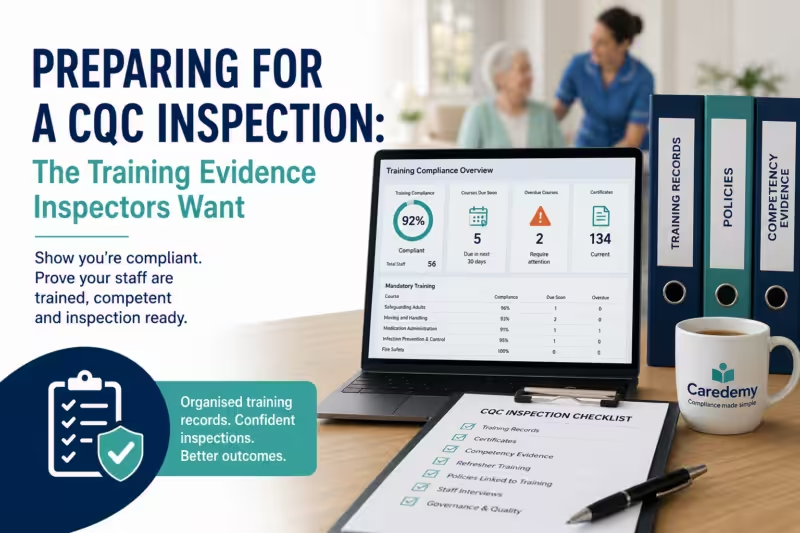
Preparing for a CQC Inspection: The Training Evidence Inspectors Want
Be Ready for Your Next Inspection
A Care Quality Commission (CQC) inspection can feel daunting, but providers who keep their training and compliance evidence organised often find the process much smoother.
Inspectors are not simply checking whether staff have completed online courses. They want evidence that training is relevant, up to date, understood by staff, and embedded into everyday practice.
Whether you manage a care home, domiciliary care service, supported living service or another CQC-regulated organisation, having robust training records can demonstrate effective leadership and a commitment to safe, high-quality care.
At Caredemy, we help care providers organise online training records and compliance evidence, making it easier to prepare for inspections and ongoing regulatory requirements.
What Do CQC Inspectors Look For?
Under the CQC’s Single Assessment Framework, inspectors gather evidence from multiple sources rather than relying on a single document or checklist. They review how providers ensure staff have the knowledge, skills and competence to deliver safe and effective care.
Training forms an important part of this evidence.
Inspectors typically want to see:
- Staff training records
- Mandatory training completion
- Certificates
- Competency assessments
- Induction records
- Refresher training schedules
- Policies linked to training
- Evidence that learning is applied in practice
Rather than asking whether training exists, inspectors are usually interested in how your organisation manages and maintains staff competence over time.
1. Staff Training Records
One of the first things inspectors may review is your staff training matrix.
A good training record should clearly show:
- Employee name
- Job role
- Required training
- Completion dates
- Renewal dates
- Outstanding courses
- Compliance percentages
Managers should be able to demonstrate that mandatory training is monitored regularly rather than only being reviewed before an inspection.
If inspectors identify expired training or significant gaps, they may ask how these risks are being managed.
Internal link suggestion:
- Mandatory Care Training
- Compliance Training Packages
2. Competency Evidence Matters Just as Much as Training
Completing an online course is only part of the picture.
Inspectors also want reassurance that staff can safely perform their duties.
Examples include:
- Medication competency assessments
- Moving and handling observations
- Practical supervision records
- Spot checks
- Care observations
- Clinical sign-offs where appropriate
Training provides knowledge, while competency demonstrates that knowledge is being applied safely.
Providers who combine online learning with workplace assessments often have stronger evidence during inspections.
3. Certificates Should Be Easy to Access
Many providers still spend valuable time searching through filing cabinets or individual staff folders.
Instead, certificates should be:
- Organised
- Searchable
- Available immediately
- Linked to each employee
- Easy to export when requested
Digital certificate management can significantly reduce preparation time before inspections.
When inspectors request evidence, being able to produce certificates within seconds creates confidence in your governance systems.
Internal link suggestion:
- Online Care Training Courses
- Team Training Platform
4. Keep Refresher Training Under Control
One of the most common compliance issues is allowing mandatory training to expire.
Rather than relying on memory or spreadsheets, providers should have a system that identifies:
- Courses due soon
- Expired certificates
- High-risk overdue training
- Staff requiring immediate refreshers
Regular monitoring helps avoid last-minute panic before inspections.
A proactive approach also demonstrates good leadership and governance.
5. Policies Should Match Your Training
Inspectors often compare organisational policies with staff training.
For example:
If your Medication Policy states that staff receive annual medicines training, your records should support this.
If your Safeguarding Policy requires Level 2 safeguarding for care staff, inspectors will expect the training records to reflect this.
Training and policies should work together rather than existing separately.
Where policies change, associated training should also be reviewed.
6. Digital Evidence vs Paper Records
Many providers still use paper folders for compliance.
While paper systems can work, digital systems usually provide several advantages:
- Faster access to records
- Automatic reminders
- Reduced paperwork
- Better reporting
- Easier auditing
- Less risk of missing certificates
- Central storage across multiple locations
Most importantly, digital records make it easier to demonstrate compliance quickly during inspections.
A well-organised digital training platform allows managers to produce evidence immediately rather than spending hours gathering documents.
7. Can Staff Talk About Their Training?
Inspectors frequently speak directly with staff.
They may ask questions such as:
- What safeguarding training have you completed?
- What would you do if you suspected abuse?
- When was your last moving and handling refresher?
- How do you report concerns?
- Where can you access policies?
Staff should be confident discussing the training they have completed and how it influences their day-to-day practice.
Training should never become a simple box-ticking exercise.
8. Good Governance Is More Than Certificates
Training evidence contributes to demonstrating good governance.
Inspectors may also review:
- Supervision records
- Staff appraisals
- Induction programmes
- Incident learning
- Audit results
- Risk assessments
- Quality improvement plans
These documents help show that learning is embedded throughout the organisation rather than existing in isolation.
How Caredemy Helps Providers Stay Inspection Ready
Caredemy has been designed specifically to simplify healthcare training compliance.
Our platform helps organisations:
- Deliver CPD-accredited online care training
- Store certificates securely
- Track learner progress
- Monitor refresher dates
- Generate compliance reports
- Replace staff without losing licences
- Manage multiple locations from one dashboard
- Reduce administration time
Instead of preparing for inspections weeks in advance, many providers can access the evidence they need in just a few clicks.
Preparing Before Your Next Inspection
A simple monthly review can make inspection preparation much easier.
Check that:
- All mandatory training is current
- New starters have completed induction
- Competency assessments are documented
- Refresher training is scheduled
- Policies reflect current practice
- Certificates are easy to access
- Managers know how to produce compliance reports quickly
Small, consistent checks throughout the year are far more effective than trying to resolve issues immediately before an inspection.
Final Thoughts
CQC inspections are designed to understand how well your service delivers safe, effective, high-quality care.
Training records form an important part of that evidence, but inspectors also want to see that learning is maintained, monitored and translated into better outcomes for the people you support.
By keeping training records organised, maintaining competency evidence and ensuring refresher schedules remain up to date, providers can approach inspections with greater confidence.
Caredemy helps care providers organise online training records and compliance evidence, making inspection preparation simpler, faster and far less stressful.
Simplify Your CQC Training Compliance
Whether you’re preparing for your first inspection or looking to improve your existing compliance processes, Caredemy provides the tools to keep your organisation inspection ready.
Visit caredemy.co.uk to simplify your CQC training compliance.
Recommended External Resources
- Care Quality Commission – Single Assessment Framework
- https://www.cqc.org.uk/guidance-regulation/providers/assessment/assessing-quality-and-performance/gather-evidence
- Care Quality Commission – Care Homes and Supported Living Evidence Categories
- https://www.cqc.org.uk/guidance-regulation/providers/assessment/care-homes-and-supported-living-services-evidence-categories/well-led