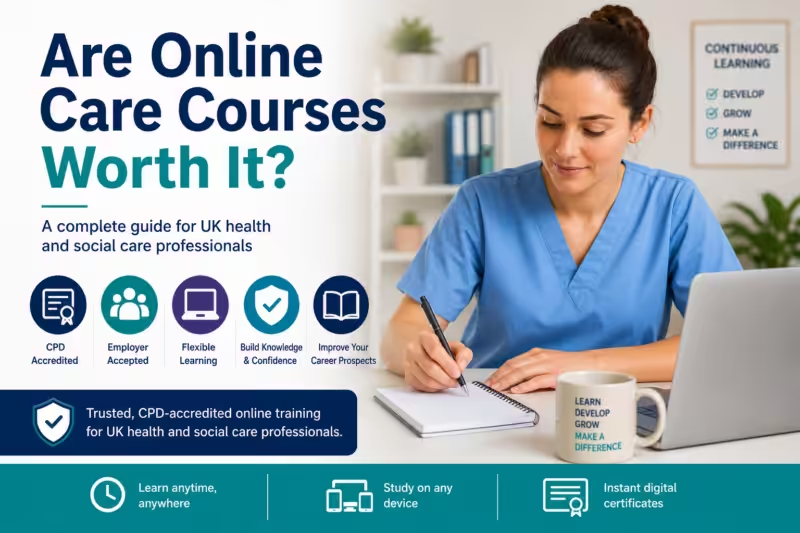
Are Online Care Courses Worth It? A Complete Guide for UK Health and Social Care Professionals
Choosing the Right Online Care Training for Your Career
The demand for qualified health and social care professionals across the UK continues to grow, and with it, the popularity of online care training. Whether you’re starting your first role in care, looking to refresh your knowledge, or progressing your career, you’ve probably asked the question:
Are online care courses actually worth it?
The short answer is yes—provided you choose high-quality, CPD-accredited training from a trusted provider and understand what online learning is designed to achieve.
In this guide, we’ll explain how employers view online care courses, what CPD accreditation means, common misconceptions surrounding the Care Certificate, and why practical experience remains just as important as theoretical knowledge.
At Care-deh-mee (Caredemy), we provide flexible CPD-accredited online care training for UK health and social care professionals, helping thousands of learners and organisations stay compliant, develop new skills, and build confidence in their roles.
Why Online Care Training Has Become So Popular
Healthcare has changed dramatically over the past decade.
Care providers now need training that is:
- Flexible
- Affordable
- Easy to update
- Accessible from anywhere
- Suitable for busy shift workers
Traditional classroom training still has its place, but online learning offers significant advantages.
Learners can:
- Study around work and family commitments
- Learn at their own pace
- Revisit modules whenever needed
- Complete refresher training without travelling
- Access training on computers, tablets or smartphones
For employers, online learning also makes it much easier to monitor staff compliance, issue certificates and keep mandatory training records organised.
What Does CPD Accreditation Actually Mean?
One of the first things to check when choosing an online care course is whether it is CPD accredited.
CPD stands for Continuing Professional Development.
CPD accreditation means a course has been independently assessed to ensure it provides valuable professional learning and meets recognised educational standards.
Benefits include:
- Demonstrates structured professional development
- Supports ongoing learning
- Helps maintain knowledge between refresher training
- Can contribute towards employer development plans
- Shows commitment to continuous improvement
For many employers, CPD accreditation provides reassurance that the course content follows recognised learning principles.
However, it’s important to understand what CPD accreditation does—and doesn’t—mean.
It confirms the quality of the learning experience but is not the same as a vocational qualification or regulated qualification.
Do Employers Accept Online Care Courses?
This is one of the most common questions asked by people entering the care sector.
The answer is yes—most employers actively use online learning themselves.
Across the NHS, care homes, domiciliary care providers, supported living services and private healthcare organisations, online learning has become a standard part of staff development.
Employers recognise that online learning is particularly suitable for:
- Mandatory training
- Annual refresher training
- Induction knowledge
- Policy updates
- Compliance training
- Professional development
Many organisations now operate entirely digital learning management systems for staff training.
The key difference is who provides the course.
Employers generally look for training providers that:
- Deliver up-to-date content
- Offer CPD-accredited courses
- Issue certificates immediately after completion
- Regularly review course material
- Align with current UK legislation and best practice
What Online Care Courses Can Do
Online learning is excellent for developing knowledge.
It can help learners understand:
- Safeguarding responsibilities
- Infection prevention and control
- Fire safety
- Medication awareness
- Equality, diversity and inclusion
- Mental capacity
- Dementia awareness
- Duty of care
- Health and safety
- Communication skills
High-quality online courses also improve confidence by explaining workplace scenarios and encouraging learners to apply best practice.
For experienced care workers, online training provides an efficient way to refresh existing knowledge and remain compliant.
What Online Care Courses Cannot Do
Being realistic is important.
Online learning has limitations.
Some aspects of healthcare require practical assessment and supervised experience.
For example, online courses cannot replace:
- Practical moving and handling assessments
- Clinical competencies
- Medication administration observations
- First aid practical assessments
- Hands-on use of specialist equipment
- Workplace supervision
- Real-life patient interaction
Good training providers explain this clearly rather than suggesting an online certificate alone makes someone fully competent.
Knowledge and competence are not the same thing.
Competence develops through supervised practice, mentoring and workplace experience.
The Care Certificate Misconception
Perhaps the biggest misunderstanding involves the Care Certificate.
Many people believe they can simply complete an online Care Certificate course and become Care Certificate qualified.
This isn’t how the Care Certificate works.
The Care Certificate is a workplace-based programme designed for new health and social care support workers.
It combines:
- Online or classroom learning
- Workplace observations
- Practical assessments
- Supervised competency checks
- Demonstration of skills in the workplace
The knowledge component can certainly be delivered online.
However, practical competencies must be assessed by an employer.
If a provider claims you can complete the entire Care Certificate independently online without workplace assessment, you should question whether this meets the recognised standards.
Why Practical Experience Still Matters
Health and social care is a people-focused profession.
No online course can fully replicate:
- Supporting someone with dementia
- Communicating during distress
- Building trust with service users
- Responding to changing care needs
- Working alongside multidisciplinary teams
These skills develop over time through practical experience.
Online learning prepares you with the knowledge.
Real-world practice develops confidence, judgement and competence.
The strongest care professionals combine both.
How Employers View Online Learning
Most employers now see online learning as part of everyday professional development rather than something unusual.
Recruiters often value candidates who demonstrate:
- Commitment to learning
- Up-to-date knowledge
- CPD activity
- Relevant mandatory training
- Willingness to develop professionally
An online certificate alone won’t guarantee a job.
However, it may strengthen an application by showing initiative and genuine interest in working within care.
Many employers also provide additional training during induction, meaning applicants who already understand key care principles often settle into their roles more quickly.
Choosing a Quality Online Care Course
Not all online courses are equal.
Before enrolling, consider the following:
Is the course CPD accredited?
Independent accreditation provides reassurance about learning quality.
Is the provider reputable?
Look for established providers with positive reviews and clear contact information.
Is the content regularly updated?
Healthcare guidance changes regularly.
Courses should reflect current legislation and best practice.
Does the provider explain limitations?
Trustworthy providers are honest about what online learning can and cannot achieve.
Are certificates issued on completion?
Immediate downloadable certificates make record keeping much easier.
Who Benefits Most from Online Care Training?
Online care courses are ideal for:
- New care workers
- Experienced carers
- Support workers
- Healthcare assistants
- Nurses
- Domiciliary care staff
- Residential care staff
- Supported living teams
- Managers
- Volunteers
- Agency workers
- Personal assistants
They are also valuable for organisations looking to deliver consistent training across multiple locations.
Why Continuous Learning Matters
Healthcare guidance never stands still.
New legislation, updated best practice and changing patient needs mean ongoing learning is essential.
Regular CPD helps professionals:
- Refresh existing knowledge
- Improve confidence
- Reduce mistakes
- Deliver safer care
- Meet employer expectations
- Demonstrate professionalism
Continuous learning benefits both staff and the people they support.
Why Choose Caredemy?
Caredemy provides flexible online training designed specifically for UK health and social care professionals.
Our courses are:
- CPD accredited
- Written using current UK guidance and best practice
- Accessible 24/7
- Mobile-friendly
- Self-paced
- Suitable for individual learners and organisations
- Supported by instant digital certificates upon successful completion
Whether you’re refreshing mandatory training, preparing for a new role or supporting your team’s professional development, our courses make learning straightforward and accessible.
Frequently Asked Questions
Can I get a care job with online training alone?
Online training can strengthen your application, but employers also value practical experience, transferable skills and a positive attitude. Many employers provide further workplace training during induction.
Are CPD-accredited care courses recognised?
CPD accreditation demonstrates that a course supports structured professional development. Many employers value CPD-accredited learning as part of ongoing staff development.
Is online care training accepted by employers?
Yes. Most UK care providers use online learning for mandatory training, refresher training and continuing professional development.
Can I complete the Care Certificate online?
You can complete the knowledge elements online, but the full Care Certificate also requires workplace assessment and practical observation.
Are online care certificates enough to prove competence?
No. Certificates demonstrate learning, while competence must be demonstrated in practice under appropriate supervision where required.
Final Thoughts
Online care training is absolutely worthwhile when used for the right purpose.
It provides accessible, flexible learning that helps healthcare professionals build knowledge, remain compliant and continue developing throughout their careers.
The most successful care professionals combine quality online learning, practical workplace experience, and continuous professional development.
If you’re looking for trusted, flexible online training designed specifically for the UK health and social care sector, Caredemy offers a wide range of CPD-accredited courses to support every stage of your career.
Explore online care training today at: https://caredemy.co.uk/