

How to Become a Carer in the UK: Your Guide to Care Jobs & Training
Embarking on a career in care is a profoundly rewarding decision, offering the chance to make a tangible difference in people’s lives every single day. If you’re considering how to become a carer in the UK, you’re stepping into a vital and growing sector that values compassion, dedication, and a willingness to learn. This comprehensive guide from CareDemy UK will walk you through the essential steps, from understanding the core requirements to securing your first role and advancing your career in care.
The demand for skilled and empathetic care professionals across the UK is consistently high, making it an excellent time to explore the diverse range of care jobs UK has to offer. Whether you’re new to the field or looking to transition from another profession, the journey to becoming a carer is accessible and supported by robust training pathways.
Why Choose a Career in Care?
A career in care is more than just a job; it’s a vocation that brings immense personal satisfaction. The UK’s ageing population and increasing complexity of health needs mean that care professionals are always in demand, offering excellent job security and a wide variety of roles.
Beyond stability, care work provides:
- Profound Impact: You directly improve the quality of life for individuals and their families.
- Personal Growth: Develop invaluable skills in communication, problem-solving, empathy, and resilience.
- Diverse Opportunities: From residential care to home care, specialist support, and hospital settings, the options are varied.
- Community Contribution: Play a crucial role in supporting vulnerable people within your community.
- Continuous Learning: The sector offers ongoing professional development and specialisation.
Essential Qualities of a Great Carer
While specific qualifications can be gained through carer training UK, certain inherent qualities are fundamental to excelling in a care role. Employers consistently look for candidates who demonstrate:
- Empathy and Compassion: The ability to understand and share the feelings of another, showing genuine care and kindness.
- Patience: Care situations can be challenging, requiring a calm and understanding approach.
- Excellent Communication Skills: Listening effectively, speaking clearly, and adapting your communication style to individual needs.
- Reliability and Punctuality: Clients depend on their carers, making consistency and trustworthiness paramount.
- Respect: Upholding the dignity, privacy, and choices of every individual you support.
- Resilience: The capacity to manage emotionally demanding situations and maintain a positive outlook.
- Observational Skills: Noticing subtle changes in a client’s health or mood, which can be crucial for their well-being.
- Adaptability: Being able to adjust to different care settings, client needs, and unexpected situations.
Step 1: Understanding the Requirements for Care Jobs UK

To become a carer in the UK, there are several foundational requirements that most employers will expect. While specific academic qualifications are often not mandatory, a good standard of literacy and numeracy is beneficial.
Age and Right to Work
Generally, you must be at least 18 years old to work in care, particularly in roles involving personal care or medication. You must also have the legal right to work in the UK. This is a non-negotiable requirement for all care jobs UK.
Disclosure and Barring Service (DBS) Check
An Enhanced DBS check is a mandatory requirement for anyone working with vulnerable adults or children. This check reveals any past criminal convictions, cautions, warnings, or reprimands. Employers will arrange this as part of your recruitment process, and a clean record is essential for safeguarding purposes.
Basic Skills and Experience
While formal qualifications aren’t always required to start, a good grasp of English (both written and spoken) and basic maths is important for documentation, communication, and managing tasks like medication records. Many care providers are open to candidates without prior formal care experience, especially if they can demonstrate the essential qualities mentioned above.
Step 2: Gaining Relevant Experience (Even Without Formal Roles)
Even if you haven’t worked in a formal care setting before, you might already possess valuable experience and transferable skills. Highlighting these can significantly strengthen your application for care jobs UK.
Volunteering
Volunteering with charities, hospices, community groups, or befriending services can provide invaluable insight into the care sector and demonstrate your commitment. It allows you to develop practical skills and build confidence in supporting others.
Caring for Family Members
Many people gain significant care experience by looking after a family member or friend. This informal experience is highly relevant and should be detailed on your CV, focusing on the responsibilities you undertook and the skills you developed.
Transferable Skills from Other Roles
Customer service, hospitality, retail, or administrative roles often involve skills directly applicable to care, such as communication, problem-solving, empathy, time management, and working under pressure. Be sure to articulate how these skills translate to a care environment.
Step 3: Essential Carer Training UK
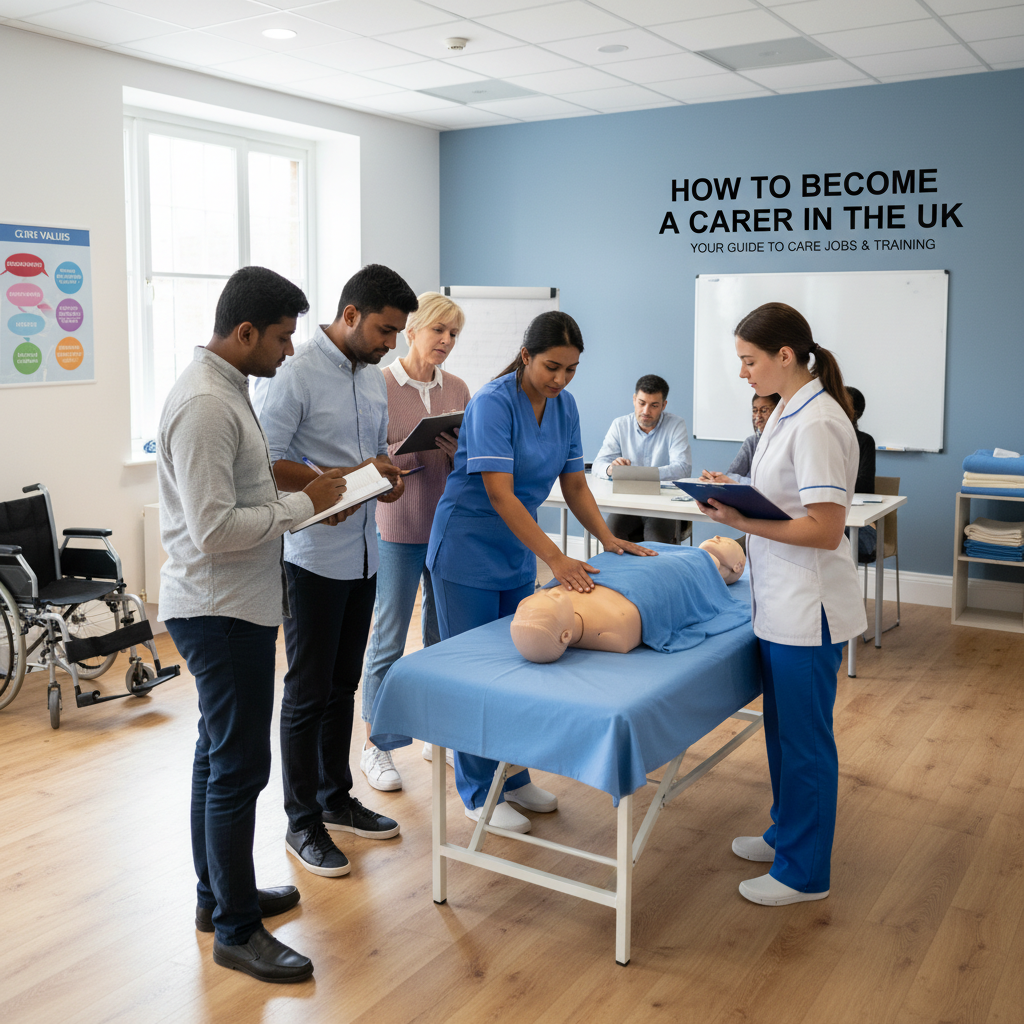
Training is a cornerstone of becoming a competent and confident carer. Even if you have prior experience, formal training ensures you meet industry standards and are equipped with the latest best practices. CareDemy UK specialises in providing high-quality, accessible carer training UK-wide.
The Care Certificate
The Care Certificate is the fundamental standard for all health and social care support workers in the UK. It covers 15 standards, including communication, safeguarding, duty of care, privacy and dignity, and basic life support. Most employers will require you to complete this within your first 12 weeks of employment, or they may prefer you to have completed it beforehand. It provides a solid foundation for any care role.
Mandatory Training Modules
Beyond the Care Certificate, all carers must complete a range of mandatory training modules, typically refreshed annually. These include:
- Manual Handling: Safe techniques for moving and assisting individuals to prevent injury to both client and carer.
- Basic First Aid: Essential skills to respond to medical emergencies.
- Safeguarding Adults and Children: Understanding how to protect vulnerable individuals from abuse and neglect.
- Medication Management: Safe administration, storage, and recording of medication.
- Infection Prevention and Control: Practices to minimise the spread of infections.
- Food Hygiene: Safe handling and preparation of food.
- Health and Safety: General workplace safety and risk assessment.
Specialised Training
Depending on the specific care jobs UK you pursue, you may undertake specialised training in areas such as:
- Dementia Care
- Palliative and End-of-Life Care
- Learning Disabilities Support
- Mental Health Awareness
- Autism Awareness
- Catheter Care or Stoma Care
Investing in your carer training UK is not just about compliance; it’s about enhancing your skills, confidence, and career prospects. CareDemy UK offers a comprehensive suite of courses designed to meet these needs, from the Care Certificate to advanced specialisations.
Step 4: Finding and Applying for Care Jobs UK
Once you’ve understood the requirements and begun your training journey, the next step is to actively seek out care jobs UK. The sector offers a wide array of opportunities, so knowing where to look and how to present yourself is key.
Where to Look for Care Jobs
- NHS Jobs: For roles within hospitals or community health services.
- Local Council Websites: Often advertise roles in social care, including home care and residential care.
- Care Home and Domiciliary Care Provider Websites: Many providers advertise directly on their own sites.
- Recruitment Agencies: Specialised health and social care agencies can connect you with multiple employers.
- Online Job Boards: Websites like Indeed, Totaljobs, and CV-Library list numerous care vacancies.
- Local Press and Community Boards: Especially for smaller, local providers.
Crafting Your CV and Cover Letter
Your CV should clearly highlight your relevant skills, any experience (formal or informal), and completed carer training UK. Emphasise your personal qualities that align with care work. A tailored cover letter for each application allows you to explain why you are passionate about that specific role and organisation.
Interview Preparation
Interviews for care roles often focus on your empathy, understanding of the role’s responsibilities, and how you would handle various scenarios. Be prepared to discuss:
- Why you want to work in care.
- How you demonstrate compassion and patience.
- Your understanding of safeguarding and confidentiality.
- Examples of how you’ve supported others (even informally).
- Your commitment to continuous learning and professional development.
Step 5: The DBS Check and Onboarding
After a successful interview, the final stages before starting your role involve essential checks and an induction period.
Enhanced DBS Check
Your prospective employer will initiate the Enhanced DBS check. This process can take several weeks, so patience is required. A clear DBS is fundamental for working in care.
References
Employers will typically request two or more references, often from previous employers or educational institutions, to verify your character and work ethic.
Induction and Shadowing
Once all checks are complete, you’ll undergo an induction period. This usually involves orientation to the workplace, meeting colleagues, understanding policies and procedures, and often shadowing experienced carers. This is a crucial time to learn the ropes and apply your carer training UK in a practical setting.
Types of Care Roles You Can Pursue
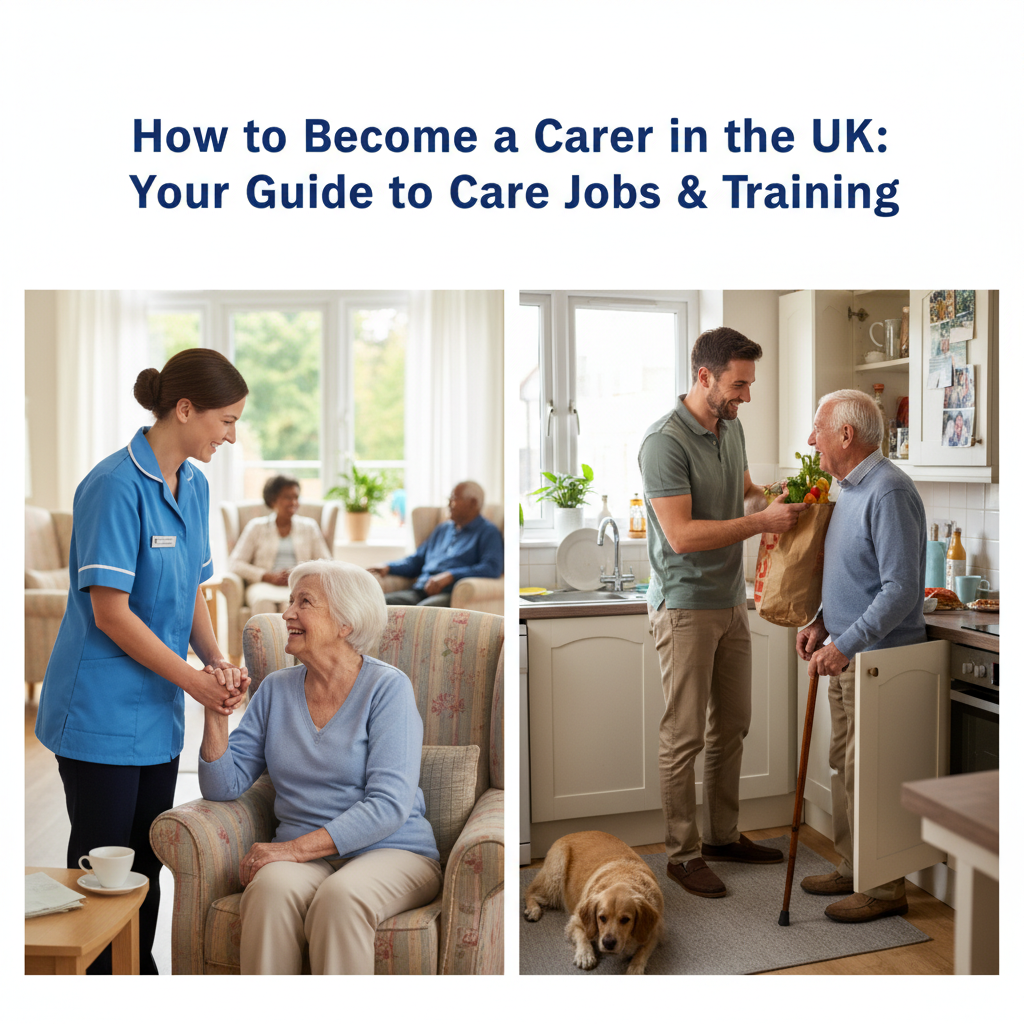
The care sector is incredibly diverse, offering a range of environments and specialisations. Understanding these can help you decide which path is right for you as you become a carer.
Residential Care Worker
Working in care homes or residential settings, you’ll provide support with daily living activities, personal care, medication, and social engagement for multiple residents.
Domiciliary (Home) Carer
You’ll visit clients in their own homes, providing personalised support that allows them to maintain independence. This often involves travel between clients.
Live-in Carer
Living with a client in their home for extended periods, providing continuous support and companionship. This role requires significant commitment and adaptability.
Hospital Support Worker / Healthcare Assistant (HCA)
Working within NHS hospitals or private healthcare settings, assisting nurses and other medical staff with patient care, observations, and mobility.
Specialist Support Worker
These roles focus on specific client groups, such as individuals with dementia, learning disabilities, mental health conditions, or those requiring palliative care. These often require additional, specialised carer training UK.
Career Progression and Development in Care
Becoming a carer is often just the first step in a fulfilling career. The sector offers numerous pathways for professional growth and specialisation.
Further Qualifications
Many carers pursue formal qualifications such as:
- NVQ/QCF Diplomas in Health and Social Care: Available at Levels 2, 3, and 4, these qualifications deepen your knowledge and skills, opening doors to more senior roles.
- Apprenticeships: Combining on-the-job training with formal study.
Specialist Roles
With experience and additional carer training UK, you can specialise in areas like dementia care, palliative care, or supporting individuals with complex needs, becoming an expert in your chosen field.
Leadership and Management
Experienced carers can progress into leadership positions such as:
- Senior Carer / Team Leader: Overseeing a team of carers, mentoring new staff, and managing care plans.
- Care Coordinator: Managing client rotas, liaising with families and other professionals.
- Registered Manager: Taking overall responsibility for a care service, ensuring compliance and high standards of care.
Pathways to Other Professions
Care experience can also be a stepping stone to professions like nursing, social work, occupational therapy, or teaching, often providing a strong foundation for further academic study.
Challenges and Rewards of Care Work
Like any profession, care work comes with its unique set of challenges and immense rewards.
Challenges
- Emotional Demands: Witnessing suffering or loss can be emotionally taxing.
- Physical Demands: Manual handling and being on your feet for long periods can be physically demanding.
- Unsocial Hours: Many care roles involve working evenings, weekends, and holidays.
- Complex Situations: Dealing with challenging behaviours or difficult family dynamics.
Rewards
- Making a Real Difference: The profound satisfaction of improving someone’s quality of life.
- Building Relationships: Forming meaningful connections with clients and their families.
- Job Satisfaction: Knowing your work is vital and appreciated.
- Personal Growth: Developing resilience, empathy, and problem-solving skills that enrich your life.
- Career Stability: A sector with consistent demand and opportunities for advancement.
Conclusion
Deciding how to become a carer in the UK is the first step towards a deeply fulfilling and impactful career. It’s a journey that requires compassion, dedication, and a commitment to continuous learning, but the rewards of making a genuine difference in people’s lives are immeasurable.
By understanding the requirements, investing in essential carer training UK, and actively seeking out the right care jobs UK, you can build a successful and meaningful career. CareDemy UK is here to support you every step of the way, providing the expert training and resources you need to excel in this vital profession. Embrace the opportunity to care, and embark on a career that truly matters.
Frequently asked questions
What are the basic requirements to become a carer in the UK?
To become a carer, you generally need to be at least 18 years old, have the legal right to work in the UK, pass an Enhanced DBS check, and possess good English and basic maths skills.
Do I need formal qualifications or prior experience to get care jobs in the UK?
Formal academic qualifications are often not mandatory. Many care providers are open to candidates without prior formal care experience, especially if they can demonstrate essential qualities like empathy and reliability.
How can I gain experience if I'm new to care work?
You can gain valuable experience through volunteering with charities or community groups, by caring for family members, or by highlighting transferable skills from previous roles such as customer service or retail.
What is the Care Certificate and is it required for carer training in the UK?
The Care Certificate is the fundamental standard for all health and social care support workers in the UK, covering 15 essential standards. Most employers will require you to complete it within your first 12 weeks of employment.