
- Home
- Health & Safety
- Safeguarding Children in Schools and Colleges (Level 2)
£15 + VAT


Written By Allison
Safeguarding Children in Schools and Colleges (Level 2)
- CPD Accredited | Instant Certificate | Mobile Friendly | Bulk Discounts Available
Trusted by care providers, healthcare organisations, businesses and workplace teams
Safeguarding Children in Schools and Colleges (Level 2) provides practical safeguarding training aligned with Keeping Children Safe in Education (KCSIE) 2026. Learners explore abuse and neglect, child-on-child abuse, exploitation, Prevent, attendance, online harms, disclosures, referrals and concerns about adults. Practical scenarios help staff recognise safeguarding risks, respond appropriately and follow reporting and escalation procedures within education settings.
Safeguarding Children in Schools and Colleges (Level 2)
Course Name: Safeguarding Children in Schools and Colleges (Level 2)
Duration: 2 Hours
Delivery: Online Training Course
Certificate Included: Instant Digital Certificate
Accreditation: CPD Accredited
Suitable For: Teachers, teaching assistants, pastoral staff, support staff and other education professionals with safeguarding responsibilities
Assessment: Online Multiple Choice Test
Access: Instant Access
Duration
2 hours
CPD Points
1
Last Updated:
7 Sep 2026
What is Safeguarding Children In Schools And Colleges (Level 2) Training?
Safeguarding Children in Schools and Colleges (Level 2) is designed for education staff who require detailed, practical safeguarding knowledge for their role.
Updated for KCSIE 2026, the course develops learners’ ability to identify safeguarding concerns and take appropriate action. It covers indicators of abuse and neglect, multiple harms, professional curiosity, child-on-child abuse, sexual violence and harassment, exploitation, radicalisation and attendance-related safeguarding concerns.
Learners also examine evolving online risks including sexual images, sextortion, artificial intelligence, deepfakes and emerging technology.
Practical sections cover responding to disclosures, recording and reporting concerns, information sharing, referrals, escalation and concerns about adults working with children.
The course reinforces a fundamental safeguarding principle: staff should act on concerns and follow safeguarding procedures rather than attempting to investigate possible abuse themselves.
CPD Accredited
User friendly interactive courses
Instant Access
Enrol Now – Start Instantly
Certify Instantly
Certificate Available Immediately
Learn on Any Device
Train on Phone, Tablet or Computer
Money Back Guarantee
14 Day Money Back Guaratnee
How Would You Like to Access This Course?
Flexible options for individuals, staff teams and organisations
1
Instant Online Purchase
From 1 to 100+ learners • Bulk discounts available • Instant online access and certificates included
- Instant Access - No Quote Required
- CPD Accredited Certificates Included
- 100% Online & Mobile Friendly
- Assign Courses to Staff, Friends or Family
- Track Progress and Completions Online
- 14 Day Money Back Guarantee
£15 + VAT
CPD • Certificate included • Start instantly
Quantity
Per Course Price
1+ Courses
£15 + Vat
5+ Courses
£9.40 + Vat
10+ Courses
£8.49 + Vat
30+ Courses
£7.99 + Vat
50+ Courses
£6.49 + Vat
100+ Courses
£4.99 + Vat
2
Need Ongoing Staff Training?
Best value for teams of 8+ learners who need regular mandatory, induction and refresher training.
- Save Money on Staff Training
- Access Our Full 200+ Course Library
- Instant certificates issued
- Track Compliance Across Your Team
- Free Learner Replacements
- Reporting & Certificate Management
- CQC inspection ready
- Lowest price guarantee
- Dedicated Support
Best Price Guarantee • CQC Inspection Ready
When should I choose Caredemy Teams?
Caredemy Teams is ideal for organisations with 8+ learners who need access to multiple courses for mandatory training, induction training, and annual refreshers. Benefit from our best-value pricing, free learner replacements, compliance reporting, and access to our full course library. If you only need a small number of CPD courses, you can buy online instantly.
Access friendly, dedicated expert support whenever you need it, with guidance available throughout your learning journey
All-access individual subscription
Get unlimited access to 200+ CPD-accredited courses. One low monthly price. Learn anytime.
Buy any 5 courses for £47
Mix and max any courses.
CPD accredited - Certificates included.
Who Is This Course For?
Safeguarding Children in Schools and Colleges (Level 2) is suitable for education professionals who work directly with children and young people and require safeguarding knowledge beyond basic awareness.
This includes teachers, teaching assistants, learning support assistants, pastoral staff, heads of year, school nurses, SEND staff, behaviour and attendance teams, tutors, sports and enrichment staff, technicians and other employees with regular contact with pupils or students.
It is also relevant to staff whose responsibilities may involve recognising concerns, receiving disclosures, recording safeguarding information or escalating concerns to the Designated Safeguarding Lead (DSL).
The course is designed to complement the school’s or college’s own safeguarding and child protection policies, staff code of conduct, DSL arrangements and ongoing safeguarding updates.
Key Benefits
✓ Apply KCSIE 2026 safeguarding responsibilities to everyday education practice
✓ Recognise abuse, neglect, exploitation and complex or overlapping harms
✓ Respond appropriately to disclosures and escalate safeguarding concerns
✓ Identify child-on-child abuse, sexual harassment and exploitation risks
✓ Recognise online harms including sextortion, AI-generated content and deepfakes
✓ Strengthen recording, information sharing and professional safeguarding practice
Course Modules
- Welcome & Course Overview
- Learning Outcomes
- Safeguarding & Child Protection
- The Safeguarding Framework
- KCSIE 2026: What Staff Need to Know
- Your Safeguarding Responsibilities
- DSL, Family Help & Escalation
- Recognising Abuse & Neglect
- Spotting the Signs
- Multiple Harms & Professional Curiosity
- Children Who May Need Additional Support
- Child-on-Child Abuse
- Sexual Violence, Harassment & Consent
- Child Sexual & Criminal Exploitation
- Recognising Exploitation
- Specific Safeguarding Risks
- Radicalisation & Prevent
- Attendance & Children Absent from Education
- Online Safeguarding
- Sexual Images, Sextortion, AI & Deepfakes
- Filtering, Monitoring & Emerging Technology
- Responding to a Disclosure
- Disclosure Scenario
- Recording & Reporting Concerns
- Information Sharing & Referrals
- Concerns About Adults
- Professional Boundaries
- Safer Recruitment
- KCSIE 2026: Regulated Activity Change
- Putting Safeguarding Into Practice
- Final Safeguarding Scenario – Meet Alex
- Key Learning & Next Steps
Ready to start?
Learning Outcomes
| Learner Outcome | Covered |
|---|---|
| Explain their safeguarding and child protection responsibilities under KCSIE 2026 | ✓ |
| Describe the role of the DSL and appropriate safeguarding escalation routes | ✓ |
| Identify signs and indicators of physical abuse, sexual abuse, emotional abuse and neglect | ✓ |
| Apply professional curiosity when a child may be experiencing multiple or overlapping harms | ✓ |
| Recognise children who may require additional safeguarding support | ✓ |
| Identify and respond appropriately to child-on-child abuse | ✓ |
| Recognise sexual violence, sexual harassment and consent-related safeguarding concerns | ✓ |
| Identify indicators of child sexual exploitation and child criminal exploitation | ✓ |
| Recognise safeguarding risks associated with radicalisation and the Prevent duty | ✓ |
| Identify attendance and absence patterns that may indicate a safeguarding concern | ✓ |
| Recognise online safeguarding risks including sextortion, AI-generated content and deepfakes | ✓ |
| Explain the safeguarding importance of appropriate filtering and monitoring | ✓ |
| Respond appropriately when a child makes a safeguarding disclosure | ✓ |
| Record and report safeguarding concerns accurately, clearly and promptly | ✓ |
| Apply appropriate principles when sharing safeguarding information and contributing to referrals | ✓ |
| Recognise concerns about adults working with children and follow appropriate reporting procedures | ✓ |
| Maintain appropriate professional boundaries when working with children and young people | ✓ |
| Apply safeguarding knowledge to realistic school and college scenarios | ✓ |
Training 8+ Staff Across Multiple Courses?
Purchasing multiple licences for this training course? Simply adjust the quantity and buy online today.
If you need ongoing training for 10+ employees across multiple subjects, our Team Training platform provides access to 200+ CPD accredited courses, compliance reporting, learner management and bulk enrolment tools.
- Access 200+ CPD Accredited Courses
- Manage All Learners In One Place
- Compliance & Audit Reporting
- Bulk Enrolment & Certificate Tracking
- Dedicated Account Support
Team Training Solutions
Ideal for care providers, healthcare organisations and workplace teams training multiple employees.
Why Choose Caredemy?
- Instant Certificate
- CPD-accredited courses
- Money Back Guarantee
- Expert-designed training
- 120,000 learners trained
- Flexible online learning
- Compliance-focused
- Dedicated support
What Our Learners Say?
“The scenarios made it much clearer when a concern should be recorded and passed to the DSL.”
Sophie Reynolds
Teaching Assistant
“Strong coverage of exploitation and overlapping harms. It made me think differently about changes in pupil behaviour.”
Andrew Collins
Head of Year
“The sections on sextortion, AI and deepfakes were especially useful for understanding newer safeguarding risks facing students.”
Melissa Grant
Pastoral Lead
4.88/5 from 1,476+ learners
Why Is Safeguarding Children In Schools And Colleges (Level 2) Training Important?
Safeguarding concerns in education are not always obvious or isolated. A change in attendance, behaviour, friendships or online activity may form part of a wider pattern of abuse, neglect or exploitation.
Level 2 training helps staff recognise these connections, exercise professional curiosity and respond appropriately rather than waiting for definitive evidence.
Effective safeguarding knowledge also enables staff to respond safely when a child makes a disclosure, create accurate records, share relevant information and understand when concerns should be referred or escalated.
This is particularly important as safeguarding risks evolve. Child-on-child abuse, criminal and sexual exploitation, sextortion, AI-generated imagery and other technology-facilitated harms can cross the boundaries between children’s online and offline lives.
Appropriate training supports earlier identification, safer professional decisions and a whole-school or college culture in which safeguarding is understood as everyone’s responsibility.
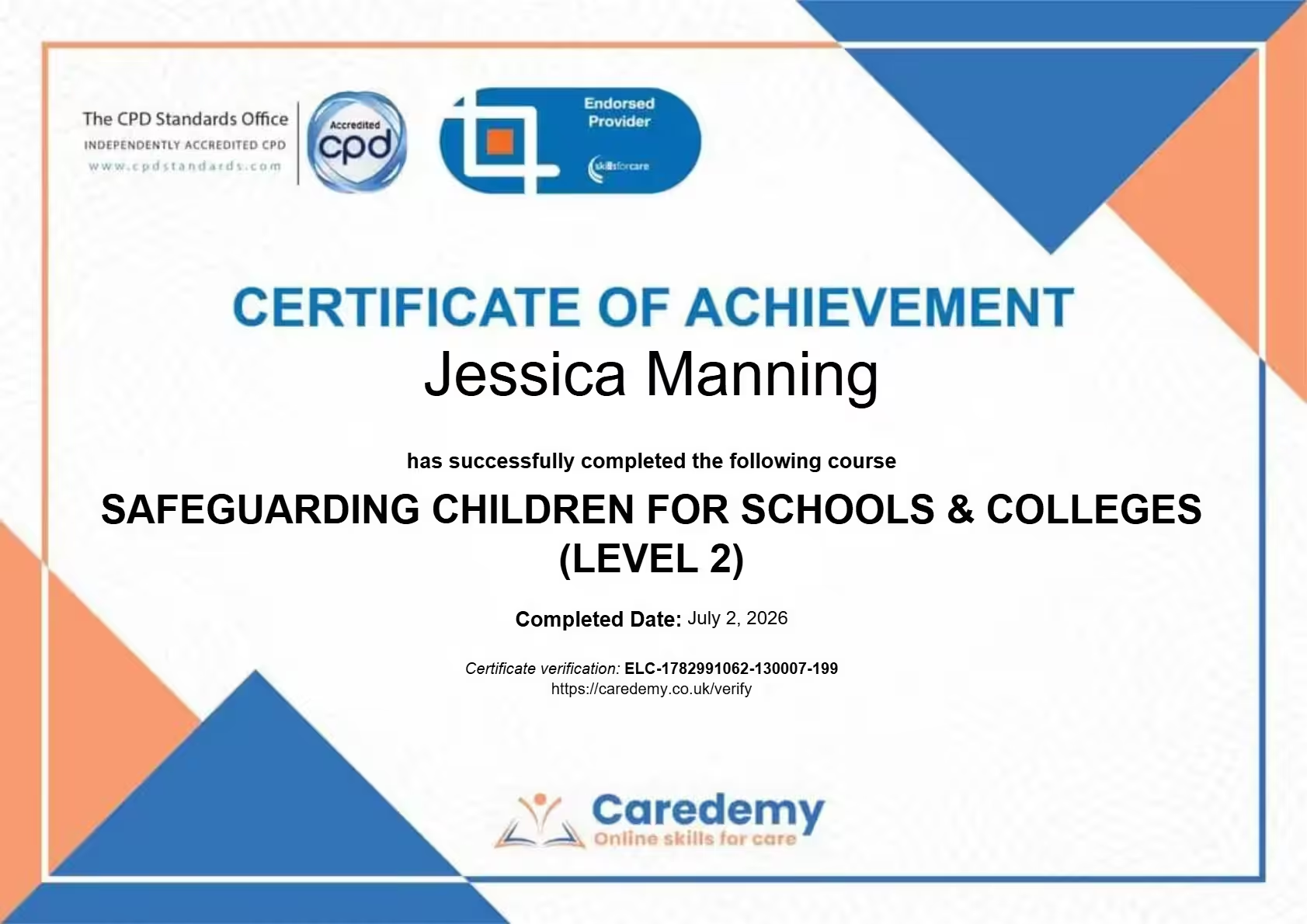
Instant Course Certificate
Is Safeguarding Children In Schools And Colleges (Level 2) Training A Legal Requirement In The UK?
There is no law requiring every education worker to hold a certificate specifically called Safeguarding Children in Schools and Colleges Level 2.
However, schools and colleges in England have statutory safeguarding responsibilities. Keeping Children Safe in Education (KCSIE) 2026 is statutory guidance that relevant education settings must have regard to when carrying out their safeguarding duties.
KCSIE requires staff to receive appropriate safeguarding and child protection training at induction, including online safety. This training should be regularly updated, and staff should receive safeguarding and child protection updates as required and at least annually.
Employers must therefore determine the appropriate level and content of safeguarding training according to the individual’s role and responsibilities.
Level 2 training is particularly appropriate for staff who regularly work with children and may need to recognise, respond to, record or escalate safeguarding concerns.
Trusted by 120,000+ learners
Trusted by care providers, healthcare organisations, businesses and workplace teams across the UK for high-quality online training
Office & Commercial
Health & Social Care
Industrial, Warehousing & Facilities
Hospitality, Retail & Public Services
Safeguarding Children in Schools and Colleges (Level 2) FAQ?
What is Safeguarding Children in Schools and Colleges Level 2 training?
Level 2 safeguarding training develops the practical knowledge education staff need to recognise and respond to child protection concerns. This course covers KCSIE 2026, abuse and neglect, child-on-child abuse, exploitation, Prevent, online safeguarding, disclosures, reporting, information sharing, referrals, professional boundaries and concerns about adults working with children.
Who needs Level 2 safeguarding training in schools?
Level 2 training is particularly relevant to staff who work directly with children and may need to recognise, respond to or report safeguarding concerns. This can include teachers, teaching assistants, pastoral teams, SEND staff, heads of year, school nurses, attendance teams and other employees with regular contact with pupils or students.
Is Level 2 safeguarding training a legal requirement for school staff?
There is no universal legal requirement for a certificate specifically called “Level 2 safeguarding”. However, KCSIE requires school and college staff to receive appropriate safeguarding and child protection training at induction and for that training to be regularly updated. Employers should determine the appropriate training according to each employee’s responsibilities.
What does KCSIE 2026 mean for school and college staff?
KCSIE sets out statutory safeguarding guidance for schools and colleges in England. Staff need to understand their safeguarding responsibilities, how to recognise concerns, how to report them and how to respond if a child needs help or protection. This course incorporates KCSIE 2026 into practical safeguarding scenarios relevant to education staff.
What is the difference between Level 1 and Level 2 safeguarding training?
Level 1 generally provides basic safeguarding awareness, such as recognising possible signs of harm and knowing how to report concerns. Level 2 develops more detailed practical knowledge for staff working directly with children, including disclosures, exploitation, multiple harms, information sharing, referrals, escalation and applying safeguarding procedures to workplace situations.
How often should school staff complete safeguarding training?
KCSIE states that staff safeguarding and child protection training should be regularly updated. Staff should also receive safeguarding and child protection updates, including online safety, as required and at least annually. Schools and colleges should decide when formal refresher training is needed according to current guidance, roles and safeguarding needs.
What should school staff do when a child makes a safeguarding disclosure?
Listen carefully, take the child seriously and avoid leading or investigative questions. Staff should not promise confidentiality. The information should be recorded accurately and reported promptly according to the setting’s safeguarding procedure, normally to the DSL or deputy. Staff should also understand how to act if normal reporting routes are unavailable or concerns remain unresolved.
Does Level 2 safeguarding training cover online safety and AI risks?
Yes. The course covers online safeguarding, sexual images, sextortion, artificial intelligence, deepfakes, filtering, monitoring and emerging technology. These topics help staff recognise how technology can facilitate abuse, exploitation and harassment and understand that children’s online and offline safeguarding risks are often closely connected.
Need Training for Multiple Employees?
Train your entire workforce through Caredemy Teams with bulk enrolment, compliance reporting and access to 200+ CPD courses.
- CPD-accredited certificate
- Instant Certificate
- Learn of Any Device
- Money-back Guarantee
Related Courses You May Like


UK REGULATIONS & GUIDANCE
£15 + Vat
Safeguarding Children in Schools and Colleges (Level 2)
- CPD Accredited
- Instant Certificate
- Instant Access
- Bulk Discounts Available