
- Home
- Health & Safety
- Adverse Childhood Experiences Ace Course
Adverse Childhood Experiences Ace Course
£15 + VAT


Written By Allison
- CPD Accredited | Instant Certificate | Mobile Friendly | Bulk Discounts Available
Trusted by care providers, healthcare organisations, businesses and workplace teams
Adverse Childhood Experiences (ACEs) training explores childhood adversity, its potential effects and the factors that help people cope and recover. Learners consider how this knowledge applies when supporting children, families and adults. The course encourages thoughtful responses to distress, helping staff look beyond behaviour and consider what a person needs to feel safe and supported.
Adverse Childhood Experiences Ace Course Summary
Course Name: Adverse Childhood Experiences (ACEs) Awareness – Level 1
Duration: 1 hour
Delivery: Online Training Course
Certificate Included: Instant Digital Certificate on successful completion
Accreditation: CPD Accredited – 1 CPD point
Suitable For: Healthcare, social care, education, early years, youth work, community support and relevant workplace roles
Assessment: Online Multiple Choice Test
Access: Instant Access with 12 months’ course access.
Duration
1 hour
CPD Points
1
Last Updated:
15 Apr 2026
What is Adverse Childhood Experiences training?
Adverse Childhood Experiences training introduces the relationship between difficult childhood experiences and a person’s later needs, relationships and responses to services.
It provides a foundation for considering how previous experiences may influence everyday interactions. For example, someone who feels unsafe may struggle to trust a professional or participate in decisions about their support.
Trauma-informed practice encourages staff to explain their actions, offer meaningful choices and work alongside the person. Its purpose is to make services more accessible and reduce the possibility of re-traumatisation; it is distinct from specialist treatment for trauma. GOV.UK
This awareness course should sit alongside role-specific safeguarding training, workplace procedures and supervision.
CPD Accredited
User friendly interactive courses
Instant Access
Enrol Now – Start Instantly
Certify Instantly
Certificate Available Immediately
Learn on Any Device
Train on Phone, Tablet or Computer
Money Back Guarantee
14 Day Money Back Guaratnee
How Would You Like to Access This Course?
Flexible options for individuals, staff teams and organisations
1
Instant Online Purchase
From 1 to 100+ learners • Bulk discounts available • Instant online access and certificates included
- Instant Access - No Quote Required
- CPD Accredited Certificates Included
- 100% Online & Mobile Friendly
- Assign Courses to Staff, Friends or Family
- Track Progress and Completions Online
- 14 Day Money Back Guarantee
£15 + VAT
CPD • Certificate included • Start instantly
Quantity
Per Course Price
1+ Courses
£15 + Vat
5+ Courses
£9.40 + Vat
10+ Courses
£8.49 + Vat
30+ Courses
£7.99 + Vat
50+ Courses
£6.49 + Vat
100+ Courses
£4.99 + Vat
2
Need Ongoing Staff Training?
Best value for teams of 8+ learners who need regular mandatory, induction and refresher training.
- Save Money on Staff Training
- Access Our Full 200+ Course Library
- Instant certificates issued
- Track Compliance Across Your Team
- Free Learner Replacements
- Reporting & Certificate Management
- CQC inspection ready
- Lowest price guarantee
- Dedicated Support
Best Price Guarantee • CQC Inspection Ready
When should I choose Caredemy Teams?
Caredemy Teams is ideal for organisations with 8+ learners who need access to multiple courses for mandatory training, induction training, and annual refreshers. Benefit from our best-value pricing, free learner replacements, compliance reporting, and access to our full course library. If you only need a small number of CPD courses, you can buy online instantly.
Access friendly, dedicated expert support whenever you need it, with guidance available throughout your learning journey
All-access individual subscription
Get unlimited access to 200+ CPD-accredited courses. One low monthly price. Learn anytime.
Buy any 5 courses for £47
Mix and max any courses.
CPD accredited - Certificates included.
Who Is This Course For?
This course is relevant to staff whose work involves supporting children, families or adults affected by childhood adversity.
Suitable roles include nurses, healthcare assistants, social workers, care workers, residential support workers, teachers, teaching assistants, early years practitioners, youth workers and mental health support staff.
It is also relevant to community workers, police and justice professionals, public health teams and managers responsible for developing supportive services.
HR professionals and line managers may find the subject useful when considering sensitive workplace interactions. Parents, carers and guardians can also use the learning to develop their knowledge of childhood adversity.
The course offers introductory learning rather than a qualification to assess or treat trauma.
Key Benefits
✓ Consider the needs behind distressed or defensive behaviour.
✓ Recognise how early experiences may affect trust in services.
✓ Identify protective influences that support resilience.
✓ Use clearer explanations and meaningful choices in everyday interactions.
✓ Support consistent, compassionate approaches across your team.
✓ Complement safeguarding learning and reflective supervision.
Course Modules
- Adverse Childhood Experiences – Course Introduction
- Introduction to Childhood Adversity
- Defining Adverse Experiences
- Beyond the Household
- 10 Markers of Adverse Childhood Experiences
- The Prevalence of Adversity
- The Concept of Toxic Stress
- Early Brain Development
- The First 1000 Days
- The Cumulative Effect of Adversity
- Physical Health Outcomes
- Mental Health and Emotional Wellbeing
- Behavioural Responses to Adversity
- Education and Life Opportunities
- Risk Factors
- Parenting and Family Dynamics
- The Role of Biology and Environment
- Resilience and Protective Factors
- A Public Health Approach
- Trauma-Informed Practice
- Trauma-Informed Services
- Key Components of a Trauma-Informed Practice
Ready to start?
Learning Outcomes
| Learner Outcome | Covered |
|---|---|
| Define childhood adversity and adverse childhood experiences. | ✓ |
| Identify the 10 markers of ACEs presented in the course. | ✓ |
| Recognise adversity beyond the household. | ✓ |
| Explain the concept of toxic stress. | ✓ |
| Describe why early brain development and the first 1,000 days matter. | ✓ |
| Explain how exposure to multiple adversities can have cumulative effects. | ✓ |
| Identify potential links between adversity and physical health. | ✓ |
| Describe possible effects on mental health and emotional wellbeing. | ✓ |
| Recognise behavioural responses associated with adversity. | ✓ |
| Explain how adversity may affect education and life opportunities. | ✓ |
| Identify risk factors involving family circumstances and the wider environment. | ✓ |
| Explain how biology and environment interact in development. | ✓ |
| Identify protective factors that help resilience develop. | ✓ |
| Describe the purpose of a public health approach to adversity. | ✓ |
| Apply trauma-informed principles to an everyday support scenario. | ✓ |
Training 8+ Staff Across Multiple Courses?
Purchasing multiple licences for this training course? Simply adjust the quantity and buy online today.
If you need ongoing training for 10+ employees across multiple subjects, our Team Training platform provides access to 200+ CPD accredited courses, compliance reporting, learner management and bulk enrolment tools.
- Access 200+ CPD Accredited Courses
- Manage All Learners In One Place
- Compliance & Audit Reporting
- Bulk Enrolment & Certificate Tracking
- Dedicated Account Support
Team Training Solutions
Ideal for care providers, healthcare organisations and workplace teams training multiple employees.
Why Choose Caredemy?
- Instant Certificate
- CPD-accredited courses
- Money Back Guarantee
- Expert-designed training
- 120,000 learners trained
- Flexible online learning
- Compliance-focused
- Dedicated support
What Our Learners Say?
“The explanation of toxic stress helped me think more carefully about children’s responses in the classroom.”
Emma Clarke
Teaching Assistant
“Clear examples helped me consider how offering choices could make everyday support feel safer.”
Daniel Hughes
Residential Support Worker
“A useful introduction to protective factors and why consistent relationships matter when supporting families.”
Aisha Patel
Family Support Worker
4.68/5 from 13+ learners
Why Is Adverse Childhood Experiences training important?
A distressed child or an adult who withdraws from support may need a more sensitive approach. Staff who consider the possible influence of trauma can reflect on how their communication, expectations and environment affect the person.
For example, explaining what will happen during an appointment and checking what would help someone feel comfortable can support trust. Trauma-informed practice prioritises physical and emotional safety while helping services avoid interactions that recreate feelings associated with previous harm. GOV.UK
ACEs awareness also provides a useful focus for team discussion and supervision. Managers can use learning needs identified through practice to plan further development, consistent with expectations for role-appropriate staff training and support.
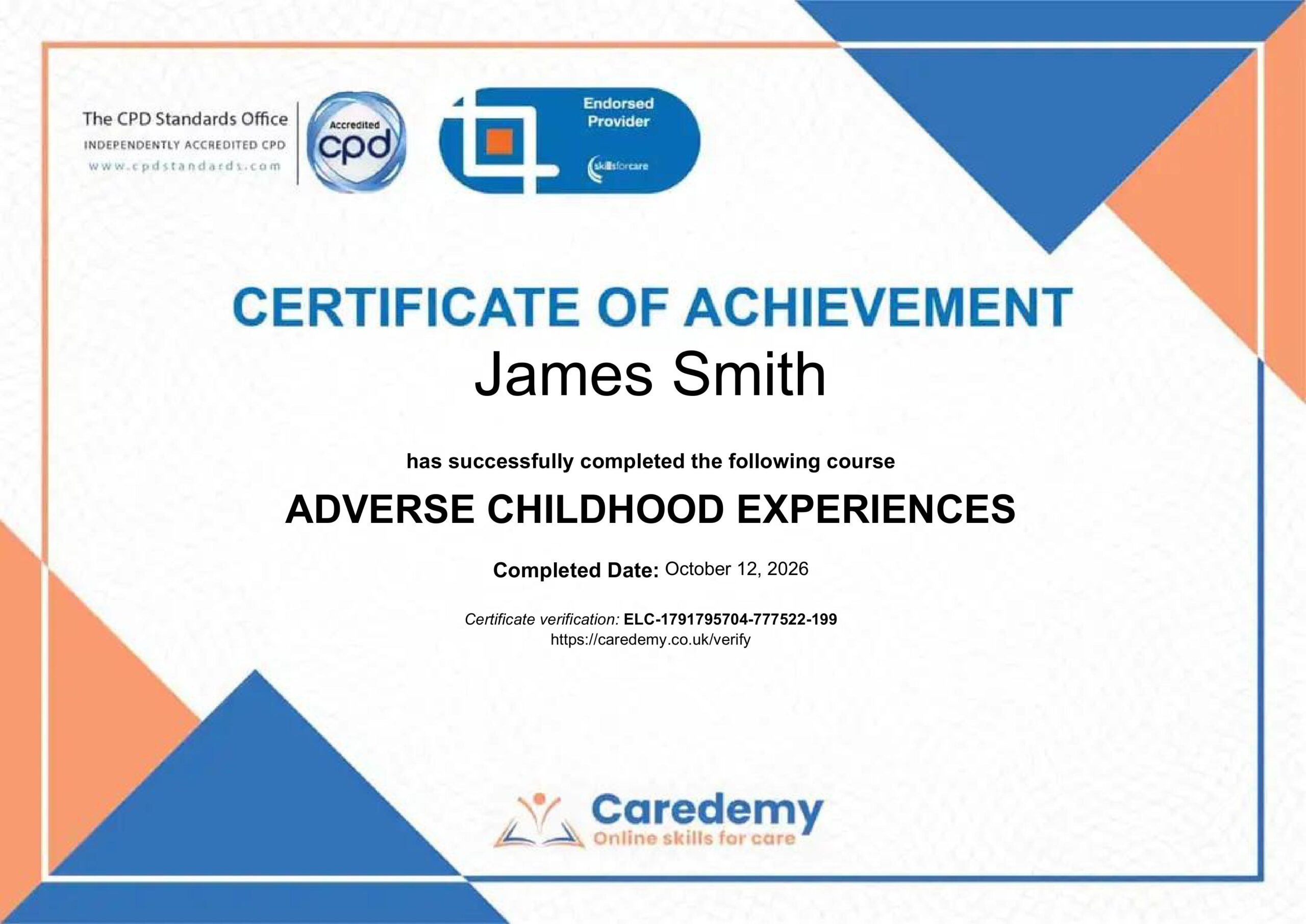
Instant Course Certificate
Is Adverse Childhood Experiences training a legal requirement in the UK?
There is no blanket UK legal requirement for every worker to complete a specifically named ACEs course. Employers should determine relevant learning from staff responsibilities, service needs and applicable safeguarding requirements.
In England, Regulation 18 of the Health and Social Care Act 2008 (Regulated Activities) Regulations 2014 requires relevant providers to give staff the training, support and supervision necessary for their duties. It does not prescribe this particular course. cqc.org.uk
Working Together to Safeguard Children 2026 sets out statutory expectations for organisations working with children in England. ACEs awareness can complement this work but does not replace safeguarding training or reporting procedures. GOV.UK
Organisations in Scotland, Wales and Northern Ireland should apply their own national safeguarding frameworks and local procedures.
Trusted by 120,000+ learners
Trusted by care providers, healthcare organisations, businesses and workplace teams across the UK for high-quality online training
Office & Commercial
Health & Social Care
Industrial, Warehousing & Facilities
Hospitality, Retail & Public Services
Adverse Childhood Experiences training FAQ?
What are adverse childhood experiences?
Adverse childhood experiences, often called ACEs, are potentially traumatic experiences occurring during childhood. Examples include abuse, neglect and exposure to domestic abuse. The term helps professionals consider how early adversity may influence someone’s needs. It should encourage sensitive, individual support rather than assumptions about a person based on their history.
Who needs adverse childhood experiences training?
ACEs training is useful for people supporting children, families or adults whose earlier experiences may affect their engagement with services. This includes education, healthcare, social care and community staff. Employers should consider the depth of learning each role requires, particularly where workers have safeguarding responsibilities or regularly support people experiencing distress.
What is the difference between ACEs awareness and trauma-informed practice?
ACEs awareness focuses on childhood adversity and its possible effects. Trauma-informed practice concerns how services respond to people who may have experienced trauma, including trauma occurring in adulthood. It emphasises safety, trust and participation in decisions. Understanding ACEs can inform this approach, while putting it into practice also requires organisational support.
How long does the ACEs course take, and will I receive a certificate?
The course takes approximately one hour. After passing the online multiple choice assessment, you can download your digital certificate. When planning staff learning, allow additional time to discuss how the subject relates to your service and any further development needed for individual roles.
How often should ACEs training be refreshed?
Set a review date through your employer’s training policy and supervision process. Consider whether your responsibilities have changed, whether you can apply the learning confidently and whether service reviews identify gaps. A refresher may be useful after moving into a role involving more complex support, alongside any required safeguarding updates.
Is ACEs training compulsory for care workers?
A specifically named ACEs course is not a universal requirement for every care worker. In England, regulated care providers must ensure staff receive training and support appropriate to their duties. An employer may therefore include ACEs awareness in its training plan where this is relevant to the people receiving care.
Does this course replace safeguarding children training?
No. ACEs awareness provides additional context for understanding childhood adversity; safeguarding training addresses responsibilities for protecting children and responding to concerns. Staff must still follow their organisation’s reporting procedures and complete the safeguarding learning appropriate to their role. In England, this sits within the framework of Working Together to Safeguard Children.
Does ACEs training qualify me to provide trauma therapy?
No. An awareness course does not qualify you to diagnose trauma-related conditions or provide psychological therapy. Use the learning within your role, seek supervision where needed and follow established referral routes. Trauma-informed everyday practice aims to improve people’s experience of services; specialist assessment and treatment require appropriately qualified practitioners.
Need Training for Multiple Employees?
Train your entire workforce through Caredemy Teams with bulk enrolment, compliance reporting and access to 200+ CPD courses.
- CPD-accredited certificate
- Instant Certificate
- Learn of Any Device
- Money-back Guarantee
Related Courses You May Like


UK Regulations And Guidance

£15 + Vat
Adverse Childhood Experiences Ace Course
- CPD Accredited
- Instant Certificate
- Instant Access
- Bulk Discounts Available