

Unlock Your Potential: Benefits of Accredited Online Care Courses UK
In the dynamic and ever-evolving landscape of UK health and social care, ensuring staff are expertly trained, compliant, and confident is not just good practice – it’s a fundamental requirement. For care providers, managers, and individual care workers alike, the pathway to achieving this often involves navigating a complex array of training options. This is where accredited online care courses emerge as a powerful, practical, and increasingly essential solution, offering a wealth of benefits that directly address the sector’s unique challenges.
Accredited online care courses provide a flexible, high-quality, and cost-effective means for care professionals across the UK to gain and maintain the critical skills and knowledge needed to deliver outstanding care. They offer a structured, recognised framework for learning that supports both individual career progression and organisational compliance, making them an invaluable asset for anyone involved in care provision. From enhancing service user safety to fostering a highly skilled workforce, the advantages of embracing accredited online care training are profound and far-reaching.
Why Accreditation Matters in UK Care
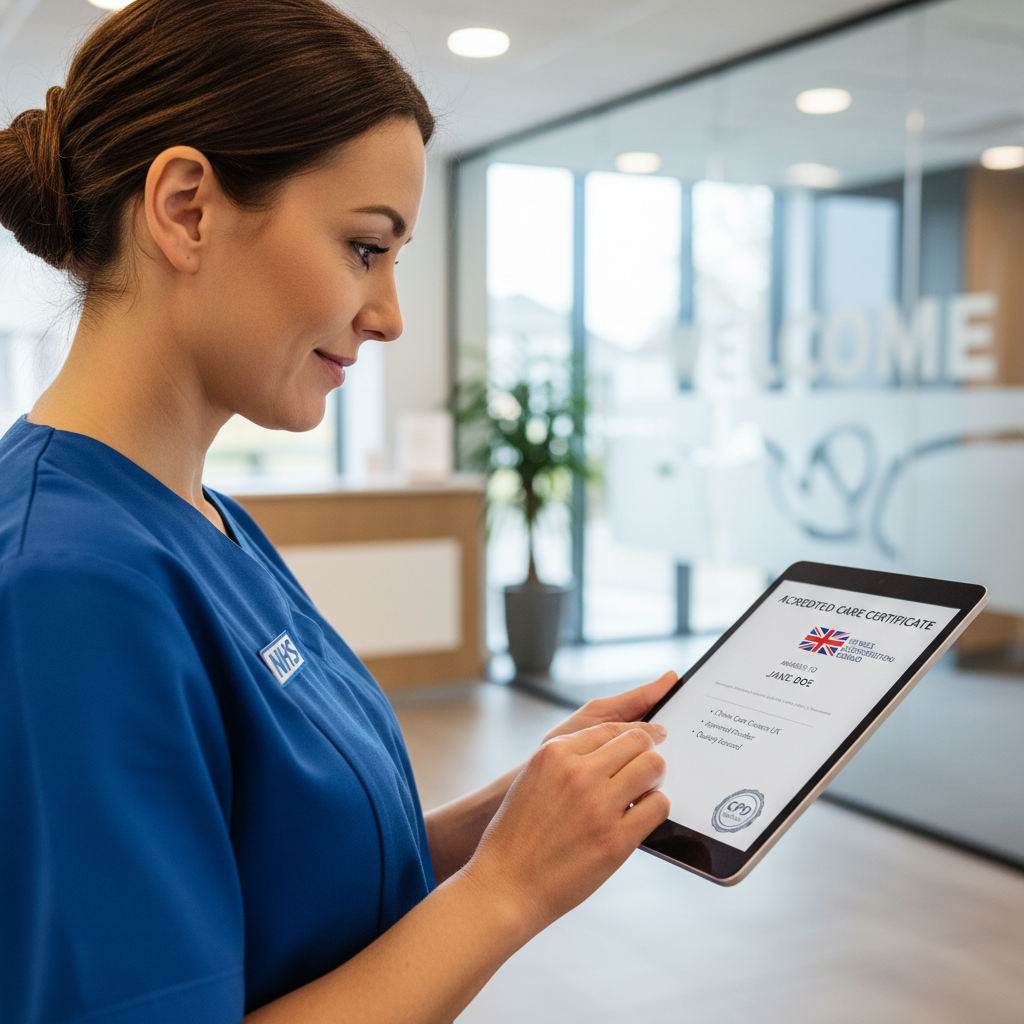
The term ‘accredited’ is not merely a buzzword; it signifies a crucial mark of quality and reliability within the UK care sector. When an online care course is accredited, it means it has been independently assessed and verified by a recognised awarding body against specific, rigorous standards. For care providers and workers, this offers significant reassurance.
Accreditation ensures that the training content is up-to-date, relevant to current UK legislation and best practices, and meets the professional standards expected by regulators such as the Care Quality Commission (CQC) in England, Care Inspectorate Wales, the Care Inspectorate in Scotland, and the Regulation and Quality Improvement Authority (RQIA) in Northern Ireland. It provides a clear benchmark for quality, helping organisations demonstrate their commitment to continuous professional development and high standards of care.
Choosing accredited online care courses means investing in training that has been scrutinised for its educational value, accuracy, and effectiveness. This not only builds confidence in the learner but also provides tangible evidence of competence and adherence to industry benchmarks, which is vital for compliance and safeguarding service users.
Flexibility and Accessibility: Training on Your Terms

One of the most compelling benefits of online care training is the unparalleled flexibility it offers. The traditional model of classroom-based training often presents significant logistical hurdles for care providers and their staff. Coordinating schedules, arranging cover, and managing travel time and costs can be a considerable challenge in a sector that operates 24/7.
Accredited online care courses remove many of these barriers. Care workers can access learning materials at a time and place that suits them, whether that’s during a quiet period at work, at home in the evenings, or on their days off. This adaptability is particularly beneficial for those working irregular shifts or living in remote areas where access to physical training centres might be limited.
For care managers and training leads, this flexibility translates into reduced disruption to service delivery. Staff can complete their training without needing to be taken off the floor for extended periods, ensuring continuity of care. It also broadens the reach of training, making high-quality education accessible to every member of the team, regardless of their location or personal circumstances.
Ensuring Compliance and High Standards
In the highly regulated UK care sector, compliance is non-negotiable. Care providers are legally and ethically bound to ensure their staff possess the necessary skills and knowledge to deliver safe, effective, and person-centred care. Accredited online care courses play a pivotal role in meeting these stringent requirements.
These courses are typically designed to align with national occupational standards, CQC fundamental standards, and guidance from bodies like Skills for Care. By undertaking accredited online care training, organisations can confidently demonstrate to inspectors and auditors that their workforce is receiving recognised, quality-assured education that addresses key areas such as safeguarding, medication management, moving and handling, and infection control.
Maintaining an up-to-date training matrix with evidence of accredited learning helps care providers not only pass inspections but also proactively mitigate risks. A well-trained workforce is less prone to errors, better equipped to handle challenging situations, and more capable of promoting the well-being and dignity of those they support, ultimately leading to higher standards of care and improved service user outcomes.
Cost-Effectiveness for Care Providers
Beyond the immediate benefits of flexibility and compliance, accredited online care courses offer significant financial advantages for care providers. Traditional face-to-face training often comes with a substantial price tag, encompassing not just the trainer’s fees but also venue hire, travel expenses, accommodation, and the indirect cost of staff time away from their duties.
Online care training dramatically reduces these overheads. There are no travel costs, no venue hire, and often, the per-learner cost is considerably lower, especially when purchasing bulk licences or subscriptions. The ability for staff to train during quieter periods or outside of peak hours also minimises the need for expensive agency cover or overtime for colleagues.
Furthermore, the scalability of online platforms means that training can be rolled out to a large number of staff efficiently and consistently, ensuring everyone receives the same high-quality instruction. This cost-efficiency allows care providers to allocate resources more effectively, investing more in direct care provision or other areas of service improvement, while still maintaining a highly skilled and compliant workforce.
Empowering the Care Workforce: Professional Development

For individual care workers, accredited online care courses are a powerful tool for professional growth and career advancement. In a sector where continuous learning is vital, these courses provide accessible pathways to enhance existing skills, acquire new competencies, and specialise in particular areas of care.
Completing accredited training boosts a care worker’s confidence and competence, making them feel more valued and capable in their role. This, in turn, can lead to increased job satisfaction and improved staff retention rates for care providers. When employees see a clear investment in their development, they are more likely to feel engaged and committed to their organisation.
Moreover, the certifications gained from accredited online care training are widely recognised and respected within the industry. They serve as tangible evidence of a care worker’s dedication to their profession and their ability to meet high standards, opening doors to new opportunities, promotions, and specialisation within the diverse field of health and social care.
Key Features of Effective Accredited Online Care Courses
When selecting accredited online care courses, it’s important to look beyond just the accreditation badge. The effectiveness of the training also hinges on several key features that enhance the learning experience and ensure practical application of knowledge.
- Interactive and Engaging Content: Look for courses that utilise a variety of learning methods, including videos, quizzes, case studies, and interactive exercises, to keep learners engaged and facilitate deeper understanding.
- Clear Learning Outcomes: The course should clearly state what learners will be able to do or understand upon completion, aligning with practical care scenarios.
- Regular Assessments: Formative and summative assessments help reinforce learning and confirm comprehension, ensuring that knowledge has been effectively absorbed.
- Tutor Support: While online, access to expert tutors or support staff for questions and guidance can significantly enhance the learning journey.
- Up-to-Date and UK-Specific Content: Ensure the course content reflects current UK legislation, guidelines, and best practices relevant to the care sector.
- User-Friendly Platform: An intuitive and accessible learning management system (LMS) is crucial for a smooth and frustration-free experience for all learners.
- Certification: Upon successful completion, a verifiable certificate of achievement from the awarding body is essential for demonstrating compliance and professional development.
Addressing Common Concerns About Online Care Training
While the benefits are clear, some care providers and workers may have reservations about online care training, particularly regarding practical skills and engagement. It’s important to address these concerns head-on.
One common query is how practical skills, such as moving and handling or basic life support, can be effectively taught online. The reality is that for many practical skills, online modules serve as an excellent foundation for theoretical knowledge, risk assessment, and procedural understanding. These are often best complemented by hands-on, in-person practical sessions or supervised practice in the workplace, forming a blended learning approach.
Engagement and motivation can also be concerns. High-quality accredited online care courses are designed with engagement in mind, using interactive elements, varied media, and clear progress tracking. Furthermore, a supportive organisational culture that values learning and provides dedicated time for training can significantly boost learner motivation.
Technical accessibility is another consideration. Reputable online training providers ensure their platforms are user-friendly and accessible across various devices, with technical support readily available. For organisations, ensuring staff have access to appropriate devices and internet connectivity is a practical step to facilitate successful online learning.
Implementing Accredited Online Care Training in Your Organisation
Successfully integrating accredited online care training into your organisation requires a thoughtful approach. Here are some practical steps for care managers and training leads:
- Conduct a Training Needs Analysis: Identify specific areas where your staff require training or refresher courses, aligning with CQC requirements, individual development plans, and service user needs.
- Choose a Reputable Provider: Select a provider of accredited online care courses that offers a comprehensive range of relevant courses, a user-friendly platform, and robust support. Look for providers with a strong track record in the UK care sector.
- Develop a Training Plan: Create a clear schedule for staff to complete their training, ensuring it fits around their shifts and allows adequate time for learning.
- Provide Support and Resources: Ensure staff have access to the necessary equipment (computers, tablets), internet connectivity, and a quiet space for learning. Offer encouragement and be available to answer questions or address technical issues.
- Monitor Progress and Impact: Utilise the reporting features of the online learning platform to track completion rates and assessment scores. Regularly review the impact of the training on staff performance and service user outcomes.
- Foster a Learning Culture: Encourage continuous professional development and celebrate achievements. Make learning an integral part of your organisation’s ethos.
The Future of Care Training: A Blended Approach
The landscape of care training is continually evolving, and accredited online care courses are at the forefront of this transformation. While they offer immense benefits, it’s important to recognise that they are often most effective when integrated into a broader, blended learning strategy.
A blended approach combines the theoretical knowledge and flexibility of online learning with the essential hands-on practice, mentorship, and experiential learning that are crucial in care. For instance, an online module on medication management can be followed by a practical session on administering medication under supervision, or an online safeguarding course can be reinforced with in-house discussions and scenario planning.
This holistic approach ensures that care workers not only understand the ‘what’ and ‘why’ of care practices but also develop the confidence and competence to apply them effectively and safely in real-world situations. As the demand for skilled care professionals continues to grow, accredited online care training will remain a cornerstone of continuous professional development, empowering the UK care workforce to meet future challenges with expertise and compassion.
Conclusion
The benefits of accredited online care courses for the UK health and social care sector are undeniable. From providing unparalleled flexibility and accessibility to ensuring robust compliance and fostering professional development, these courses offer a strategic advantage for care providers and a vital resource for care workers.
By embracing high-quality, accredited online care training, organisations can cultivate a highly skilled, confident, and compliant workforce, ultimately leading to enhanced service user safety, improved care outcomes, and a more resilient care sector. Investing in accredited online care training is not just about meeting requirements; it’s about elevating the standard of care across the UK, one well-trained professional at a time.
Frequently asked questions
What does 'accredited' mean for online care courses in the UK?
When an online care course is accredited, it means it has been independently assessed and verified by a recognised awarding body against specific, rigorous standards. This ensures the content is up-to-date, relevant to current UK legislation and best practices, and meets professional standards expected by regulators like the CQC.
How do accredited online care courses offer flexibility for care workers?
Accredited online care courses allow care workers to access learning materials at a time and place that suits them, whether at work, home, or on days off. This adaptability is ideal for those with irregular shifts or limited access to physical training centres, reducing disruption to service delivery.
How do accredited online care courses help care providers meet compliance requirements?
These courses are designed to align with national occupational standards and CQC fundamental standards. By undertaking accredited training, organisations can confidently demonstrate to inspectors that their workforce receives quality-assured education, addressing key areas like safeguarding and medication management, which helps pass inspections and mitigate risks.
Are accredited online care courses cost-effective for care providers in the UK?
Yes, online care training significantly reduces overheads compared to traditional face-to-face training, eliminating travel, venue hire, and often lowering per-learner costs. It also minimises the need for expensive agency cover or overtime by allowing staff to train during quieter periods.